- The Culture Vulture
- Posts
- Battle of the Natural Wine Bars: Noble Green vs 107 Wine bar
Battle of the Natural Wine Bars: Noble Green vs 107 Wine bar
London's most intoxicating rivalry bubbles over, Ai Weiwei's marble spectacle hits the Turbine Hall, Tokyo's invisible restaurant mystery, and why Copenhagen deserves your September booking.

Shakira Taylor
August 17, 2025

In partnership with

Hey Culture Clubbies!
This week we're diving glass-first into London's most effervescent battlefield, getting lost in an artist's marble maze, uncovering Tokyo's most elusive dining experience, and slipping you three insider secrets for conquering Copenhagen like a local.
Keep reading for the crunchiest, most culturally curious 10 minutes of your Thursday.
In less than 10 minutes we will cover:
Battle of the Natural Wine Bars: Noble Green vs 107 Wine Bar
Ai Weiwei's monumental "Straight" installation at Tate Modern
Tokyo's invisible restaurant Narisawa's secret pop-up
Travel Spotlight: three hidden gems in Copenhagen
Battle of the Natural Wine Bars: Noble Green vs 107 Wine Bar
London's Orange Wine Uprising
London's natural wine scene has fermented from niche obsession to mainstream mania faster than you can say "skin contact." Two establishments now define the capital's biodynamic drinking culture: Noble Green in King's Cross, the sleek pioneer that legitimized orange wine for the masses, and 107 Wine Bar in Clapton, the scrappy neighborhood champion where sommeliers make pilgrimages for rare bottles. We armed ourselves with designated drivers and discerning palates to settle this naturally funky feud.
Looking for unbiased, fact-based news? Join 1440 today.

Join over 4 million Americans who start their day with 1440 – your daily digest for unbiased, fact-centric news. From politics to sports, we cover it all by analyzing over 100 sources. Our concise, 5-minute read lands in your inbox each morning at no cost. Experience news without the noise; let 1440 help you make up your own mind. Sign up now and invite your friends and family to be part of the informed.
Noble Green: Minimal Chic Meets Maximum Funk
Noble Green occupies a converted Victorian warehouse in King's Cross, all poured concrete floors, exposed steel beams, and strategically placed succulents. Founded in 2019 by ex-Michelin sommelier James Crawford, this 40-seat temple to minimal intervention winemaking has become ground zero for London's natural wine awakening.

Noble Green
The aesthetic screams Scandinavian restraint—white walls, blonde wood, and a refrigerated wine display that looks more like contemporary art installation than storage. Crawford sources exclusively from producers who eschew sulfites, filtration, and anything resembling conventional winemaking wisdom.
The Orange Wine
2021 Radikon Jakot (Slovenia) - £78
Their flagship Radikon Jakot arrives in Noble Green's signature stemless glasses, glowing amber like liquid sunlight. This Friulian skin-contact wine spends 3 months macerating with grape skins, creating complexity that unfolds in waves: orange peel, dried apricot, herbs you can't quite identify, and a tannic structure that grips without overwhelming.
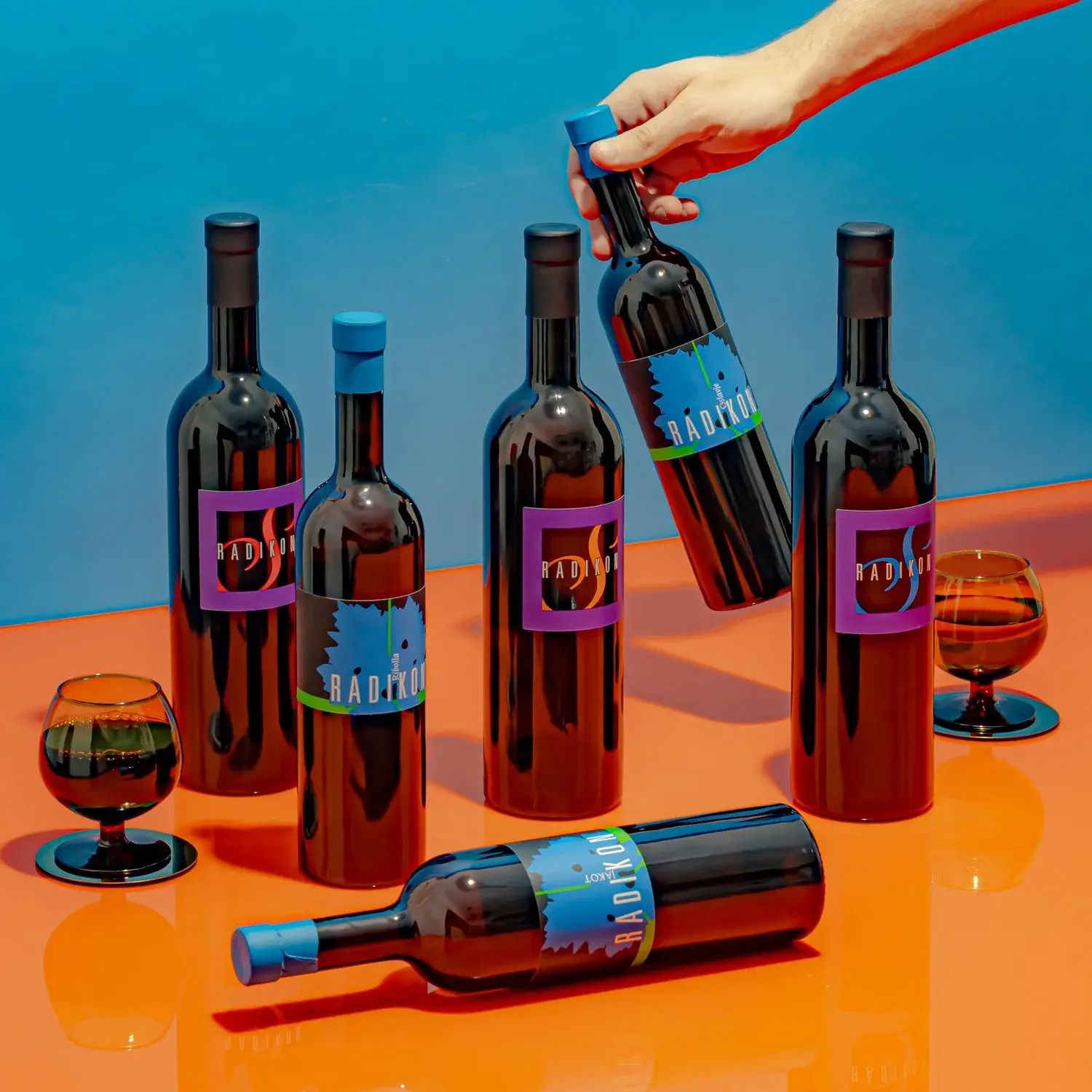
Radikon Jakot
First sip delivers controlled chaos—wild fermentation creates flavors that dance between white and red wine territories. The mouthfeel strikes that perfect natural wine balance: structured but alive, funky but not barnyard. At £78, it's investment-level drinking that justifies every penny through sheer liquid artistry.

Noble Green's food program centers on "wine-first" small plates designed to complement rather than compete. Their Aged Comté with honeycomb (£18) creates magical synergy with orange wines—the cheese's crystalline crunch echoing the wine's mineral backbone while honey bridges any tannic gaps.
The Heritage tomato salad (£14) with basil oil and aged balsamic works beautifully with lighter skin-contact wines, each element singing harmony rather than fighting for attention.
107 Wine Bar: Neighborhood Soul in a Former Chippy
Cross the city to Clapton and you'll find 107 Wine Bar occupying what was obviously a fish-and-chips shop until about five minutes ago. The transformation feels deliberately minimal—original tiled floors, hand-drawn wine lists on brown paper, and exactly zero Instagram-worthy design elements.

107 Wine bar
Co-owners Charlie Price and Alfie Agnew met working at Michelin-starred Ikoyi but defected to champion natural wine's democratic spirit. Their philosophy centers on accessibility—both intellectual and financial—making natural wine approachable for curious newcomers while maintaining credibility among hardcore enthusiasts.
The Orange Wine
2022 La Coulée d'Ambrosia Ploussard (Jura) - £42
107 Wine Bar's Ploussard from Jura represents everything beautiful about natural wine's unpredictability. This light red ferments wild in old barrels, creating a wine that tastes like liquid poetry—cranberry juice crossed with forest floor, earth without heaviness, fruit without sweetness.

The wine changes as it breathes, revealing new layers every few minutes. What starts bright and acidic develops earthy complexity, then circles back to pure fruit expression. At £42, it offers complexity that would cost double in fancier neighborhoods.
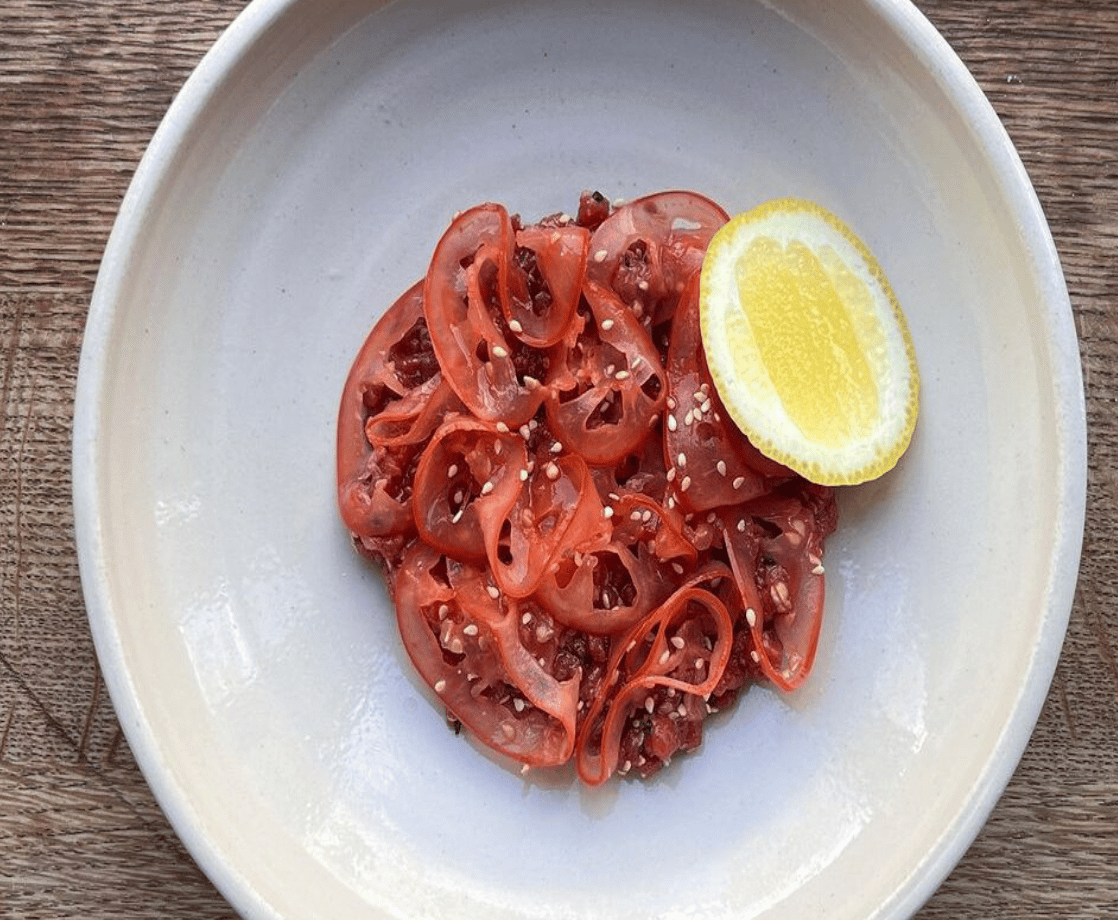
Where Noble Green intellectualizes, 107 Wine Bar comforts. Their Nduja toast (£8) with ricotta and honey creates perfect contrast—rich, spicy, salty elements that make natural wine's acidity shine. Simple execution, maximum impact.
The Burrata (£12) with roasted vegetables changes seasonally but always hits that sweet spot where great ingredients need minimal intervention - much like the wines they serve.
107 Wine Bar's genius lies in making natural wine feel neighborly rather than precious. The staff educate without condescending, pouring tastes freely and explaining techniques without wine-splaining. You leave feeling smarter about natural wine rather than intimidated by it.
The Verdict
Noble Green wins on pure sophistication and Instagram appeal. Their curated selection represents natural wine's artistic peak, perfect for impressing dates or business dinners requiring cultural credentials.
107 Wine bar claims victory for community spirit and value proposition. This feels like a local where natural wine enthusiasts gather to share discoveries rather than compete over rare bottles.
For special occasions: Noble Green. For regular drinking and learning: 107 Wine Bar. For maximum natural wine education: visit both and taste the full spectrum of this fascinating movement.
Ai Weiwei’s Monumental ‘Straight’ Transforms Tate Modern’s Turbine Hall
Ai Weiwei's Monumental "Straight" Transforms Tate Modern's Turbine HallThe Turbine Hall has hosted some spectacular installations, but Ai Weiwei's "Straight" (running until 15 January 2026) might be his most emotionally devastating yet. The Chinese artist has filled the cavernous space with 90 tons of rebar recovered from the 2008 Sichuan earthquake—each piece painstakingly straightened by hand over four years.

Ai Weiwei
The Weight of Memory
Walking into the Turbine Hall feels like entering a steel forest. 15,000 individual rebar rods, each one twisted and crushed by catastrophic force, now stand arranged in precise grids across the concrete floor. The mathematical order creates uncomfortable beauty from materials born of tragedy.

Ai Weiwei and his team spent four years straightening each rod using hammers and pure persistence: a meditation on trauma, reconstruction, and the weight of collective memory. The earthquake killed nearly 70,000 people, many of them children in poorly constructed schools.

Visitors can walk between the installations, the metal creating subtle musical notes as air moves through the grid. The scale overwhelms initially, then gradually reveals intimate details - scratch marks from hammers, numbers painted by recovery workers, rust patterns that map the violence of collapse.

What makes "Straight" profound isn't just its memorial function but its transformation of destruction into something approaching hope. These materials, twisted by tragedy, now stand as testament to human persistence and the possibility of repair.
The Guardian calls it "a masterpiece of memorial art that makes grief beautiful without diminishing its power." Time Outpraises the "hypnotic effect of repetition turned into contemplation."
Some critics argue the installation aestheticizes disaster, but most visitors report feeling moved rather than manipulated. The experience requires time: rushed viewing misses the meditation at the work's heart.
Fact-based news without bias awaits. Make 1440 your choice today.
Overwhelmed by biased news? Cut through the clutter and get straight facts with your daily 1440 digest. From politics to sports, join millions who start their day informed.
Tokyo's Most Elusive Pop-Up: Narisawa's Invisible Restaurant
Finding Narisawa's secret pop-up requires dedication bordering on obsession. Chef Yoshihiro Narisawa (of the two-Michelin-starred main restaurant) has been operating monthly "invisible" dinners since March 2025—12 seats, no fixed location, bookings via encrypted app only.

The booking system defies logic. Download the "Kage" app, submit a 500-word essay explaining why you deserve a seat, and wait. No location revealed until 2 hours before service. No menu preview. No second chances if you're late.
We secured seats for the August session after three rejection emails and one acceptance that felt like lottery victory. The location—revealed via GPS coordinates—led to a residential building in quiet Ebisu, specifically to apartment 4B, where an unmarked door opened to reveal a living room transformed into dining theater.

Narisawa himself greets guests, having converted his friend's apartment into a temporary restaurant for one night only. The "Invisible" concept centers on local ingredients so subtle they nearly disappear—micro-herbs that dissolve on the tongue, broths clear as water but complex as wine, vegetables cooked until their essence concentrates into whispers.
Course Highlights
The "Vanishing Radish" arrives as a single slice so thin it's translucent, dressed with vinegar that evaporates as you chew, leaving only the radish's peppery ghost. "Water Soup" tastes impossibly like concentrated rainfall—somehow both empty and full simultaneously.
"Invisible Beef" pushes the concept furthest: wagyu reduced to its pure umami essence, served as an aromatic mist trapped under glass domes. You breathe the "dish" rather than eat it, yet leave satisfied by phantom flavor.

The Experience Economy
At ¥85,000 per person (roughly £425), this isn't dinner—it's performance art with digestive consequences. The experience lasts exactly 90 minutes, timed to coincide with sunset through the apartment's western windows.
Narisawa explains each course personally, discussing his philosophy of "invisible gastronomy"—flavors so refined they challenge perception itself. It sounds pretentious until you taste vapor that somehow satisfies like solid food.
Is It Worth the Hunt?
Instagram will hate this—most courses disappear before photography becomes possible. But for serious food enthusiasts seeking dining's outer limits, Narisawa's invisible restaurant offers experiences impossible to replicate.
Bookings open monthly via the Kage app. September sessions launch August 25th at exactly 11:11 a.m. JST. Good luck.
Reader Poll: What's Your Copenhagen Priority?Click and vote below: |
Travel spotlight: 3 Under the Radar tips for Copenhagen
Refshaleøen's Industrial Renaissance
Skip touristy Nyhavn for Refshaleøen, a former shipyard turned creative district. The decommissioned industrial island now hosts Copenhell metal festival, Reffen street food market, and CopenHill ski slope—yes, skiing on a waste-to-energy plant's roof.

Rooftop Urban Skiing
Christiania
Visit Christiania: Morning brings residents walking dogs past rainbow houses, evening unveils intimate jazz sessions at Loppen venue.
The Gray Hall café serves killer coffee and pastries made by residents.
Selma Restaurant
Selma
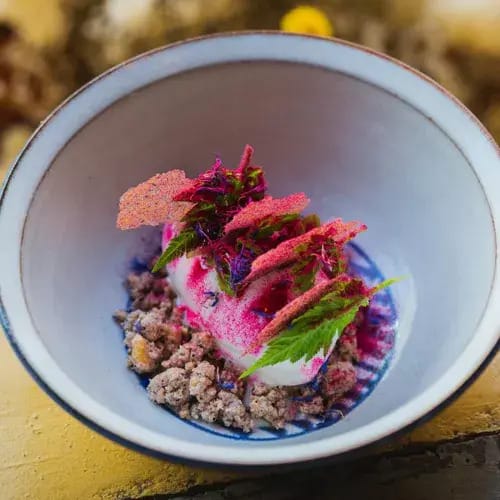
Copenhagen's best open sandwiches hide at Selma (Guldbergsgade 10), a neighborhood spot unknown to guidebooks. Chef Henrik Yde-Andersen creates architectural smørrebrød using hyper-local ingredients.
Thank you for reading! Tot Ziens.
How would you rate todays edition of the newsletter? |