- The Culture Vulture
- Posts
- Greek Revival: Lagana vs. Zephyr
Greek Revival: Lagana vs. Zephyr
This issue: Mediterranean mash-up, Regent's park transforms, Berlin Festival of Lights and Vilnius' hidden charm.

Shakira Taylor
October 13, 2025
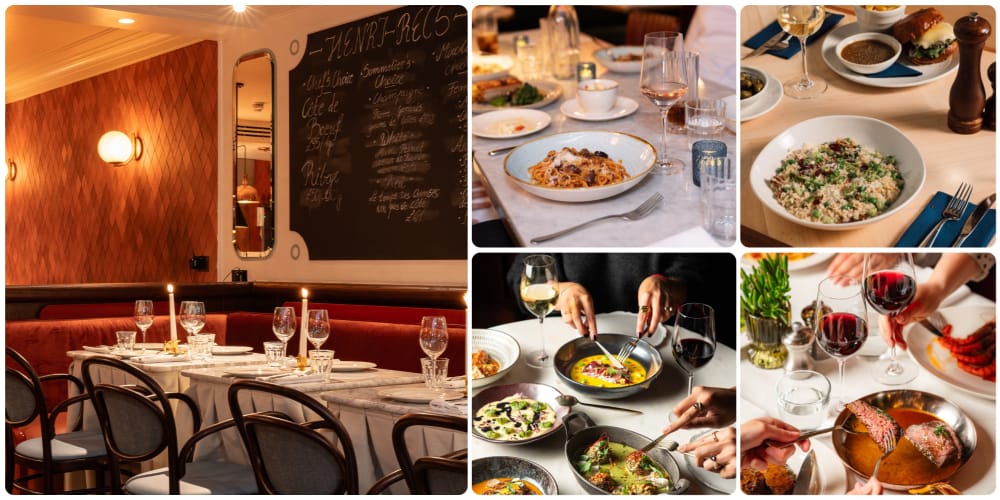
In partnership with

Hey Culture Clubbies!
London’s dining scene has gone Med-mad, and the latest chapter of this culinary odyssey is a Greek one. The Pachamama Group, the brains behind some of the city’s chicest tables, has sparked buzz again with Lagana, a Shoreditch debut that’s turning heads and packing tables. But there’s an older sibling in Notting Hill to consider: Zephyr, a polished temple of modern Mediterranean dining that helped define this wave back in 2023. This round, we head east and west to see how contemporary Greek eating plays out in two different London neighbourhoods.
In under 10 minutes we’ll cover:
Greek Revival: Lagana vs. Zephyr
Frieze London & Frieze Sculpture 2025: Regents Park
Berlin Festival of Lights: The City as a Canvas
Vilnius, Lithuania – European Green Capital 2025
Let’s get started.
Greek Revival: Lagana vs. Zephyr
London is entering a golden age for modern Greek food. Not the postcard-taverna cliché, but a generation of restaurants led by ambitious chefs who treat Hellenic flavors as a creative medium. At the centre of this movement stands the Pachamama Group, known for venues like Bottarga in Chelsea and Soraya in Abu Dhabi.
Their two Greek concepts: Lagana and Zephyr, are both love letters to the Mediterranean, yet they speak different dialects. One hums with radiant Shoreditch energy, the other glows with West London refinement. The overlap in leadership - Group Executive Chef Tzoulio Loulai and creative director Yaroslava Malkova, ensures each plate is as artful as it is edible. But beneath that shared polish lies a deeper divergence in personality, audience, and culinary rhythm.
Fact-based news without bias awaits. Make 1440 your choice today.

Overwhelmed by biased news? Cut through the clutter and get straight facts with your daily 1440 digest. From politics to sports, join millions who start their day informed.
Lagana is the newer of the two, opening in September 2025 after transforming the former Pachamama East site into something altogether fresher. Shoreditch can be fickle with openings, but Lagana struck a chord immediately. By early autumn, it had already become a darling of London food media, with Hot Dinners calling it one of the city’s “hottest new tables.”

The name itself carries quiet confidence, lagana is a traditional Greek flatbread eaten during Lent, and here it’s reimagined as both a signature dish and a symbol. Each piece emerges puffed and bronze-edged from the oven, served warm beside a flight of dips that changes with the season: smoked aubergine, whipped feta, roasted red pepper, or whatever the kitchen fancies that week. At once familiar and inventive, it sets the tone for a menu that’s deeply Greek but filtered through Loulai’s modern, ingredient-driven lens.

The ‘Lagana’ and Tzatziki
The dining room mirrors that ethos. The design borrows from the Greek islands with whitewashed walls, rustic pottery, shades of sea blue and marries it with Shoreditch casualness. Tables are set with simple charm, inviting diners to doodle or sketch on paper coverings as they sip on Greek natural wine. It’s not a marketing gimmick but an invitation to play, to join the creative spirit that animates the space.
The open kitchen crackles with energy, filling the room with a drift of coal smoke and oregano. Service keeps step—attentive without affectation, with staff quick to guide newcomers through the more unfamiliar items on the menu. At Lagana, being taken care of feels easy, natural, and warm.

The food, however, has real discipline beneath its relaxed mood. Starters show both restraint and flair: Anthotiro cheese comes lightly scented with thyme and truffle oil, drizzled with honeycomb that turns earthy dairy into something near-luxurious. Courgette tempura arrives feather-crisp over a slick of spiced red pepper sauce, familiar yet redefined. The grill section, though compact, delivers the kind of smoky char that anchors Greek cuisine. Lamb kebabs with oregano-tomato sauce, cumin yoghurt, and roasted fennel sing of balance—meaty, fragrant, lively with acid.

There’s drama in a skewer of Dry-aged Picanha, rare at the center but glossed with olive oil that seems to lengthen every note of umami. Seafood gets its due too, from a Sea Bass Ceviche in kakavia sauce, a clever nod to fisherman’s soup, to a Greek riff on bouillabaisse that nods to Marseille through Athens.
Priced gently by London standards: starters at £8–£14, mains £18–£32, desserts under £10, it’s a menu designed to be shared, returned to, maybe even adopted as a neighborhood favorite. According to OpenTable, diners already rate Lagana’s service at 4.7 out of 5, for once, the crowd and the critics agree.
Zephyr
Zephyr, across the city in Notting Hill, might seem at first like Lagana’s elder sister—glamour where Lagana is glow. Opened earlier under the same leadership, Zephyr helped define what London’s modern Greek renaissance could look like: a Mediterranean meeting of precision cooking and social appetite.

The space channels westside polish—brass trims, marble top tables, diffused lighting, and a hum that grows from early cocktail hour to full dinner rush. It’s cosmopolitan, yet still distinctly Malkova: textures meet contemporary art, and the balance feels intentional rather than overdesigned. There’s the dining room itself, yes, but also the secret: a hidden cocktail den called Naked & Famous. It’s where the restaurant’s creative reach flourishes most, merging bar culture and fine dining into one fluid experience.

Chef Loulai uses Zephyr’s broader Mediterranean brief as his sandbox. The plates here travel from Greek shores to Sicilian markets, through the Levant and back again. The mezze are vibrant and wide-ranging: taramasalata as smooth as mousse, grilled halloumi with citrus honey, octopus carpaccio fanned across the plate like edible sculpture.
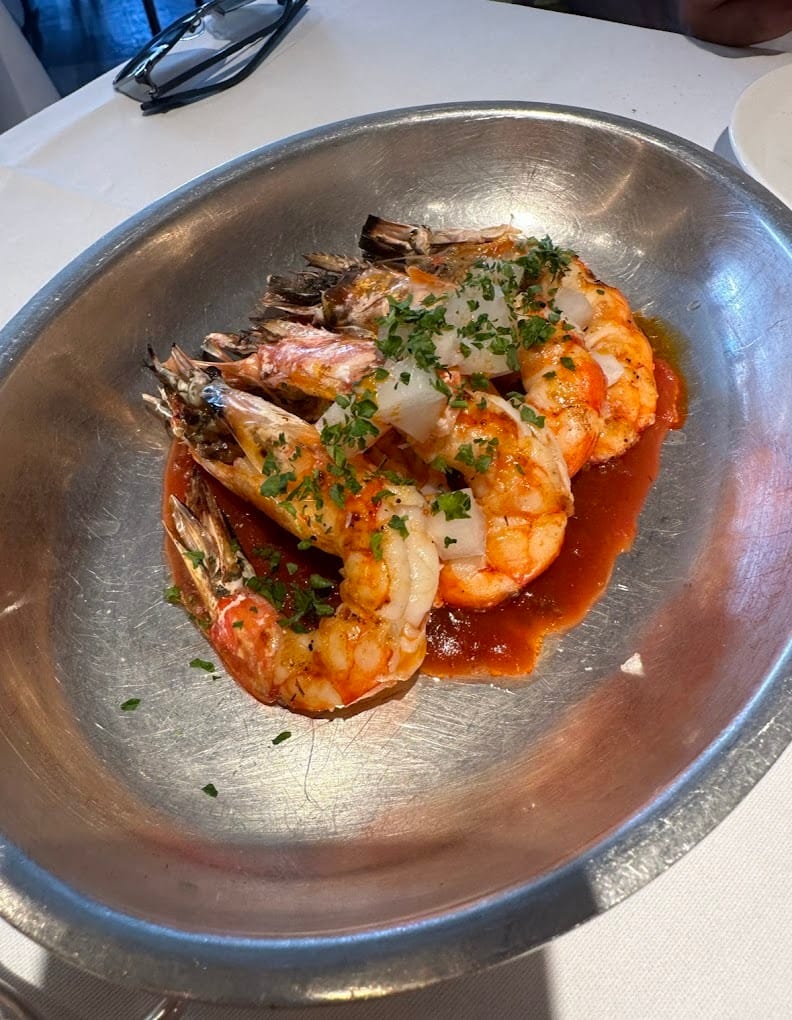
Seafood claims star billing: whole grilled fish, presented tableside, or day-boat prawns seared with lemon and oregano. The grill extends further than Lagana’s, catering to group dining: shoulder cuts, whole seabass, lamb for sharing.

Where Lagana is all about subtlety, Zephyr leans toward performance. The kitchen doubles down on color, texture, and aroma. And the desserts follow suit: think classic baklava reimagined as a deconstructed plate with pistachio ice cream, or semolina cake soaked in citrus syrup that recalls the comfort of someone’s Yaya, but refitted for a Notting Hill evening.
That elevated tone reflects in the bill, too—starters £10–£16, mains £22–£38, desserts around £10–£12. With that comes service both polished and present. Zephyr’s floor team carries the same warmth you’d find at Lagana but adds something more rehearsed - a rhythm matched to the steady glide of the bar team shaking behind the curve of the counter.

Together, these two restaurants illustrate the width of London’s Greek revival. They are connected not only by ownership but by philosophy: the belief that authenticity need not freeze tradition in time. Lagana feels like the Shoreditch test kitchen for that idea: smaller, more agile, more interactive. Zephyr operates as the gallery version, built to impress and envelop.
The Verdict
Judge them side by side and the differences sharpen but don’t compete. Lagana is the younger rebel, genuinely fresh in both concept and joy, a restaurant that rewards curiosity and defines East London’s new dining rhythm. Zephyr is the confident icon that proved Greek food could be glamorous and modern without losing soul. For a weeknight dinner where service feels like friendship, Lagana wins. For a polished night out where the mezze glimmer and the cocktails hum, Zephyr still rules.
Frieze London & Frieze Sculpture 2025
Every October, Regent’s Park becomes the centre of the art world. Frieze London and Frieze Sculpture return from 15–19 October 2025, drawing collectors, artists, and the culturally curious for five days of visual energy. Over 280 global galleries will fill the park’s temporary pavilions, offering works spanning six millennia, from ancient objects to the most forward-looking contemporary experiments. The result is a rare panorama of how art speaks across time and geography, where a bronze from antiquity can hang opposite a brand-new multimedia installation from Brazil or Japan.

Step outside, and Regent’s Park itself becomes an extension of the gallery. Frieze Sculpture, entirely free and open-air, transforms the lawns and pathways into a monumental landscape of art. Families wander between towering forms of metal or stone; runners slow down for a double take; friends picnic under the shadow of abstract steel.

The sculpture park embodies what Frieze does best: turning London’s public space into a democratic encounter with creativity. It makes art feel both extraordinary and accessible, a walk-in exhibition that demands no ticket and rewards curiosity at every angle.

Inside the main fair, highlights will span continents. Look out for artists such as Sandra Poulson, Aline Motta, Alberto Pitta, and Tadskia, whose works bring stories from Angola, Brazil, and beyond into conversation with the global art dialogue. There are sections dedicated to emerging talent and youth culture that keep the fair’s outlook refreshingly current. Equally vital are the immersive installations and performances, blurring the boundaries between audience and artwork. Some invite participation; others surround you with light, sound, or movement until you forget where the artwork ends and you begin.

Frieze London & Frieze Sculpture 2025 is more than an art fair; it is a temporary culture capital that rewrites the city’s calendar. For one long weekend, Regent’s Park becomes a living museum where history meets experiment and where art reveals itself not as a static product, but as an ongoing conversation. Whether you window-shop or acquire a masterpiece, the experience is the same: step inside and the world looks a little more like art.
What: Frieze London & Frieze Sculpture 2025
Where: The Regent’s Park, London NW1 4NR
When: 15–19 October 2025
Stop Buying Expensive Probiotics

What if it only took ONE CAPSULE of your favorite probiotics to start a nearly unlimited supply of gut-healthy bacteria?
And it was not only affordable, but easy to do in the convenience of your own kitchen?
Now YOU CAN with the #1 best-selling Ultimate Probiotic Yogurt Maker.
Join the millions who have stopped wasting money expensive probiotics and store-bought yogurt. These products are weak and ineffective.
Make up to 2 quarts of probiotic-rich yogurt using a single capsule of probiotics or spoonful of your favorite yogurt.
Just mix this "starter" with half-and-half dairy and set it in the Ultimate Probiotic Yogurt Maker to make the magic happen.
And it's so easy, a child can do it. The next day, you'll be enjoying your very own, rich and creamy probiotic yogurt.
Try the #1 Yogurt Maker in the USA today risk-free for just $71.95 with our LIFETIME WARRANTY.
Get Yours Today!
Not evaluated by the FDA. This product isn’t meant to diagnose, treat, or cure.
Berlin Festival of Lights: The City as a Canvas
For one luminous week every October, Berlin seems to take a breath—then exhale in technicolor. From October 8 to 15, 2025, the Berlin Festival of Lights returns to repaint the city in brilliance. More than forty landmarks will glow in synchrony with sound, motion, and story, transforming familiar stone and steel into 80 living artworks. The theme this year, “Let’s Shine Together,” is both a greeting and a promise: art not as spectacle alone, but as connection.

Each year the festival’s painters are not wielding brushes, but beams. The Brandenburg Gate, Berlin Cathedral, and the TV Tower all become story surfaces that reveal new sides of the city’s character. Some projections burst with optimism, others hum with quiet reflection on unity and change. Each one is temporary—here for a few nights, then gone—leaving behind a softened memory of color and community. Millions visit, yet the experience feels intimate when the lights ripple against the night sky.

Walkers who journey through the city during festival week find Berlin turned inside out. Streets that once led to offices now end in glowing mosaics; squares become amphitheaters of light and music. Yet beyond the social whirl, there’s also a sense of collective pause. The light tells stories everyone can share, inviting residents to rediscover their own neighborhoods as art spaces.

There are many ways to navigate this open-air gallery. Some guests wander on foot to savour the surprises tucked between stone arches and bridges. Others join guided night tours or hop-on-hop-off bus routes that weave together the historic and the modern—from the East Side Gallery’s colorful remnants of the Wall to the wide openness of Tempelhofer Feld, new to the programme this year. Every route holds a different rhythm, every corner a change of light.

The result is a cinematic cocoon that pulls you into a shared heartbeat with hundreds of strangers. Another quiet marvel hides behind the spectacle: the careful sustainability design that allows the festival to glow brightly without waste. Organizers rely on energy-efficient LEDs and eco conscious practices that mirror Berlin’s environmental goals. In a city known for innovation, this thoughtfulness feels like part of the show.
The interactive side of the festival deepens the draw. Augmented reality layers let visitors see digital constellations sparkle through their phones. Artist talks and photography workshops open a window into how light itself can carry emotion and political gesture.

When the lights fade, Berlin returns to its twilight normalcy, but those glimmers linger in memory like afterimages. They remind anyone who wandered the illuminated streets that art can belong to everyone and that even a capital defined by history can reinvent itself nightly.
Which City would you want to see lit up with projected art?Please Vote Below |
Travel spotlight: Vilnius, Lithuania – European Green Capital 2025
14Horses
Where modern Lithuanian cuisine meets the city’s eco-forward spirit.
This Michelin Guide–recognized favorite takes farm-to-table seriously,
drawing on local growers and foragers to craft seasonal menus that
honor Baltic flavors with a fresh twist.

14Horses
UNESCO World Heritage Site
The heart of Vilnius beats within its Old Town, a UNESCO
World Heritage site that wraps centuries of history in baroque charm. Wander cobbled lanes lined with pastel façades, discover tucked-away courtyards, and let the onion domes and gothic spires guide you toward secret galleries and outdoor cafés.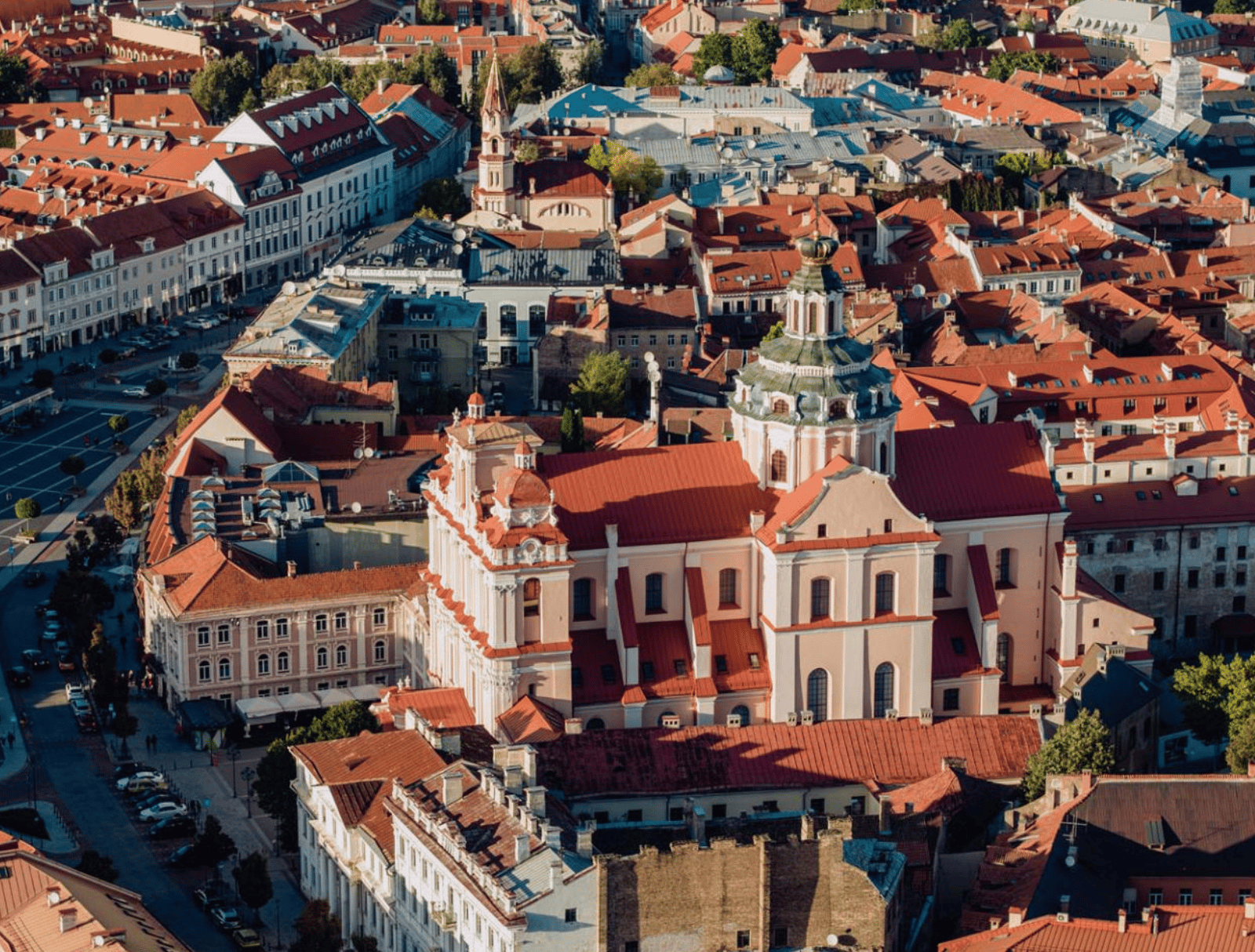
Old Town
Beigelistai
A small café that captures Vilnius’ creative pulse through something as
simple as a bagel. Expect warm smiles, coffee roasted by local makers,
and walls lined with sketches from neighborhood artists. It’s a
gathering spot for students, designers, and dreamers.
Thank you for reading!
How would you rate todays edition of the newsletter? |
Buying Cannabis Online Is Now Legal, And Incredibly Convenient

Thanks to changing laws buying THC online is now 100% federally legal.
And when it comes to quality, reliability and ultimate convenience, Mood is leading the way…
Because, instead of memorizing confusing strain names – you simply choose how you want to feel: Creative, Social, Focused, Relaxed, Happy, Aroused, and more.