- The Culture Vulture
- Posts
- Clash of the crustaceans: Malaysia vs Singapore chilli crab showdown
Clash of the crustaceans: Malaysia vs Singapore chilli crab showdown
A sweet-meets-spicy mud-crab face-off where Kuala Lumpur’s old-school flavour challenges Singapore’s polished powerhouse.

Shakira Taylor
May 13, 2025

In partnership with

Hey Culture Clubbies!
In this edition, we’re criss-crossing Asia and South America to taste iconic dishes, meet free-roaming deer, drool over centennial cookware, and prep you for Brazil like a pro.
Keep reading to uncover the best restaurants, destinations, and design drops right now.
In less than 10 minutes we will cover:
Fight of the Chilli Crabs: restaurant review – Malaysia vs Singapore
Nara, Japan: the city where deer bow for biscuits
Le Creuset at 100: the fiery new hue Flamme Dorée
Travel Spotlight: Exploring the hidden gems in Brazil
Clash of the crustaceans:
Malaysia vs Singapore chilli crab showdown
Chilli crab is Southeast Asia’s most beloved mud-crab masterpiece: live Scylla serrata crabs are chopped, wok-seared and swaddled in a tomato-chilli gravy sweetened with ketchup, fortified with fermented soy-bean paste, and finished “wat-dan” style with wisps of beaten egg for silkiness.
The dish’s origin story begins in 1950s Singapore when home cook Cher Yam Tian improvised a tomato-sauce stir-fry at her beach-side stall, adding chilli at her husband’s suggestion; the couple’s invention became a national treasure and the template for countless Cantonese-run seafood kitchens across the
region. Fried mantou buns, deep-gold, fluffy doughnuts are mandatory for sopping up every last drop. Look for a sauce that clings to the shell, tastes more sweet-savoury than incendiary, and glows a glossy brick-red.
Looking for unbiased, fact-based news? Join 1440 today.

Join over 4 million Americans who start their day with 1440 – your daily digest for unbiased, fact-centric news. From politics to sports, we cover it all by analyzing over 100 sources. Our concise, 5-minute read lands in your inbox each morning at no cost. Experience news without the noise; let 1440 help you make up your own mind. Sign up now and invite your friends and family to be part of the informed.
Contender #1: New Ocean Restaurant, Kuala Lumpur
Hidden behind a sun-bleached sign on Jalan Imbi, this thirty-year-old Cantonese stalwart looks like an auto-garage but smells like seafood nirvana. The mud crabs (≈ RM 90/kg) arrive cracked but not over-butchered, revealing pearly flesh that stays juicy even after a communal dunk in the sauce.

The Chilli Crab
The gravy is almost jam-thick, heavy on ketchup sweetness, light on chilli burn, and streaked with generous egg ribbons—perfect for those who worship flavour over fire. A side platoon of blistered mantou disappears in seconds. Stretch out the meal with their boneless chicken stuffed with fish paste and a fresh silken tofu dish —both menu legends among KL locals. Expect plastic chairs, ceiling fans, and staff who call patrons “boss” while splashing Tiger Beer into chipped glasses.

New Ocean Restaurant KL
Contender #2: Jumbo Seafood, Singapore
Jumbo’s flagship at Riverside Point feels worlds away: tank-lined foyer, white linen, LED spotlights. Founded in 1987, the chain helped codify the modern Singapore style—thinner, punchier gravy and monster two-kilogram crabs that justify the S$95 price tag. The cooks loosen the shell before frying so sauce penetrates every cavity, then crank up bird’s-eye chilli for a lingering burn. Egg sets into velvety curds rather than wisps, and a final cornstarch slurry keeps the sauce pourable rather than jammy. Order tangerine-honey ribs and baby kailan with garlic while you wait; the queue can stretch 45 minutes on weekends. Service is efficient bordering on brisk: plates whisked away, table reset, bill presented before the last mantou cools.

Jumbo seafood Chilli Crab
Both kitchens rely on the “three-step” method: oil-blanch the crab to set the flesh, fry an aromatic paste of shallot-garlic-ginger-belacan, then deglaze with stock, sauces and sugar before the crab finishes cooking. New Ocean simmers longer, reducing the gravy to coat each shell like lacquer; Jumbo leaves its sauce looser, ideal for rice spooning. Chilli level sits at 3 of 10 in KL (but you can always request they turn up the heat) and 6 in Singapore—palates sensitive to spice should start in Malaysia. Wherever you dine, accept the plastic bib, crack claws with the provided mallet and keep a wet towel handy; the mess is half the fun
The Verdict
For a cradle-of-cuisine experience—sticky tables, syrup-thick sauce, and a bill that leaves room for dessert—choose New Ocean. For trophy-sized crabs and the archetypal Singapore chilli sauce that food writers canonised in the 1980s, book Jumbo. Either way, skip white shirts, carry cash for the mantou refill, and remember that the true winner is anyone licking red sauce off their fingers at midnight.

The inside of Jumbo Seafood, Singapore
London cravings?
Start in Chinatown at Rasa Sayang, a halal Malaysian-Singaporean canteen whose bubbling clay-pot chilli crab draws queues of spice hunters nightly. North-west in Swiss Cottage, family-run Singapore Garden has served its signature Singapore chilli crab since the 1980s; the shells come pre-cracked, one crab feeds two, and the sauce is gloriously. Closer to the museums, Bugis Kitchen inside the Copthorne Tara Hotel, South Kensington, turns out a whole crab braised in spicy-sweet egg gravy for about £39 in a bright, marble-topped dining room—perfect after a V-&-A visit. Paddington’s Melur by Pakawie flash-fries mud crab in a fiery “Cha Cha” chilli glaze that regulars claim rivals Kuala Lumpur’s best.
Nara, the town where deer roam free
Ever had a deer bow to you - meet the Nara deer
Sliding through torii gates and cedar groves just 45 minutes from Kyoto, Nara dazzles visitors with eighth-century temples and 1,300 semi-tame sika deer protected as messengers of the thunder god Takemikazuchi. The animals earned imperial immunity in 1185, and killing one was once a capital offence. Today, the penalty is a ¥200 fine if you feed the wrong snack. Pick up shika-senbei crackers from green-umbrella vendors, bow, and many deer will bow back before gently nibbling the wafer; break each cracker into quarters so you’re not mobbed. Hold your palms up when empty—the deer understand.

Deer in Nara Park
Beyond charismatic cervids, Nara Park compresses a cultural atlas into 660 hectares. At Tōdai-ji, walk beneath the 18-metre Great Buddha, then hunt the pillar with a belly-button-sized hole said to grant enlightenment if you squeeze through. Five minutes south, Kōfuku-ji’s five-storied pagoda mirrors over Sarusawa Pond at sunset. Art lovers linger in the Nara National Museum’s Buddhist Sculpture Wing, circling 100 carved deities displayed in the round, many labelled National Treasures. If you visit on the fourth Saturday of January, stay after dark for Wakakusa Yamayaki: monks ignite the dry grass of Mount Wakakusa, turning the hillside into a 342-metre torch while fireworks crack overhead. In spring, climb the same slope for pastel sakura views clear to Osaka.
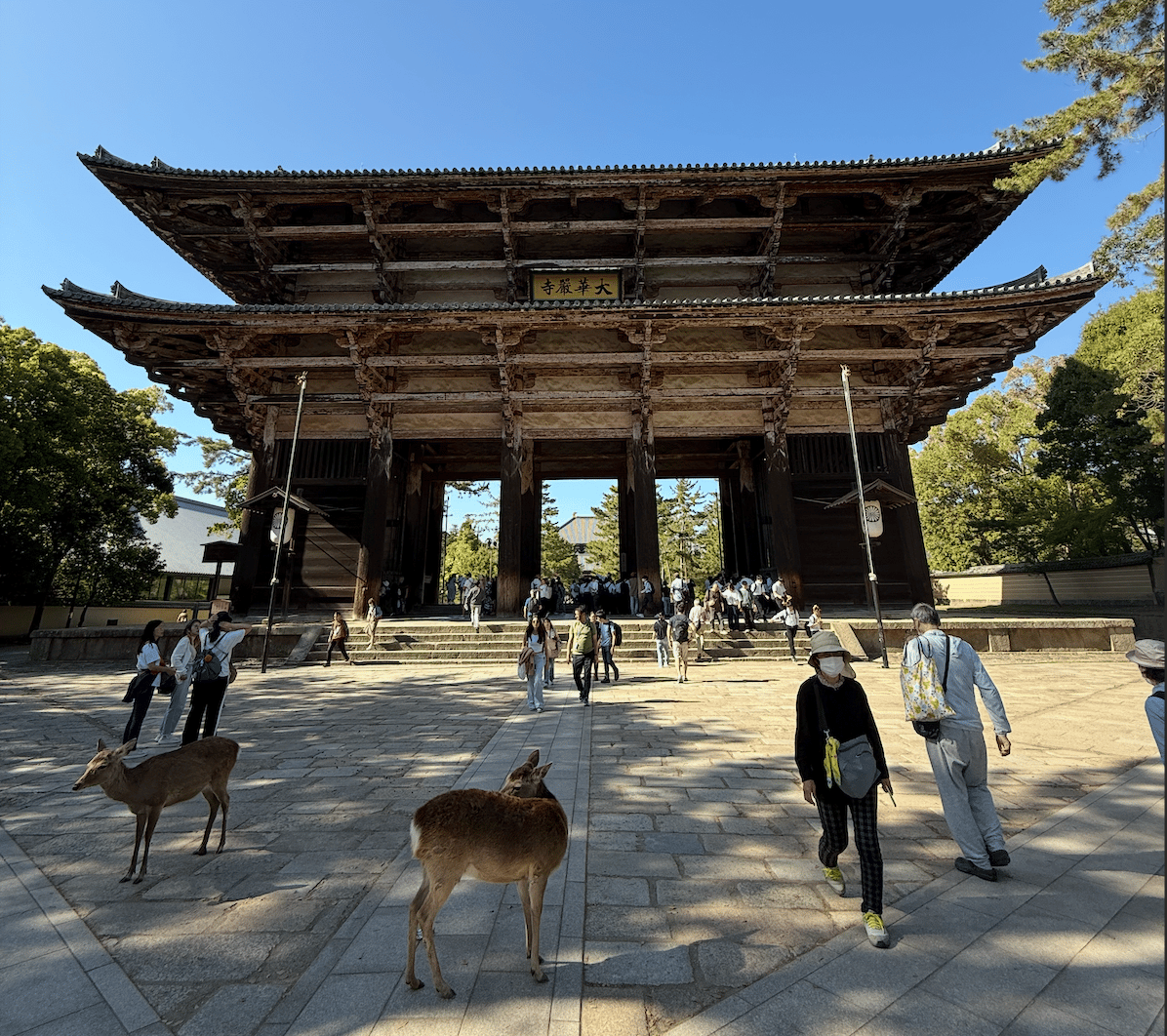
Nara Park
Foodwise, fuel up on warm mochi pounded to order at Nakatanidou near Sanjō-dōri, or try persimmon-leaf sushi at a machiya café. Trains back to Kyoto taper after 23:00; linger too long and you may share the platform with velvet-antlered commuters.

Deer crossing the road in Nara
Le Creuset’s Golden Flame – why Flamme Doree marks a century
When Le Creuset’s founders Armand Desaegher and Octave Aubecq first poured molten iron at Fresnoy-le-Grand in 1925, the glowing crucible inspired their inaugural enamel: a searing orange called Flame. Flame’s high-temperature hue broke from the era’s drab, coal-black cookware and quickly became the brand’s calling card across Europe’s nouvelle-cuisine boom.
A hundred years—and more than 100 colour launches—later, the company revisits that birth spark with Flamme Dorée (“golden flame”). This limited enamel recipe adds a third translucent layer infused with light-reflecting minerals, giving the gradient from ember-red to molten-gold a subtle metallic twinkle. The stainless-steel crucible knob, anodised champagne-gold and laser-etched with a centennial “C”, salutes the foundry ladles that still cast every pot.

Flamme Doree - the new anniversary colourway
Why this colour for the anniversary? First, it pays homage to the original Flame while acknowledging a century of material science—today’s enamel tolerates 500 °F and induction cooktops that didn’t exist in 1925. Second, French artisanship: the gilded sheen echoes Art Déco objects forged when Le Creuset debuted at the 1925 Paris Exposition. Finally, story-telling: publishers Assouline partnered on A Century of Colorful Cookware, its dust-jacket printed in Flamme Dorée to cement colour as iconography.

Original advert for the first Le Creuset in Flame in 1935
The line spans Dutch ovens (4.5–15.5 qt), braisers, saucepans and shallow casseroles, priced from US$310; early drops on Le Creuset’s site and Williams-Sonoma sold out within 48 hours. Fans speculate a secondary-market premium akin to 2018’s Deep Teal surge, so set your alerts.
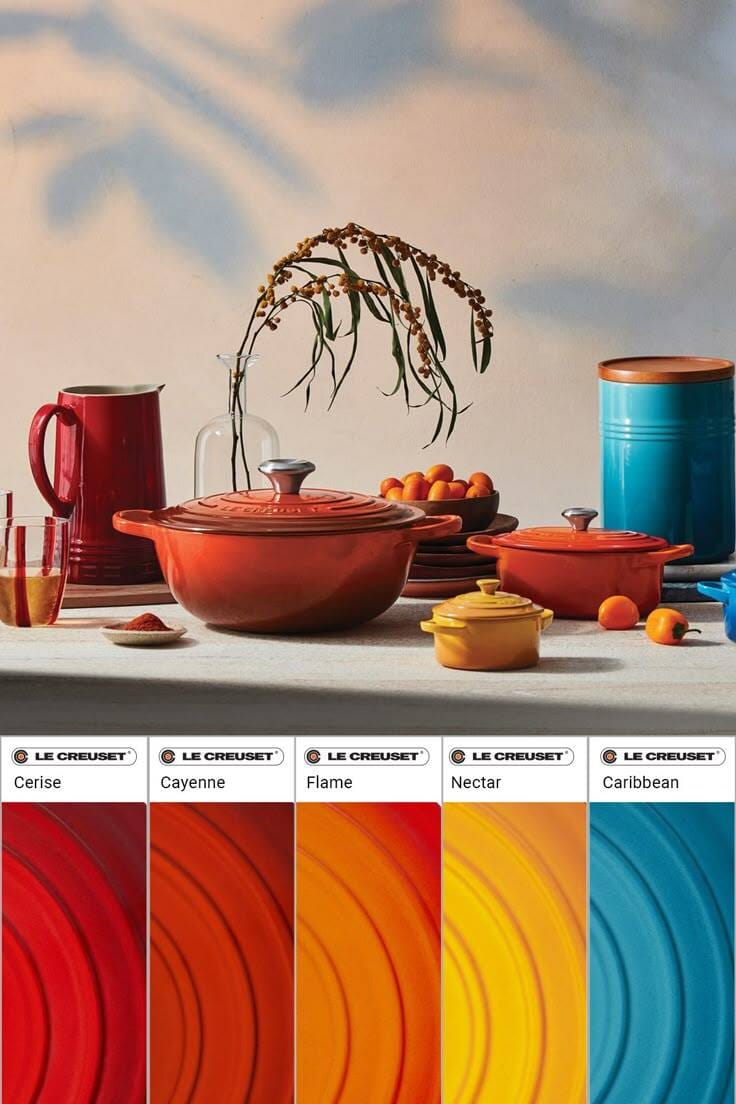
Le Creuset in Cerise red, Cayenne, classic flame, nectar and Caribbean turquoise
Which Le Creuset shade would you add to your kitchen?Please Vote Below |
Travel spotlight: 3 Things you need to know before visiting Rio de Janeiro, Brazil
Feijoada Fridays
Brazil’s soul food—a black-bean stew enriched with nose-to-tail pork—traditionally anchors Friday lunches and Saturday family gatherings. In Rio, order the all-you-can-eat cauldron at Casa da Feijoada, Ipanema; orange slices and farofa cut the richness, while house caipirinhas loosen conversation.

Casa da Feijoada in Rio de Janeiro
Beat the Crowds at Christ the Redeemer
Reserve the first Corcovado cog-train of the day (08:00) or the final sunset slot; soft light flatters photos and spares you midday elbow wars. If queues swell, rideshare to Paineiras Visitor Centre and board the park shuttle from there.Hidden Gem: Escadaria Selarón
Arrive before 09:30 to climb Jorge Selarón’s 215-step mosaic in Santa Teresa almost alone—heat and crowds crest by noon. Pair the visit with brunch in bohemian Largo dos Guimarães and a yellow-tram ride across the Lapa Arches.

Santa Teresa Tram over the Lapa Arches
Thank you for reading! See you next time.
How would you rate todays edition of the newsletter? |