- The Culture Vulture
- Posts
- Ducksoup vs Rita’s: Soho’s Wine Bar Darlings
Ducksoup vs Rita’s: Soho’s Wine Bar Darlings
This issue: Soho’s wine bar face-off, a glittering Mayfair art fair, the world’s top restaurant, and Poland’s mountain haven.

Shakira Taylor
November 06, 2025

In partnership with

Hey Culture Clubbies!
This week we are posted up at the bar in Soho, dissecting a rivalry that feels like pure London in 2025. On one side is Ducksoup, the candlelit champion of natural wine and effortless intimacy. On the other sits Rita’s, a riot of Americana energy, inventive plates, and cocktails with personality. Both beloved. Both influential. Both utterly themselves.
In under 10 minutes we’ll cover:
Ducksoup vs Rita’s: Soho’s Wine Bar Darlings
The LAPADA Berkeley Square Art & Antiques Fair 2025
Maido, Lima: The World’s #1 Restaurant for 2025
Spotlight on Zakopane, Poland
Let’s get started.
Will A Book Grow Your Business?

No one buys a beach house from selling a book. They buy the beach house from the opportunities the book gets them.
Author.Inc helps experts, executives, and entrepreneurs turn expertise into world‑class books that build revenue, reputation, and reach.
Their team—behind projects with Tim Ferriss and Codie Sanchez—cuts through uncertainty to show whether your book can realistically hit those targets.
Schedule a complimentary 15‑minute call with Author.Inc’s co‑founder to quantify potential ROI from your offers, speaking engagements, royalties, and more.
This isn’t writing advice. It’s a strategic consultation to decide whether now is the right time to put pen to paper.
If it’s a go, they’ll show you how to write and publish it at a world-class level. If it’s a wait, you just avoided wasting time and money.
Ducksoup vs Rita’s: Soho’s Wine Bar Darlings
If Soho were a dinner party, Ducksoup and Rita’s would be seated at opposite ends of the table.
One glows softly with candlelight, its shelves stacked with natural wine bottles and weathered ceramics, the music floating quietly from an old-school stereo. The other hums with the chatter of creative professionals, cocktails being shaken, and a playlist that shifts from Roy Davis Jr to atmospheric funk without missing a beat. Yet despite their stylistic differences, both have mastered something rare in London’s restaurant landscape: heart. They merge food, drink, and personality so seamlessly that eating there feels less like a night out and more like joining a community that genuinely loves what it does.
Ducksoup
Ducksoup, tucked at 41 Dean Street, has been doing its understated dance since 2011. Walking in feels a bit like dropping into a friend’s kitchen mid-service. Tables are small, wooden, set close together; the glow is warm, thanks to flickering candlelight and bare bulbs.
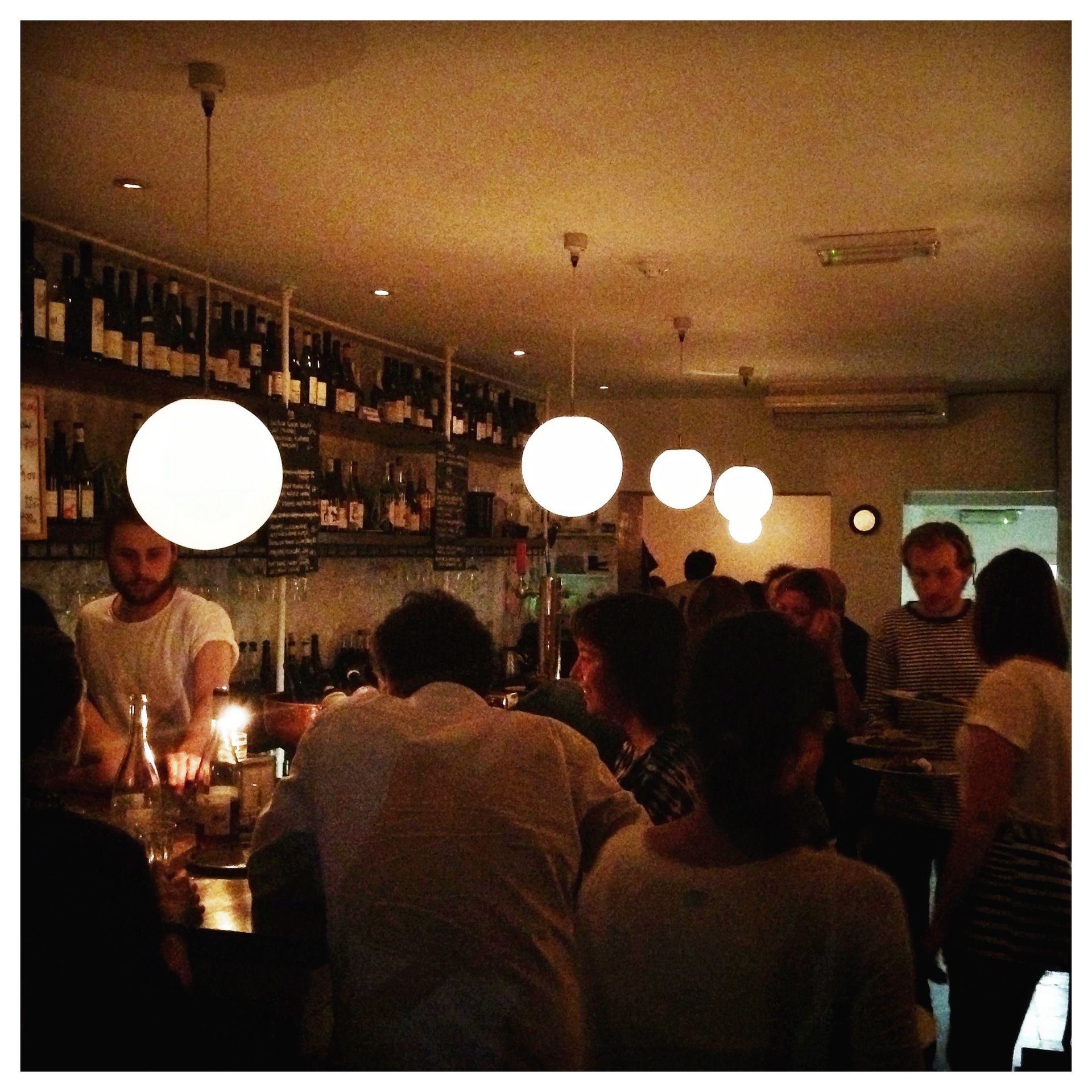
There's a small open kitchen visible behind a marble counter, where chefs prepare plates with gentle precision rather than spectacle. The soundtrack—curated by the staff—adds to the intimacy, often vinyl or a house playlist that mirrors the rhythm of the evening. On busy nights, voices bounce off the plaster walls but never overwhelm. It’s a space that pushes against Soho’s polished showmanship by reminding London that hospitality can be simple, quiet, and deeply human.
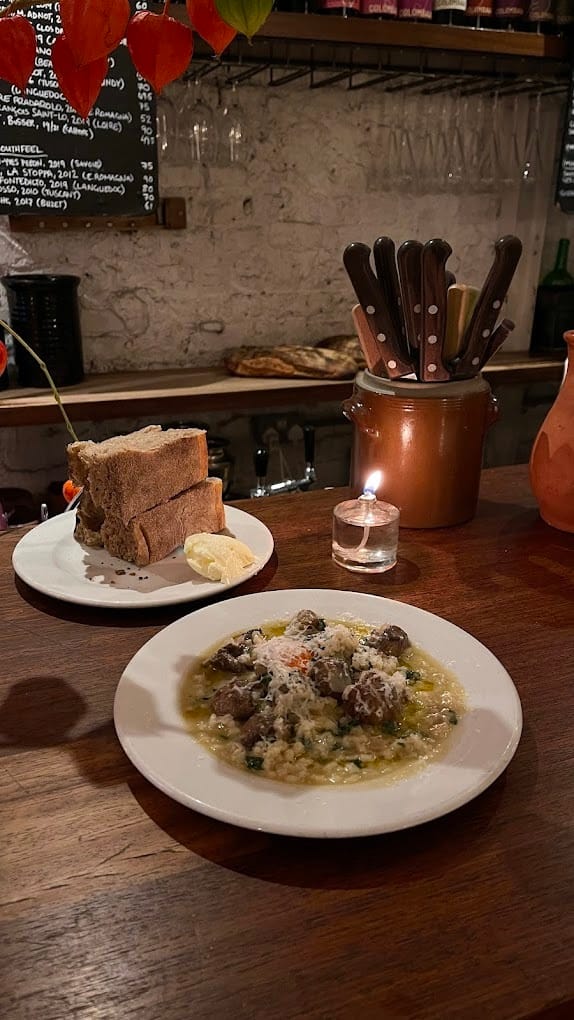
Here, the menu changes daily. Ducksoup’s plates orbit European seasonality: grilled mackerel with fennel one night, wild mushroom risotto the next, burrata paired with heritage tomatoes when summer is in full swing.
Everything is designed to share, but not because sharing is trendy but because it makes sense. The focus lies on texture and raw ingredient quality rather than on ornate presentation. A plate arrives, something green and aromatic, olive oil glistening and it’s served as if by a friend: no unnecessary garnish, just impeccably sourced food cooked with restraint.

Small plates typically range between £7 and £15, a price that keeps Ducksoup within reach for locals and repeat diners, while mains hover in the mid-twenties. Even better, the restaurant adds no service charge. That small gesture encapsulates its approach: hospitality should feel mutual, not transactional.
The real cornerstone of Ducksoup, though, is the wine. The list is entirely natural, low-intervention, and European—bottles from small producers, no corporate labels, no fluff. Each glass feels like a story. The staff know their inventory intimately, describing a Greek orange wine or a Jura red with genuine excitement rather than jargon. Guests who are new to natural wine find themselves guided, not lectured. For those already converted, it’s heaven. A glass starts around £6, bottles begin near £30, and every recommendation somehow fits the mood of the evening. It’s not uncommon to see diners talking with neighboring tables about what they’re drinking; it breeds connection.

Owners Clare Lattin and Tom Hill have backgrounds that shape the place’s character—Lattin comes from food writing, Hill from cooking—and together they built something that feels literary but not pretentious, culinary without being conceptual. Everything is about seasonality, honesty, and a sense that good food is as much about how it’s served as what’s on the plate. Critics have long applauded Ducksoup for that sincerity. The Infatuation calls it a “neighborhoody” refuge perfect for dates or out-of-towners looking for a Soho gem that doesn’t perform.
Indeed, it’s the kind of spot people return to after travels abroad, craving that particular comfort—where a glass of natural red and a plate of just-seared fish feel almost medicinal.
Rita’s
Two streets away sits Rita’s, at 49 Lexington Street, and walking inside is like flipping the record to a different tempo.
Rita’s radiates energy. You’ll find candlelight here too, but it glows warmer and louder, refracted through glassware and neon. There’s a lively bar, a buzzing evening crowd, and a playlist that could belong to a Brooklyn loft party. Roy Davis Jr might weave through the speakers while a waiter plates clams alongside Idaho scones. The energy is infectious. Regulars include writers, designers, and food industry insiders who come for both the food and the friends they’ll inevitably bump into.
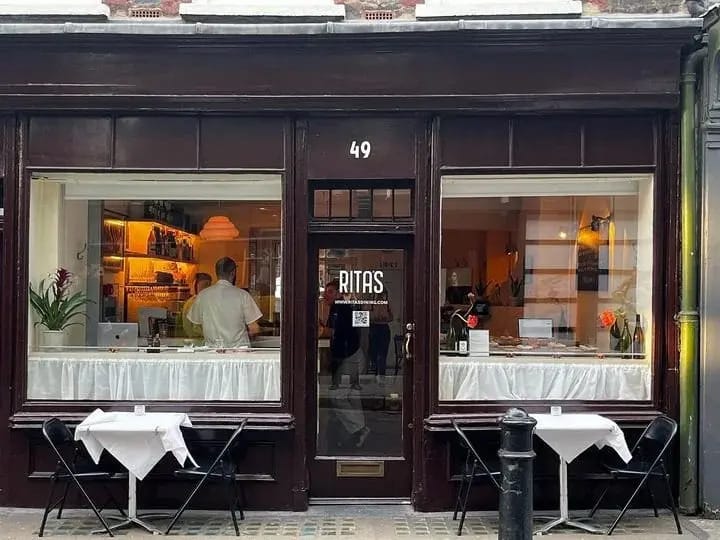
The story of Rita’s is one of evolution. Founded by Gabriel Pryce and Missy Flynn, it began as a pop-up and slowly matured into a permanent powerhouse—part-American diner nostalgia, part-British produce showcase.
The menu stitches together Pryce’s Stateside inspirations and his appreciation for seasonal, local ingredients. Start with jalapeño gildas, sharp, salty, finger-sized skewers that ignite the palate, or the Southern fried quail with creamed corn, a dish that nods to the American South while feeling firmly rooted in Soho produce. Clams with Idaho scones blur the line between indulgent and heartfelt comfort, while vegan burnt tomato fregola—bright with saffron, olives, and capers—shows how plant-based cooking can be layered and luxurious.

Plates here typically run £8 to £14, mains from £18 to £28, and though prices have crept with inflation, value remains strong given the quality and inventiveness.
Rita’s cocktail list deserves its own following. Missy Flynn’s background in drinks means the bar program rivals the kitchen. The mini-Martinis are cult status—perfect little bursts of cold, clean spirit served before dinner—and the signature ‘rita (grapefruit, green chile, celery) drinks like a zesty handshake. The wine list, though shorter than Ducksoup’s, is equally thoughtful: natural, low-intervention bottles selected for attitude as much as terroir. Regulars often split their evening between cocktails and wine, and few leave without trying both. The staff encourage curiosity; they want you to have fun with the pairings.

Service at Rita’s feels precise but easygoing, the kind delivered by people who love what they’re doing. If Ducksoup feels serene, Rita’s is pure life. Candlelight reflects off glasses, laughter rises, plates move quickly from pass to table. Esquire UK describes it as “London’s buzziest restaurant,” and it’s easy to see why.

Both, though, are rooted in care and sustainability. Ducksoup builds its menu around British seasonality, with ethically sourced meat and fish. Rita’s takes a similar stance, minimizing waste and drawing heavily on local farms and suppliers. These are restaurants built by people who genuinely care what ends up on the plate and how it got there. Prices across both restaurants hover at the London midrange but feel generous in return.
The Verdict
Choosing between Ducksoup and Rita’s isn’t so much about superiority as about the mood you’re in. If you crave intimacy and the quiet romance of natural wine poured by candlelight, Ducksoup offers a slice of Europe in central London. It’s the place for conversations that stretch, for unplanned second glasses, for slow dining that feels deeply considered. If instead you want verve and brightness, Rita’s delivers. It’s the taste of modern London: diverse, bold, celebratory. Here, flavors pop, cocktails sparkle, and the air feels charged with possibility.
In short, these two establishments form the yin and yang of Soho’s dining soul. Ducksoup gives you calm creativity; Rita’s gives you exuberant experimentation. Together they capture why this neighborhood remains London’s beating culinary heart and why no true culture vulture could choose just one.
The LAPADA Berkeley Square Art & Antiques Fair 2025
Each autumn, London’s Berkeley Square transforms from Mayfair’s leafy heart into a glittering stage for art, antiques, and design. From 28 October to 2 November 2025, the LAPADA Berkeley Square Art & Antiques Fair returns as one of the city’s most refined cultural fixtures. Over 80 top-tier exhibitors will showcase museum-quality pieces, paintings, sculptures, jewellery, furniture, and design objects, each rigorously vetted by a seventy-member expert committee for authenticity and condition.

The mood of the fair is distinct. It is part exhibition, part salon, where collectors, curators, and designers converge under a single marquee to experience centuries of creativity in one sweep. This year feels particularly charged with anticipation. Under the new directorship of Elizabeth Shanks, formerly of Sotheby’s and the British Museum, the fair is evolving beyond its traditional collector’s charm into a broader celebration of heritage and contemporary luxury.

Shanks’s curatorial vision introduces a new rhythm and an expanded roster of exhibitors. The atmosphere she promises is more dynamic, drawing in younger audiences alongside seasoned patrons. According to organisers, demand has already surged, suggesting that 2025 could mark a defining chapter in the fair’s four-decade history.

The fair’s Haute Jewels debut exemplifies the evolution. International jewellers Sicis Jewels, Stenzhorn, and Ferri Firenze make their first joint appearance in London, bringing an array of fine craftsmanship rarely seen outside continental Europe. From intricate micro-mosaics to multi-coloured pearl settings and statement diamond creations, these jewels offer what one exhibitor described as “art you can wear.” Their presence aligns with Shanks’s ambition to blur the line between decorative and fine art, allowing a dialogue between Old Master paintings and contemporary luxury pieces.

Another highlight will come courtesy of Hatchwell Antiques, known for its blend of eccentricity and precision. This year’s stand features collectible 20th-century pianos, aeronautical artefacts, and modern design pieces that have become legends among connoisseurs of the extraordinary. Few fairs can segue so seamlessly from Renaissance cabinets to aviation memorabilia, yet here, the conversation between eras feels instinctive. A single aisle might lead you from gilt-framed portraits to sleek Art Deco geometry, each work reinforcing the fair’s sense of discovery.

LAPADA’s reputation rests on its rigorous vetting process, ensuring visitors can buy with confidence. Every painting, clock, or jewel passes through the eyes of specialists spanning disciplines from ceramics to arms and armour. That transparency makes the event equally inviting for first-time buyers and established collectors. Prices range from £500 to over £500,000, making it possible to fall in love with a modest silver snuffbox or commission a statement piece destined for an international collection. Beyond its collecting purpose, the fair has become a cultural salon—an environment that invites conversation. Guests often linger longer than planned, chatting with dealers about provenance stories or taking a glass of champagne while debating the artistry of a Venetian mirror. For many, LAPADA’s appeal lies in this intangible mix of history and sociability. It feels more like a living museum set among the plane trees of Mayfair than a trade event.

Tickets begin at £35, available at lapadalondon.com/visit.
Whether you come to admire, to acquire, or simply to understand what binds collectors to beautiful objects, the LAPADA Berkeley Square Art & Antiques Fair 2025 offers a six-day immersion in craftsmanship and curiosity. If London has a season for the art lover’s imagination, this will be it.
Stay Calm, Energized & Radiant This Season
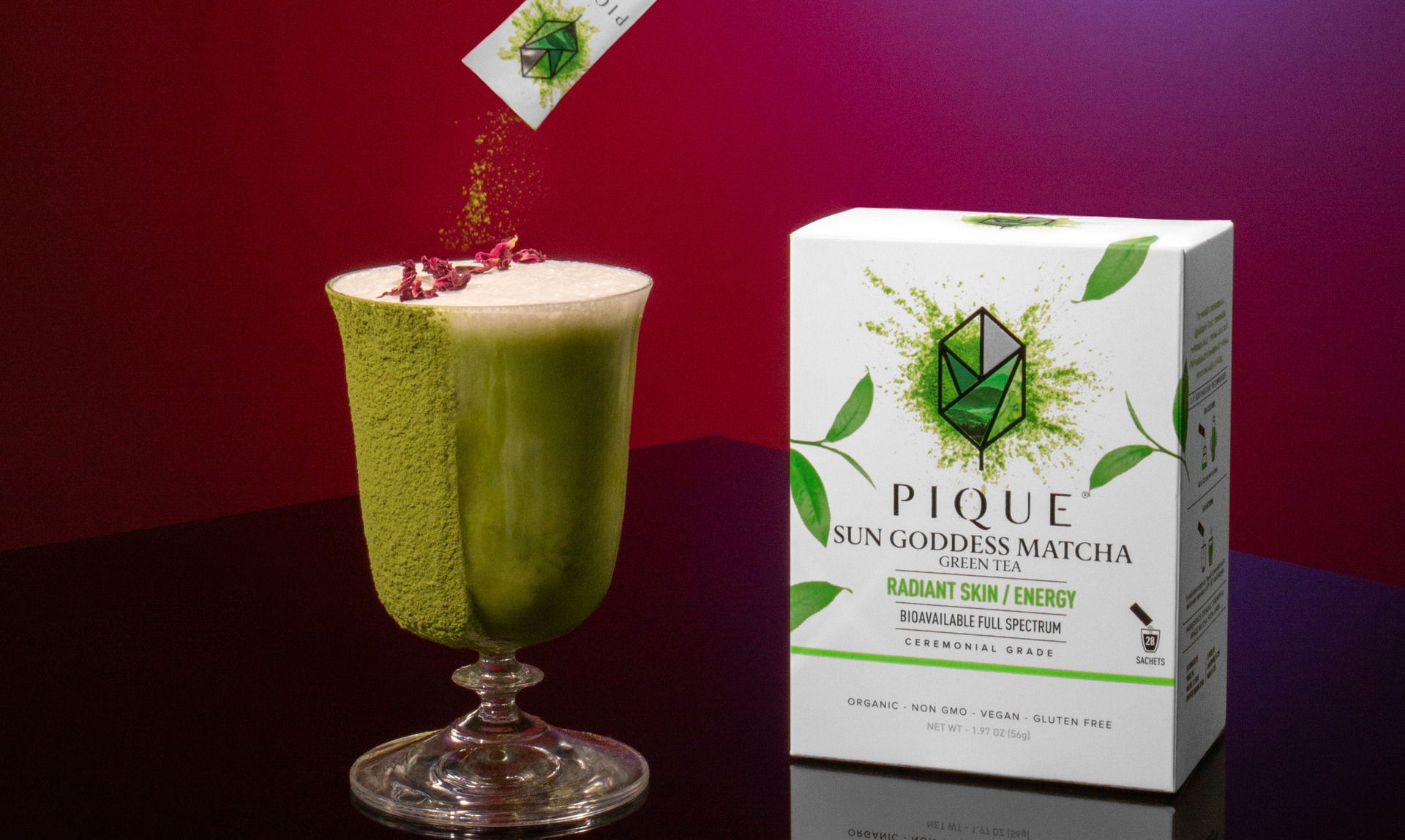
The holiday rush is here—don’t just survive it, glow through it. Start every day with Pique’s Sun Goddess Matcha, the ultimate ritual for calm focus, sustained energy, and radiant skin. Unlike coffee, which spikes and crashes your energy, this matcha keeps you steady, alert, and glowing from within. Crafted by Japanese tea masters in Kagoshima, it’s ceremonial-grade, organic, and shaded longer for higher L-theanine and chlorophyll—meaning more calm, more clarity, and a daily dose of antioxidants that support skin, detox, and immunity.
This isn’t just a drink—it’s your secret to thriving through the season. And now’s the perfect time to stock up or gift it. For a limited time, get up to 20% off for life + free gifts.
✨ Elevate your ritual. Energize your glow.
Maido, Lima: The World’s #1 Restaurant for 2025
In Lima, the greeting “maido,” meaning “welcome” in Japanese, sets the tone for what unfolds inside the restaurant that now tops the world. Maido, led by chef Mitsuharu “Micha” Tsumura, has been named the World’s #1 Restaurant for 2025.
The accolade honors not just its dishes but the entire sensory journey it creates. The restaurant embodies Nikkei cuisine, a fusion of Japanese technique and Peruvian ingredients, and it has transformed from a niche curiosity into a global standard bearer.

The atmosphere inside Maido feels both ceremonial and relaxed. Staff members greet diners in unison before leading them to tables beneath a ceiling of woven ropes that nod subtly to both fishing nets and Japanese design.

What follows is a tasting menu that narrates Peru’s biodiversity through a Japanese lens. Guests find themselves moving from an oceanic course of squid ramen with spicy Amazonian chorizo to a braised short rib so tender it can be eaten with a spoon. Every plate looks like a brushstroke, every bite feels deliberate yet easy. The effect is seamless, as if Japan’s precision had long been waiting for Peru’s corn, cacao, and chili to complete it.

Maido’s elevation to number one is a milestone for Lima. For more than a decade, the city has been on the cusp of global recognition, with established names like Central and Mayta drawing attention. Now, Maido’s win underscores Peru’s emergence as a culinary powerhouse. It is not only about luxury dining; it is about a cultural moment in which fine dining tells national stories.

By weaving together coastal produce, Amazonian herbs, and Andean roots, Maido reminds the world that Peru’s landscape is as varied as its flavors. Look closer and that 50-hour short rib tells a deeper story about patience and transformation. Slow-cooked until the grain dissolves, it reflects the same persistence that carried Tsumura through near closure in Maido’s early years. Guests who dip a spoon into that dish are, in a sense, tasting the restaurant’s own endurance.
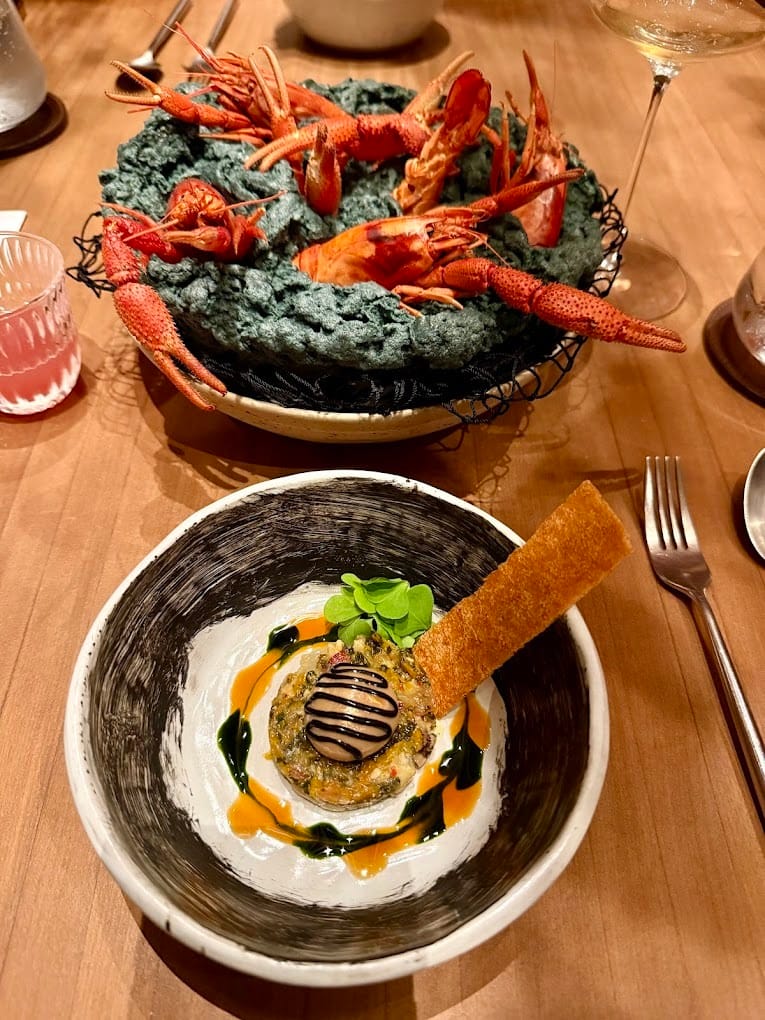
Nikkei cuisine was once a quiet subset, mostly known within Lima’s Japanese-Peruvian community. Tsumura helped lift it to global prominence by showing that culture could live on a plate. Yet even as his tasting menus attract bookings months in advance, his philosophy stays grounded. He calls his cooking “fun dining,” a playful counterpoint to fine dining’s traditional stiffness. The point, he often says, is to make people feel welcome, not watched.
“Maido” is more than a name; it is the restaurant’s full-circle invitation to belong. The ranking amplifies what diners have been whispering for years: that Lima has become one of the world’s great food capitals. Maido’s recognition closes a loop between heritage and innovation, showing how two culinary traditions can fuse without losing their roots. In its glow, both Japan and Peru shine brighter.
Would you fly to Lima just to eat at the world’s #1 restaurant?Click your answer below: |
Spotlight on Zakopane, Poland
Eat
For a meal with mountain magic, settle into Góralski Browar, where hearty Polish comfort food meets craft brewing and panoramic Tatras views. It’s a meeting point of old and new—crispy potato pancakes and dumplings paired with local ales poured against a backdrop of snow-tipped peaks.

Explore
Let the funicular carry you up Gubałówka Mountain for a bird’s‑eye view of Zakopane and the surrounding Tatras. At the summit, souvenir stalls mingle with rustic cafés, and hikers wander into trails that promise endless sky and crisp pine air.

Unwind
Tucked away from the main drag, Karczma Zabi Dwor offers a quieter window into the town’s soul. Wooden beams and flickering candles frame an experience that feels like being welcomed into someone’s home.
Thank you for reading!
How would you rate todays edition of the newsletter? |
Does your car insurance cover what really matters?
Not all car insurance is created equal. Minimum liability coverage may keep you legal on the road, but it often won’t be enough to cover the full cost of an accident. Without proper limits, you could be left paying thousands out of pocket. The right policy ensures you and your finances are protected. Check out Money’s car insurance tool to find the coverage you actually need.