- The Culture Vulture
- Posts
- Battle of the Japanese Newcomers: MOI vs. Sushi Kyu
Battle of the Japanese Newcomers: MOI vs. Sushi Kyu
This issue: London’s Japanese newcomers go head-to-head, a glowing Toronto exhibition, Hawaii’s iconic coffee festival, and New Zealand’s overlooked gem.

Shakira Taylor
November 10, 2025

In partnership with

Hey Culture Clubbies!
London’s Japanese dining scene is heating up again, with two new arrivals redefining how the city eats sushi in 2025. This week we dive into MOI, the design-forward fusion newcomer shaking up Fitzrovia, and Sushi Kyu, Soho’s quietly brilliant counter proving omakase doesn’t need to cost a fortune. One is loud and social, the other calm and exacting. Both are shaping the future of London’s Japanese food culture.
In under 10 minutes we’ll cover:
Battle of the Japanese Newcomers: MOI vs Sushi Kyu
When Light Becomes Art: Inside the Aga Khan Museum’s Dazzling New Show
Kona Coffee Cultural Festival: Hawaii’s Volcanic Brew on the World Stage
Spotlight on Taranaki, New Zealand: Coast, Craft, and Creativity
Let’s get started.
Will A Book Grow Your Business?

No one buys a beach house from selling a book. They buy the beach house from the opportunities the book gets them.
Author.Inc helps experts, executives, and entrepreneurs turn expertise into world‑class books that build revenue, reputation, and reach.
Their team—behind projects with Tim Ferriss and Codie Sanchez—cuts through uncertainty to show whether your book can realistically hit those targets.
Schedule a complimentary 15‑minute call with Author.Inc’s co‑founder to quantify potential ROI from your offers, speaking engagements, royalties, and more.
This isn’t writing advice. It’s a strategic consultation to decide whether now is the right time to put pen to paper.
If it’s a go, they’ll show you how to write and publish it at a world-class level. If it’s a wait, you just avoided wasting time and money.
Battle of the Japanese Newcomers: MOI vs. Sushi Kyu
London’s obsession with Japanese dining shows no sign of cooling.
In 2025, the scene is marked by two types of eaters: those who crave sushi as an immersive ritual served piece by piece, and those who want a modern, social experience where cocktails, design, and artistry share equal billing with the fish.
Sushi Kyu and MOI embody those two instincts perfectly. Sushi Kyu focuses on precision, purity, and the ritual of omakase, while MOI thrives on atmosphere, momentum, and interpretive creativity. Both are new, both are making waves, and both show how London now supports not just traditional, chef-led sushi bars but also restaurants that treat Japanese cooking as an evolving language.
Sushi Kyu: Minimalism with Meaning
Hidden behind a discreet black façade on a narrow Soho street, Sushi Kyu is the sort of restaurant that whispers rather than shouts. With only ten seats at its sleek counter, it’s a room that puts the diner eye to eye with the chef. The world outside disappears once you sit down; the rhythm of service becomes almost meditative.

Led by Chef Mogi and his team, alumni of Cubé Mayfair, where they mastered the discipline of Japanese haute cuisine, the restaurant channels deep training into an experience that feels both luxurious and grounded.

The omakase at Sushi Kyu starts at £70 for dinner and £50 for lunch, which, in London’s current sushi market, counts as strikingly accessible. The menu unfolds as a carefully choreographed journey: an appetiser to awaken the palate, followed by eight pieces of nigiri, a hand-rolled temaki, and dessert.
The signature lineup rotates with the seasons but often includes Scottish salmon sashimi with ponzu and shiso flowers, dishes that marry local produce with classical Japanese presentation. The French red mullet with shredded shiso delivers a subtle contrast—continental fish filtered through the Japanese art of simplicity. One of the most talked-about bites is the prawn nigiri with ikura and green chilli sauce, which balances sweetness, brine, and heat with daring restraint.

Every course comes with a personal touch: staff describe each ingredient with care, explaining where it’s sourced and why it’s chosen. Diners often comment that the experience feels like an education in delicacy and balance. Sushi Kyu’s chirashi don, a bowl of perfectly seasoned rice covered in jewel-like sashimi, has also built a loyal following among those who want artistry without formality.
From the Time Out write-up calling it “the best sushi experience in London for less” to the praise in The Good Food Guide a consistent theme emerges: value, purity, and focus. This is Michelin-quality precision unburdened by price or pretension.

The room reflects that philosophy. Bare walls, pale wood counter, and soft lighting reinforce focus on the fish rather than décor. There’s something intensely satisfying about how stripped-back it all feels, no gimmicks, no noise, only the hush of knife work and the occasional murmur of appreciation.
One surprise, though, is the playful touch of a back-door karaoke room, available for post-meal fun - a Soho nod to Japanese nightlife that unexpectedly bridges worlds. The sake list, too, plays a supporting role: diners can choose curated sake flights, Japanese whisky highballs, or wine options fine-tuned to the delicate seasoning of the fish.
From the pour of sake to the wipe of the counter, signals respect, for food, for diners, for tradition. But its accessibility should also be applauded: it fills the gap between the ultra-premium omakase spots of Mayfair, where £250 dinners are the norm, and the casual sushi spots scattered across the city.
Moi: Energy, Aesthetic and Innovation
If Sushi Kyu is zenlike precision, MOI is controlled chaos—alive, contemporary, and vividly social. Listed by Hot Dinners among London’s hottest new restaurants, MOI represents the city’s gravitation toward creative Japanese fusion, where boundaries are meant to be bent, not simply honored. While details remain emerging, what defines MOI is its energy and design. Imagine a room of sculpted light, sleek stone, and warm brass tones—half restaurant, half stage. Where Sushi Kyu asks for quiet focus, MOI invites chatter, laughter, and experimentation.

The menu at MOI mixes traditional sushi with modern small plates, designed for sharing. While specific dishes are still under wraps in official listings, MOI sits comfortably alongside London’s new generation of stylish Japanese restaurants that serve things like innovative maki rolls, seasonal seafood carpaccios, and grilled skewers matched with bold Japanese-inspired cocktails. With plating that’s sculptural and colourful, with unexpected pairings that keep the meal visually dynamic and light on rules.

MOI’s music, lighting, and crowd contribute as much to the flavor of the night as the food itself. The atmosphere hovers between fine dining and party, craftsmanship without stiffness. For London’s dining scene, saturated with reverent omakase bars, MOI’s sociable approach offers a counterpoint: Japanese dining as celebration rather than ceremony. Its bar program underscores that balance with creative cocktails, sake options, and likely a wine list wide enough to please group diners.

Service at MOI is described as polished but lively, suited to a space that attracts design-conscious guests. Where the chefs at Sushi Kyu interact in silence behind the counter, staff at MOI keep the energy flowing with professional warmth and smile. It embodies London’s appetite for hybrid experiences: culinary precision paired with social ease.

Price-wise, while not inexpensive, MOI seems positioned in the mid-to-high range, appealing to the same diners who might frequent high-design restaurants like Zuma or Roka but want something fresher, more intimate, and less formulaic.
What’s most significant about MOI isn’t any single dish—it’s the overall tone it sets for the city’s evolving Japanese landscape. It signals that Japanese-inspired food in London is no longer the domain solely of minimalism or purist rituals. Instead, it’s inclusive, experimental, and design-driven. That forward-facing attitude, plus its inclusion in lists of London’s “hottest restaurants,” makes MOI emblematic of what the next generation of Japanese dining looks like: intellectually flexible, aesthetically restless, and grounded in fun.
The Verdict
If you want quiet reverence and faultless sushi, an experience where each bite feels handcrafted for you alone, go to Sushi Kyu. But if you crave vibrancy, laughter, and the thrill of something new, MOI will carry you through the night. Either way, London wins: its Japanese scene has never been more alive or more deliciously diverse.
When Light Becomes Art: The Aga Khan Museum’s Most Dazzling Exhibition Yet
The Aga Khan Museum has always been a place where architecture and imagination converge, but for its 10th anniversary, the Toronto landmark has turned its focus to the element that inspired its very design: light.

Light: Visionary Perspectives invites visitors to experience illumination not just as a physical phenomenon but as a universal language. Running from July 13, 2024, through April 21, 2025, this major exhibition fills the museum with radiance, both literal and symbolic. It is a curatorial celebration that spans cultures and generations, allowing light to reveal and the boundaries between art and spirit.

Across the museum’s atrium, collections gallery, and temporary exhibition spaces, twelve large-scale installations reimagine what it means to truly see. Works by internationally renowned artists such as Anila Quayyum Agha, Anish Kapoor, Olafur Eliasson, Kimsooja, Tannis Nielsen, Sanaz Mazinani, and others form a dialogue that moves from the poetic to the utterly transformative. Each installation considers light not merely as matter, but as metaphor: a signal of knowledge, transcendence, unity, and sometimes, uncertainty.

Within these rooms, shadows speak as eloquently as reflections. Perhaps the most hypnotic of these is Anila Quayyum Agha’s A Thousand Silent Moments (Rainforest), a luminous chamber where patterned shadows cascade across walls, floors, and visitors’ faces like woven lace. Here light behaves like memory—fragile, mobile, fleeting—inviting quiet meditation.

Nearby, Anish Kapoor’s mirrored optical disks face each other in a suspended conversation, creating corridors of illusion and color that distort orientation and depth. Walking between them feels like stepping through two visions of the same thought, one real, one imagined. Elsewhere, works by Olafur Eliasson and Mallory Lowe Mpoka evoke the ever-guiding presence of lighthouses. Their pieces conjure light as a metaphor for navigation and hope, translating coastal symbolism into immersive experience.

It is fitting that this exhibition unfolds inside a building designed by Fumihiko Maki, whose granite walls and intricately patterned glass façade were themselves conceived as an homage to light. Throughout the day, sunlight filters through the museum’s mashrabiya-inspired screens, scattering intricate patterns across floors and staircases that shift with every passing hour. The interplay between artwork and architecture ensures that even the corridors become part of the show, alive with texture and changing tones.

On February 23, 2025, the museum hosts Artist Talk: Visionary Perspectives, featuring Tannis Nielsen, Ala Ebtekar, and Sanaz Mazinani. The discussion promises to unravel how each artist approaches light as muse and method, offering rare insight into their creative worlds. It is a chance to meet the thinkers behind the luminance and to understand how cultural heritage shapes the perception of brilliance and shadow alike.

Tickets start at $20, with discounts for students, seniors, and Friends of the Museum. To plan your visit, see agakhanmuseum.org/whats-on/light-visionary-perspectives. Step inside and watch the ordinary dissolve into radiance. The exhibition promises not only to be illuminating—but transformative in every sense.
Stay Calm, Energized & Radiant This Season
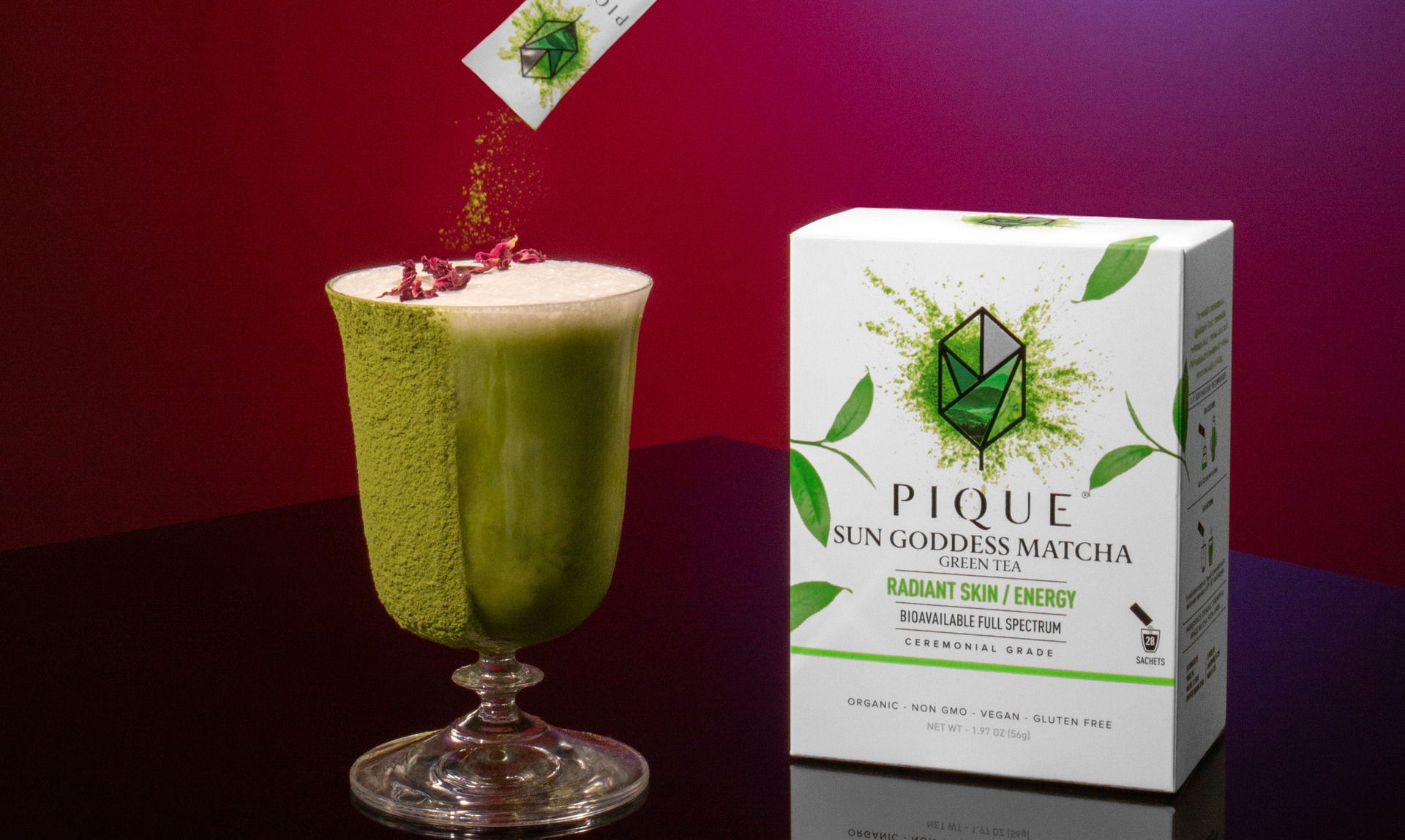
The holiday rush is here—don’t just survive it, glow through it. Start every day with Pique’s Sun Goddess Matcha, the ultimate ritual for calm focus, sustained energy, and radiant skin. Unlike coffee, which spikes and crashes your energy, this matcha keeps you steady, alert, and glowing from within. Crafted by Japanese tea masters in Kagoshima, it’s ceremonial-grade, organic, and shaded longer for higher L-theanine and chlorophyll—meaning more calm, more clarity, and a daily dose of antioxidants that support skin, detox, and immunity.
This isn’t just a drink—it’s your secret to thriving through the season. And now’s the perfect time to stock up or gift it. For a limited time, get up to 20% off for life + free gifts.
✨ Elevate your ritual. Energize your glow.
Kona Coffee Cultural Festival: Hawaii’s Volcanic Brew and Its Global Impact
Every November, Hawaii’s Big Island hums with the earthy aroma of freshly roasted beans as the Kona Coffee Cultural Festival begins its annual celebration. This ten-day event is no ordinary gathering; it is a tribute to nearly two centuries of coffee cultivation on volcanic slopes that produce one of the world’s most revered brews. The festival is the state’s oldest food celebration, and through its lantern parade, art strolls, and farm tours, it showcases how an agricultural craft evolved into a cultural identity.

Kona coffee is grown exclusively along the narrow belt of the Hualalai and Mauna Loa volcanoes, an area blessed with rich mineral soil and shifting microclimates. The mornings are sunny, the afternoons misty, and the nights cool—conditions that coax the beans into developing their signature characteristics: a medium body, delicate floral aroma, and subtle sweetness. Every cup mirrors its environment, a liquid reflection of lava rock, ocean mist, and tropical air. No two farms ever yield beans that taste quite the same, giving each brew its own fingerprint of the island.

Mauna Loa Volcano
The festival’s beating heart is the Kona Coffee Cupping Competition, a ritualistic blind tasting that transforms coffee into performance art. Experts gather around neatly aligned cups, slurping each sample with a sharp inhale to aerate and analyze every nuance of aroma, flavor, and aftertaste. This act, called cupping, is the coffee world’s equivalent of a sommelier’s swirl. In the quiet clinking of spoons and murmured notes, judges chase clarity, texture, and balance, ranking the finest expressions of the year’s harvest. For many visitors, witnessing this precision is a revelation that coffee can be judged with the same reverence as fine wine.

Away from the competition, the festival opens like a community fair. The streets fill with Hawaiian music and hula performances; handcrafted jewelry and wooden art line the stalls. Educational exhibits trace the journey from seed to cup, honoring the immigrant farmers who first cultivated the rugged slopes in the 19th century. Even entry becomes a keepsake. The collectible festival button, redesigned each year, is both admission and artwork, reflecting how art and agriculture intertwine here.

Look closer and the sense of scale shifts. Despite its global fame, true Kona coffee makes up less than one percent of the world’s total coffee supply. That rarity magnifies its allure. Each sip connects drinkers to a small patch of earth and a community dedicated to preserving it. The festival’s endurance since its founding in 1970 is a testament to that devotion, turning an agricultural product into a symbol of heritage and pride.
For locals, the event is about lineage as much as livelihood. For travelers, it is an immersion into Hawaii’s layered identity, where volcanic geology and multicultural roots meet in a single fragrant cup. The Kona Coffee Cultural Festival reminds the world that authenticity often blooms in small places, steeped in labor, history, and a hint of island magic.
Would you try blind coffee tasting in Hawaii?Choose one below: |
Spotlight on Taranaki, New Zealand
Eat
Start your Taranaki adventure at Shining Peak Brewing, where small-batch beer meets big local flavour. This award-winning spot feels equal parts relaxed taproom and culinary experiment—think smoked eel toasties alongside crisp pale ales that echo the mountain’s freshness.

Explore
Lace up your shoes (or hop on a bike) for the Coastal Walkway, a 13-kilometre path tracing New Plymouth’s dynamic shoreline. The route is a slow-burn spectacle with waves tumbling over dark volcanic rock, the Tasman Sea on one side and distant Mount Taranaki rising over green fields on the other.

Govett Brewster Art Gallery
Unwind
For a dose of modern inspiration, wander into the shimmering façade of the Govett-Brewster Art Gallery. This contemporary landmark hosts rotating exhibitions that challenge and delight, connecting local creativity with global voices. Its architecture alone, sculptural and silvered, reflects both the sky and the sea,
Thank you for reading!
How would you rate todays edition of the newsletter? |
Does your car insurance cover what really matters?
Not all car insurance is created equal. Minimum liability coverage may keep you legal on the road, but it often won’t be enough to cover the full cost of an accident. Without proper limits, you could be left paying thousands out of pocket. The right policy ensures you and your finances are protected. Check out Money’s car insurance tool to find the coverage you actually need.