- The Culture Vulture
- Posts
- Mountain vs The Dover: London’s Two Faces of Fine Dining
Mountain vs The Dover: London’s Two Faces of Fine Dining
This issue: a showdown between smoky comfort and Mayfair glamour, memory-haunted landscapes, cardboard-tube architecture reborn, and a slice of Sri Lankan beach magic.

Shakira Taylor
November 27, 2025

In partnership with

Hey Culture Clubbies!
This edition brings you a feast of contrasts, from wood-smoke and sea spray to marble floors and quiet contemplation. First up: a full tilt face-off between two of London’s most buzzed-about restaurants: Mountain and The Dover, where flame meets finesse, salt meets silver, and luxury wears two very different faces. After that, we’ll wander into worlds of art, architecture, and far-off beaches — all with the same appetite for imagination.
In under 10 minutes we’ll cover:
Mountain vs The Dover: Mayfair’s New Glamour vs Soho’s Spider-Crab Obsession
A gallery trip into illusion and memory
An architectural ode to cardboard, hope, and rebuild
A coastal escape to golden beaches and palm-lined sunsets
Let’s get started.
The daily health habit you’ll actually stick with…

This time of year, it’s SO hard to stay in control of your health.
Holiday travel (and meals!), big family gatherings, dark and cold days, it’s easy to skip that workout, sleep in later than you should, or have just one more cookie.
That’s why you need a daily health habit that’s easy to stick with.
Meet AG1: With just one quick scoop every morning, you’ll get over 75 ingredients that help support your immune health, gut health, energy, and close nutrient gaps in your diet.
Right now is the best time to get started - with every new subscription, they are giving away $126 in free gifts for the holidays.
Give AG1 a try today and take control of your health this holiday season.
Mountain vs The Dover: London’s Two Faces of Fine Dining
London’s restaurant pendulum is swinging harder than ever between glittering formality and elemental fire.
On one end: Mountain, Tomos Parry’s Soho temple to Basque technique and British produce, where wood smoke is the seasoning and spider crab is a religion. On the other: The Dover, a Mayfair debut from Gordon Ramsay’s group, housed in the former 20 Berkeley space, reinvented as a study in champagne glamour and meticulous hospitality. They seem almost designed to provoke comparison—one earthy, primal, and roaring; the other elegant, seductive, and sculpted. Yet both speak to what modern luxury means in London today: how we spend to feel, smell, and taste something unforgettable
Mountain: Smoke, Salt, and Soul in Soho
Mountain arrived in 2023 as Tomos Parry’s third act after Kitty Fisher’s and the Michelin-starred Brat. It sits on Beak Street in a former Victorian bank, now stripped back and reanimated by wood, stone, and the scent of charcoal. The space carries the mood of a Basque txoko - rowdy, communal, elemental - but elevated with Soho swagger. Tables line a glowing central kitchen, flames flickering behind glass where whole turbot roast on metal racks.
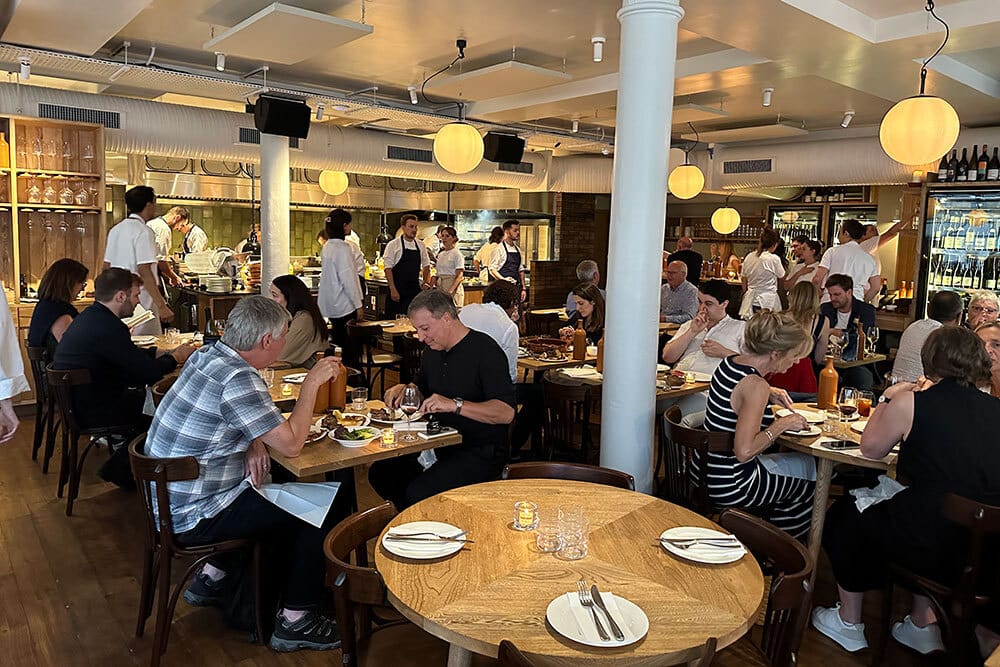
The menu reads like a riddle of land and sea in thick Welsh handwriting: spider crab omelette, wood-grilled bread with anchovy, whole pink bream presented head-on, grilled lamb chops glistening with smoke oil. Every plate feels like an event. That spider crab dish is the unofficial signature. The meat is pulled, sweet and saline, and folded into a warm, soft egg custard cooked in its shell. It’s served with a spoon and reverence. Cutting into it is like cracking the code of Parry’s ethos: seafood treated with the care usually reserved for caviar, but served with rustic immediacy.
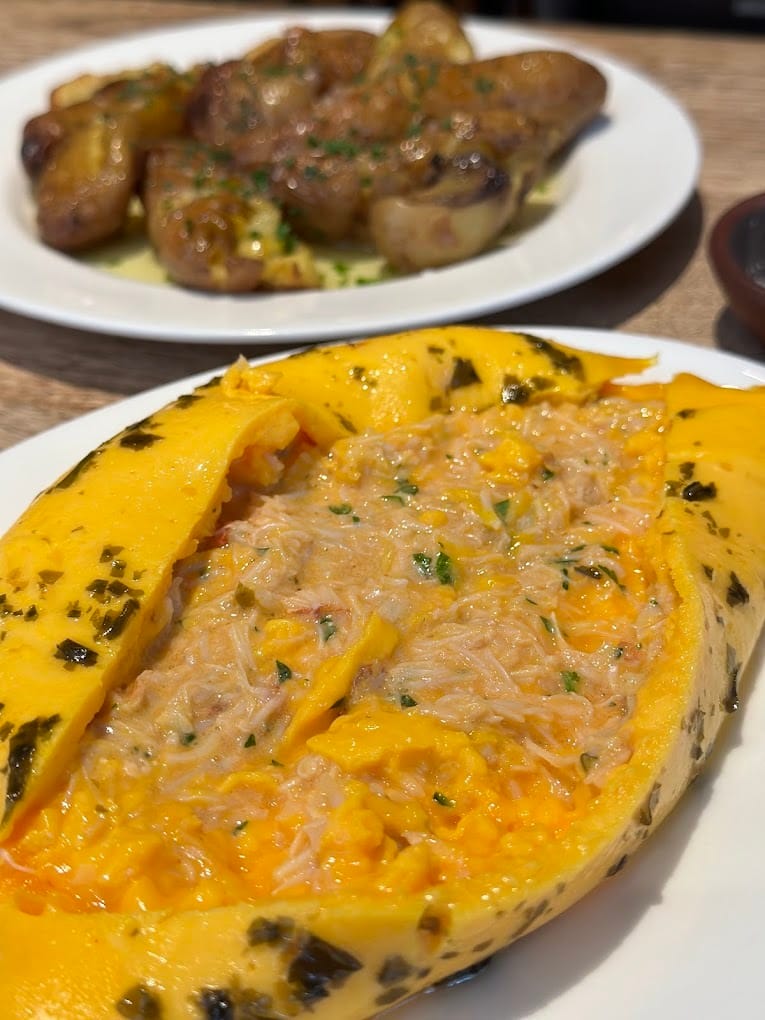
Famed spider crab omlette
The turbot, meanwhile, has become an institution in itself: a nod to his Brat fame, charred skin giving way to gelatinous flakes, dressed simply with olive oil and salt. Portions are bold but not oversized; they’re for sharing, lingering, and dipping crusts of chewy house bread into the juices. The drinks list is unpretentious but clever, sherries and Galician whites next to natural reds from the Loire.

Service matches this balance of warmth and control: casual greetings, confident pacing, no unnecessary ceremony. Prices hover in the mid-to-high range (think £16 for spider crab omelette, £80 for whole turbot to share), yet there’s a democratic energy that keeps the room grounded. Loud conversations bounce off bare walls, chefs grin through the haze of smoke, and the night hums with life.

Parry’s cooking has often been about restraint through fire. At Mountain he doubles down. His ingredients, Pembrokeshire crab, Welsh lamb, Cornish fish, carry provenance that feels personal. Flame coaxes what other chefs might glaze or saucify. The results are both ancient and avant-garde, speaking to a London crowd that now craves authenticity over opulence. You come here not to perform dining, but to lose yourself in it.
The Dover: Cocktail-hour Opulence in Mayfair
Mountain roars, The Dover purrs. Gordon Ramsay’s newest jewel opened in early 2024, replacing the short-lived 20 Berkeley with something altogether slicker and more self-assured. Named after the sea-facing white cliffs (a subtle nod to Britain at large), the restaurant draws on English seafood and French technique, interpreted through a Mayfair lens of buttery indulgence. Step through the double doors and you’re greeted by marble floors, plush banquettes in pale blue, lighting that flatters every complexion, and service that operates with invisible precision.

This is an experience designed to be cinematic. The bar gleams under mirrored glass, the open kitchen hums with quiet concentration, and everything, from the polished silverware to the heavy linen napkins, whispers control. The menu reads elegantly compact, anchored by Dover sole (grilled or meunière), Cornish crab tartlet with lemon sabayon, and a glossy lobster thermidor that straddles comfort and costume. Even the vegetables arrive like luxury goods: buttery Jersey Royals draped in wild garlic, or a side of broccoli crisped in brown butter and almonds.
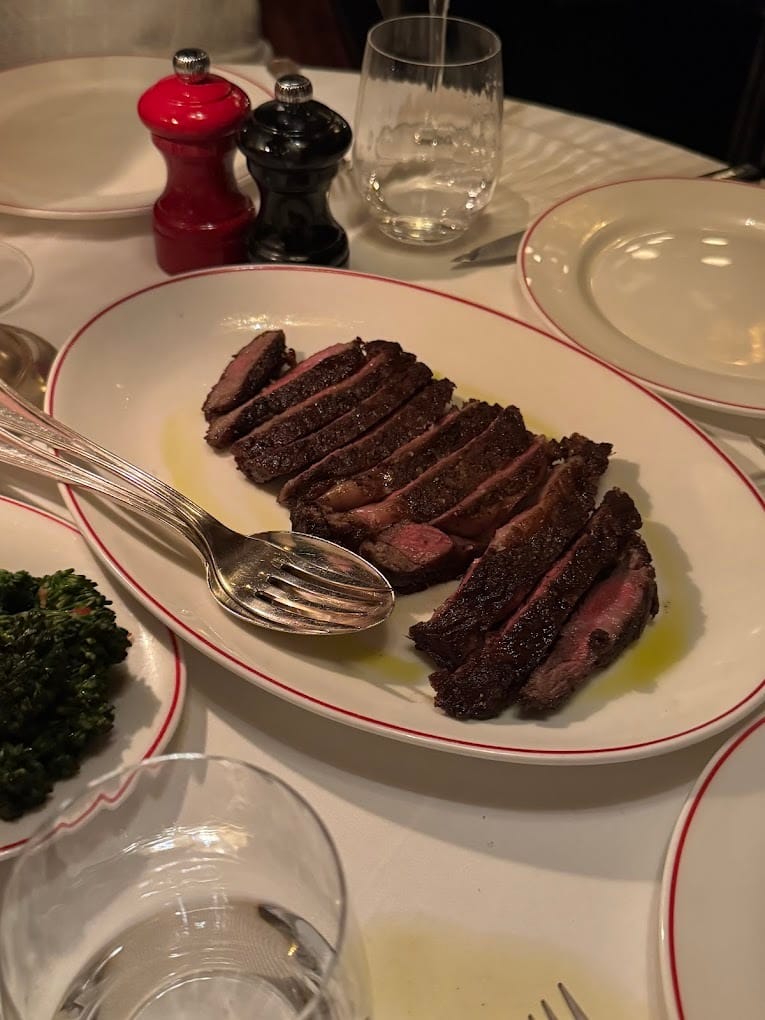
Dinner at The Dover is a lesson in choreography. The servers glide rather than walk. The sommelier appears before you think to ask. Dishes arrive under silver cloches, then unveiled with synchronized flourish. Yet it never feels stiff. Ramsay’s empire has perfected that dance where diners feel both indulged and respected. There’s a rosé-tinted nostalgia for hotel dining, updated for today’s Instagram-polished appetites.

Prices remind you you’re in Mayfair: a Dover sole sits around £68, caviar upgrades start near triple digits. Yet the clientele: city financiers, Knightsbridge couples, visiting Americans, expect it. And in return, they get perfectionism. The soups are glossy, the sauces mounted with absurd amounts of butter, and every plate seems to have an architectural curve to it. If Mountain’s fire is organic chaos, The Dover’s luxury is engineered calm.

Beneath the surface, though, Ramsay’s kitchen is still looking outward. The Dover’s chef de cuisine pulls subtle cues from French Riviera dining: saffron in the shellfish bisque, yuzu butter hinting underneath scallops, the occasional Japanese whisky sauce appearing beside wagyu carvery. It’s all filtered through the house discipline of the Ramsay brand: formal but current, glamorous with restraint. Where Parry’s brilliance is about texture and touch, The Dover’s is about temperature and balance. Every plate lands at just the right moment, neither too hot nor too posed.

The Verdict
Soho’s Mountain is sensory—wood, smoke, salt, noise—built for those who equate good food with presence. You smell like the kitchen when you leave, and that’s part of the badge of honor. The Dover, conversely, is curated calm: scent-controlled, air-conditioned, acoustically tuned. Its pleasure lies in exactness rather than surrender. Every detail at The Dover is designed to make you feel extraordinary; every bite at Mountain reminds you of what’s ordinary but essential.
Even their design language captures opposing moods. Mountain’s brickwork and exposed vaulting give the impression of something carved from the earth; The Dover’s soft color palette evokes a seascape viewed through champagne bubbles. Parry’s team chat across tables, plates casually dropped mid-conversation. Ramsay’s crew move like clockwork, synchronizing sauce spooning to a silent waltz. Both succeed utterly in being what they promise: one rawly democratic, the other polished to a high gloss.
Together, they define the poles of London dining in 2024: the primal and the polished, the flame and the finesse. Somewhere between them lies the city’s culinary truth, that great luxury now comes not from excess, but from intentionality.
Whether you choose the mountain or the shore, London will feed you its best self, one plate at a time.
Noémie Goudal: And yet it still moves
If landscape could whisper its prehistory, it might sound like a Noémie Goudal installation. The acclaimed French artist, known for creating illusionistic environments that sit between fact and fiction, brings her latest solo exhibition And yet it still moves to Edel Assanti Gallery in London. Opening beginning 10th October until 19th December, the show unfolds as a meditation on what the Earth remembers, and what it hides.
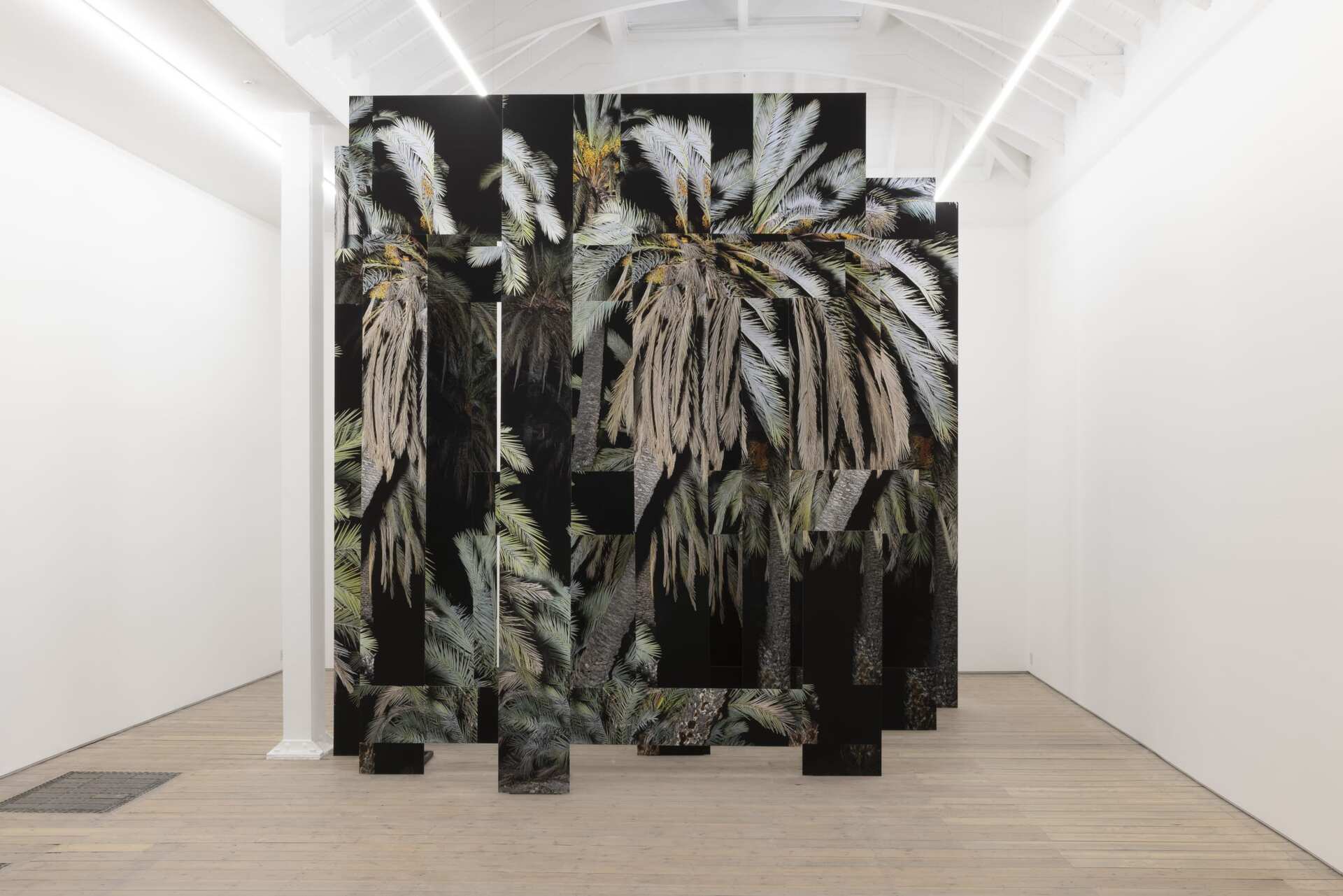
Across its rooms, Goudal’s art invites you to look twice, and then again. Vast photographic prints appear at first to capture an untouched wilderness, but closer inspection reveals subtle seams where constructed sets meet real terrain. The result is disorienting: a landscape both authentic and artificial, both documented and staged. It is a visual argument about how we perceive what is “natural.” Her pieces often begin with an architectural intervention—scaffolds or mirrored panels assembled in remote sites—then photographed or filmed until the constructed and the organic fuse. Viewers are left to navigate that delicate overlap, questioning their own certainty about what constitutes an image of truth.

This blurring of boundaries is not just aesthetic but philosophical. According to the Centre Pompidou’s profile of Goudal, her recent work draws upon research in ecology, anthropology, and paleoclimatology. Through these disciplines, she examines “deep time,” juxtaposing fleeting human presence with the immense scale of geological transformation. In And yet it still moves, glaciers, deserts, and rainforest canopies become metaphors for the planet’s shifting epochs. Each scene is both a construction and a revelation, pulling us between imagination and evidence, emotion and intellect.
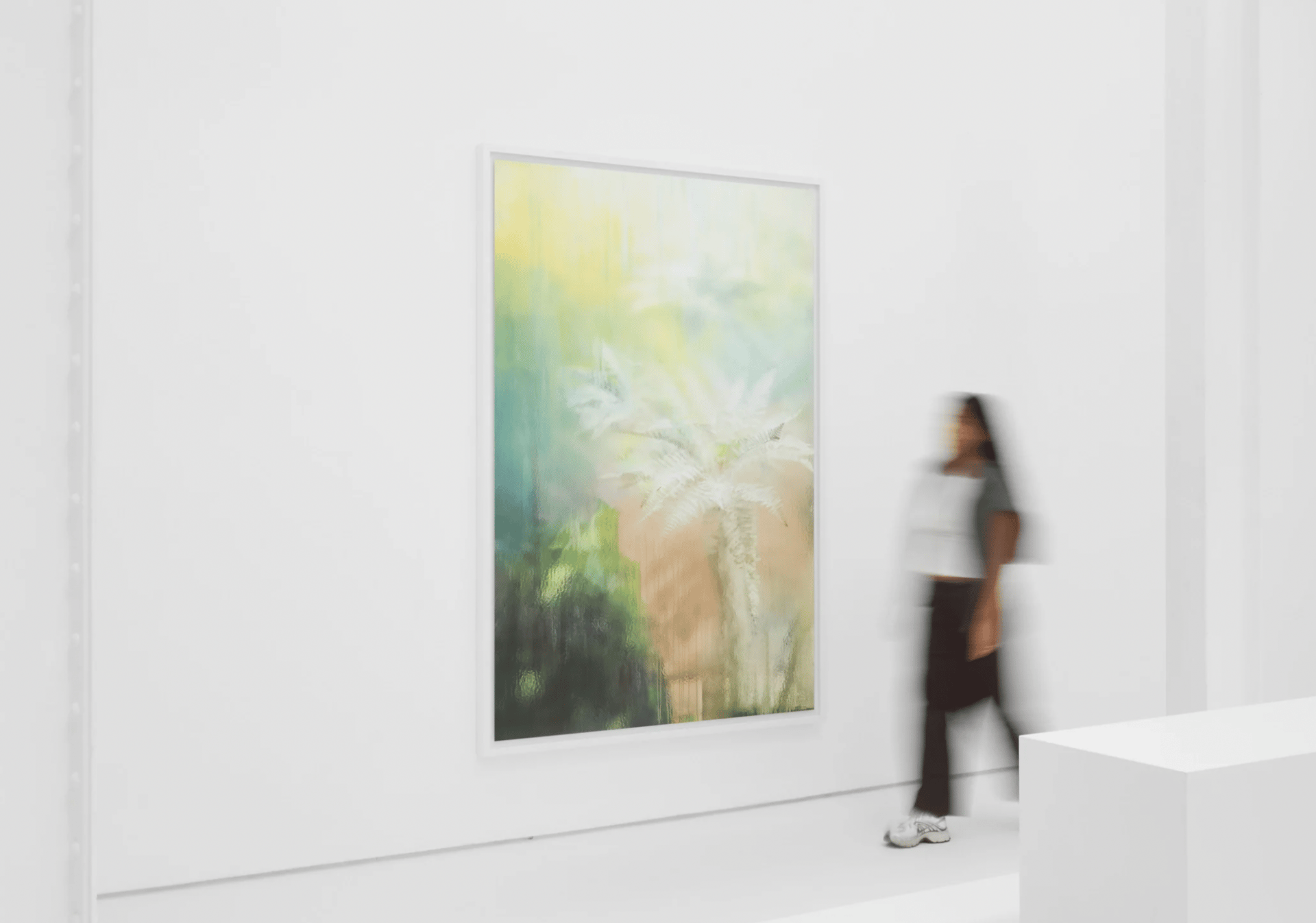
The architectural ambition of Goudal’s installations transforms the gallery into a cinematic journey. Large-format photographs stretch wall to wall; films loop quietly in darkened chambers; sculptural fragments extend the imagery into three dimensions. Her practice thrives on this interplay of mediums. The works reveal their own creation—sometimes exposing the support structures or photographic seams—reminding visitors that illusion is always collaborative. You observe not only a landscape, but also the human desire to reconstruct and claim it. That self-awareness, critics have noted, gives her work its “mesmerizing” clarity and purpose.

As environmental art increasingly grapples with climate anxiety, Goudal’s approach stands out for its measured wonder rather than alarm. Her pieces contemplate deep geological forces without resorting to dystopia. Instead, they encourage reverence for the unseen continuity of the planet. The still image becomes a slow conversation with time itself. According to Edel Assanti, the exhibition’s title—borrowed from the phrase attributed to Galileo—reflects the persistence of movement even within apparent stillness. Like the Earth’s rotation, Goudal’s practice insists on imperceptible change as the essence of existence.

Visitors can expect an experience somewhere between expedition and dream. As you move through the gallery, shadows ripple across printed landscapes, mirrored surfaces double your reflection, and the boundaries separating nature from human intervention dissolve. The illusion does not aim to deceive but to sharpen perception. Goudal’s work has long been praised for this effect: it asks us to look at the world as both construction and miracle. In a moment when the natural environment feels precariously finite, And yet it still moves offers a rare kind of reassurance—the world is still turning, still echoing its ancient rhythms, still capable of renewal if we choose to see it clearly.
30% off Medik8 Starts NOW

Black Friday is here, but these deals won’t last long! Shop Medik8 and save 30% off your must-have products*
*Terms & Conditions Apply
Shigeru Ban’s Paper Tube Architecture: Disaster Relief Meets Design
In the world of architecture, cardboard hardly suggests permanence.
Yet Shigeru Ban, Pritzker Prize laureate and design innovator, has built a career proving that paper can do more than wrap or protect. His paper tube structures reimagine shelter at its most essential: low-cost, quick to raise, and strikingly elegant. What began as an emergency response after the 1995 Kobe earthquake has matured into a global design philosophy, one where sustainability and dignity hold equal weight.
Ban’s key material is disarmingly simple. The tubes, made from recycled cardboard, become columns, walls, and even roof beams. Each one is treated to resist fire and moisture, transforming a fragile everyday item into a dependable building block. They slide into position by hand, with joints and connections designed to be built by unskilled volunteers. In disaster zones where time, materials, and expertise are scarce, that detail changes everything. Relief housing becomes both structurally sound and achievable by the very communities who need it.

His Paper Log House marked the turning point. First installed in Kobe to house earthquake survivors, it used everyday local components to remarkable effect. Ban’s resourcefulness extended all the way down to the foundations: beer crates filled with sandbags served as footings, allowing the house to rest secure on uneven ground while remaining fully recyclable. That “look closer” moment exemplifies his ethos—use what’s at hand, with intelligence and humility. Over time, versions of the Paper Log House have appeared in disaster-hit areas from Turkey to the Philippines, adapting to local climates and materials while keeping the same spirit of compassion through design.

Ban’s structures are not temporary in the usual sense. Some have far outlived their first mission. The Cardboard Cathedral in New Zealand, conceived after the 2011 Christchurch earthquake, was meant as an interim place of worship. Years later, its soaring paper columns and translucent polycarbonate panels remain not only intact but embraced as a permanent landmark. Communities that were meant to move on decided instead to keep these buildings, drawn by their calm geometry and honest materiality. The aesthetic of plain cardboard revealed a quiet resilience that mirrored their own recovery.

Technically, the success lies in rigorous testing. Each tube is engineered for stability, measured against wind, water, and seismic pressures. The structures meet codes that rival those of conventional steel or timber. Ban expands what architecture can express: durability becomes an act of thought rather than cost, and beauty emerges from the rhythm of repetition and light. He shows that sustainability need not sacrifice sensuality; the warm texture of paper complements the modular logic that defines his spaces.

The deeper innovation may be social. By designing systems that can be assembled without professional crews, Ban reclaims architecture for people. Shelter in crisis is not only about roofs but about participation and agency. His buildings invite volunteers, residents, and students to build together, embedding comfort in community action. It is humanitarianism constructed through design language.

Paper tubes might once have symbolised temporary fixes. In Ban’s hands they signal continuity between emergency relief and long-term vision. The cardboard column becomes both a technical solution and a moral gesture, a reminder that even the simplest material, treated with care, can hold humanity upright.
Would you feel comfortable living in a house made of cardboard tubes if you knew it was safe and sustainable?Choose an option below: |
Spotlight on Mirissa, Sri Lanka
Eat
On Sri Lanka’s southern coast, Mirissa’s beach cafés serve the island’s spirit with every bite. Try freshly caught tuna grilled over coconut charcoal at Zephyr Restaurant & Bar, or share a seafood platter under swaying palms at Salt Mirissa.

zephyr restaurant
Explore
Mirissa’s crescent-shaped beach curves around crystal shallows ideal for swimming, surfing, and snorkeling. When the waves settle, join a dawn whale-watching cruise from the harbor: December to April brings blue whales rising just beyond the bay.

Unwind
Step east to Secret Beach, a tucked-away cove behind rocky headlands where turquoise pools shimmer between coral and sand. It is quieter here, perfect for snorkeling with parrotfish or reading beneath a palm.
Thank you for reading!
How would you rate todays edition of the newsletter? |
Where to Invest $100,000 According to Experts

Investors face a dilemma. Headlines everywhere say tariffs and AI hype are distorting public markets.
Now, the S&P is trading at over 30x earnings—a level historically linked to crashes.
And the Fed is lowering rates, potentially adding fuel to the fire.
Bloomberg asked where experts would personally invest $100,000 for their September edition. One surprising answer? Art.
It’s what billionaires like Bezos, Gates, and the Rockefellers have used to diversify for decades.
Why?
Contemporary art prices have appreciated 11.2% annually on average
…And with one of the lowest correlations to stocks of any major asset class (Masterworks data, 1995-2024).
Ultra-high net worth collectors (>$50M) allocated 25% of their portfolios to art on average. (UBS, 2024)
Thanks to the world’s premiere art investing platform, now anyone can access works by legends like Banksy, Basquiat, and Picasso—without needing millions. Want in? Shares in new offerings can sell quickly but…
*Past performance is not indicative of future returns. Important Reg A disclosures: masterworks.com/cd.