- The Culture Vulture
- Posts
- Motorino: Fitzrovia’s Fresh Spin on London-Italian
Motorino: Fitzrovia’s Fresh Spin on London-Italian
This issue: Italy arrives in Fitzrovia, David Hockney's new art, balloons fill New York's Sky, and a slice of Mexican magic.

Shakira Taylor
November 29, 2025

In partnership with

Hey Culture Clubbies!
London’s latest Italian import lands in Fitzrovia, and it’s more than a pasta shop — it’s a mood. Motorino, born from the partnership of chef Luke Ahearne (formerly of Lita) and restaurateur Stevie Parle (of Town and Pastaio fame), sets itself apart by blending polished style, credible culinary chops, and a “London-Italian” sensibility tuned for now. It’s ambitious without show-off, familiar without cliché — and for Londoners craving comfort with a twist, it might just be the most satisfying new opening of the season.
In under 10 minutes we’ll cover:
Motorino — where London-Italian comfort lands
David Hockney: Some Very, Very, Very New Paintings
The Macy’s Parade’s Giant Balloons
Spotlight on: Bacalar, Mexico
Let’s get started.
Save 30% for Black Friday at Medik8!

Black Friday is here, but these skin care deals won’t last long! Rediscover your skin's youthful glow with Medik8, the British clinical skincare brand, delivering results without compromise. There is no better time to shop Medik8’s best-selling, results driven skincare at 30% off!*
*Terms & Conditions Apply
Motorino: Fitzrovia’s Fresh Spin on London-Italian
London’s appetite for modern Italian rarely dims, and the most interesting corner of the scene right now sits between hype and hard evidence.
Motorino in Fitzrovia, newly open and cooking with confidence, a joint effort from chef Luke Ahearne and restaurateur Stevie Parle that treats Italian as a living language spoken with a London accent. In a city that rewards good taste over grand gestures, accessible luxury means something very specific: value you can feel in the quality of ingredients, finesse you can taste in the pasta and sauces, and prices that invite frequent visits rather than special-occasion scheduling.
Motorino
Motorino is very much a now proposition. The Fitzrovia room sits within a new-build and reads glossy rather than fussy, the kind of urban polish that suits a menu rooted in Italian structure but filtered through British and Irish sourcing. Chef Luke Ahearne, who previously earned a Michelin star at Lita, has joined forces with Stevie Parle, the owner behind Town in Covent Garden, to present what they call London Italian.

The term signals freedom to reinterpret without sacrificing the rhythm of an Italian meal. Snacks, starters, primi, mains, sides, and dolci arrive in familiar order. What distinguishes the place is the equilibrium of high-end technique and everyday pricing, a combination that almost always wins in this city when done right.

Mains sit roughly between £14 and £48, and that spread is intentional. It welcomes you in for a bowl of pasta and a cocktail, or invites you to go large on steak without tipping into special-occasion territory. Reviews have singled out Motorino’s well executed pasta and pricing that feels notably more approachable than Ahearne’s previous venture, and the overall impression is one of ambition applied with restraint rather than extravagance.

Service matches this balance of warmth and control: casual greetings, confident pacing, no unnecessary ceremony. Prices hover in the mid-to-high range (think £16 for spider crab omelette, £80 for whole turbot to share), yet there’s a democratic energy that keeps the room grounded. Loud conversations bounce off bare walls, chefs grin through the haze of smoke, and the night hums with life.

That balance shows up immediately in the way the team builds the menu. Start with Wildfarmed Focaccia at £8, a signal that flour and oil are treated with care, and that bread service is something to enjoy, not skip. Small plates are not afterthoughts either, with Chopped Dexter at £18 offering a raw, knife-work expression that sets up a meal of texture and bite. The signature pasta list reads like a conversation between tradition and a confident kitchen. Agnolotti Carbonara at £24 is a playful reframing of a staple, respecting the richness and punch of the original while making the dish their own in filled-pasta form. Gigli al Gin brings sculptural curls and a gentle aromatic lift, a good example of the restaurant’s willingness to play with format.

Mains stretch into deeper comfort. Peposo beef cheek nods to the Tuscan black pepper stew, here channeled into a slow-cooked cut designed for satisfaction. If you want to take it up a notch, the Rib-Eye Belted Galloway at £48 presents a British breed that has become a hallmark of quality on London menus, and its price point demonstrates the restaurant’s accessible luxury thesis in action. Even the raw bar notes carry polish, with bluefin tuna carpaccio making a cameo as a luxe flourish that remains within the room’s overall sense of reason.
A glossy Fitzrovia setting that never feels stiff, plates that move from rustic to refined without losing plot, and cocktails that keep things bright are how Motorino makes good on the promise.
Defining the London Italian
So how would we define the bar Motorino sets for any restaurant entering this accessible luxury lane:
First, price transparency that feels generous relative to culinary ambition. Motorino’s mains run from £14 to £48, with significant interest centered between the low and mid range.
Second, a menu that traces an Italian arc while speaking with local voice, whether through British and Irish ingredients or gentle reinterpretations like agnolotti in carbonara clothes.
Third, a beverage program that nods to the city’s cocktail culture, here represented by a £12 list leaning into Italian aperitivo spirits as natural partners for the cuisine. For any newcomer called Marta to compete, this trio of clarity, structure, and taste would be the baseline from which distinctiveness emerges.

Ahearne’s Michelin-starred tenure at Lita gives Motorino credibility on technique and standards, while Stevie Parle’s Town in Covent Garden supplies hospitality muscle and understanding of how Londoners like to eat when they want quality without ceremony. Reviews have noticed that the pastas are not just stylish; they are properly worked, with the attention to texture that separates good from great.
Wildfarmed Focaccia as a ritual rather than an add-on, a £24 pasta that stands as the star, and cocktails that sit comfortably at £12 are the markers that keep people coming back.

Snacks and starters give momentum without forcing an overspend, primi deliver craftsmanship at a price many will consider the main event, and larger plates like Peposo beef cheek and the Rib-Eye Belted Galloway allow for amplitude when the table wants it. The bluefin tuna carpaccio reads as a flourish rather than a flex, and that tone keeps the room balanced. It all adds up to a proposition that feels sophisticated yet welcoming, an equilibrium that London’s Italian scene has been refining for years and that Motorino articulates clearly.
The partnerships are smart, the pricing is calibrated, and the menu finds playfulness without losing the thread of Italian cooking.
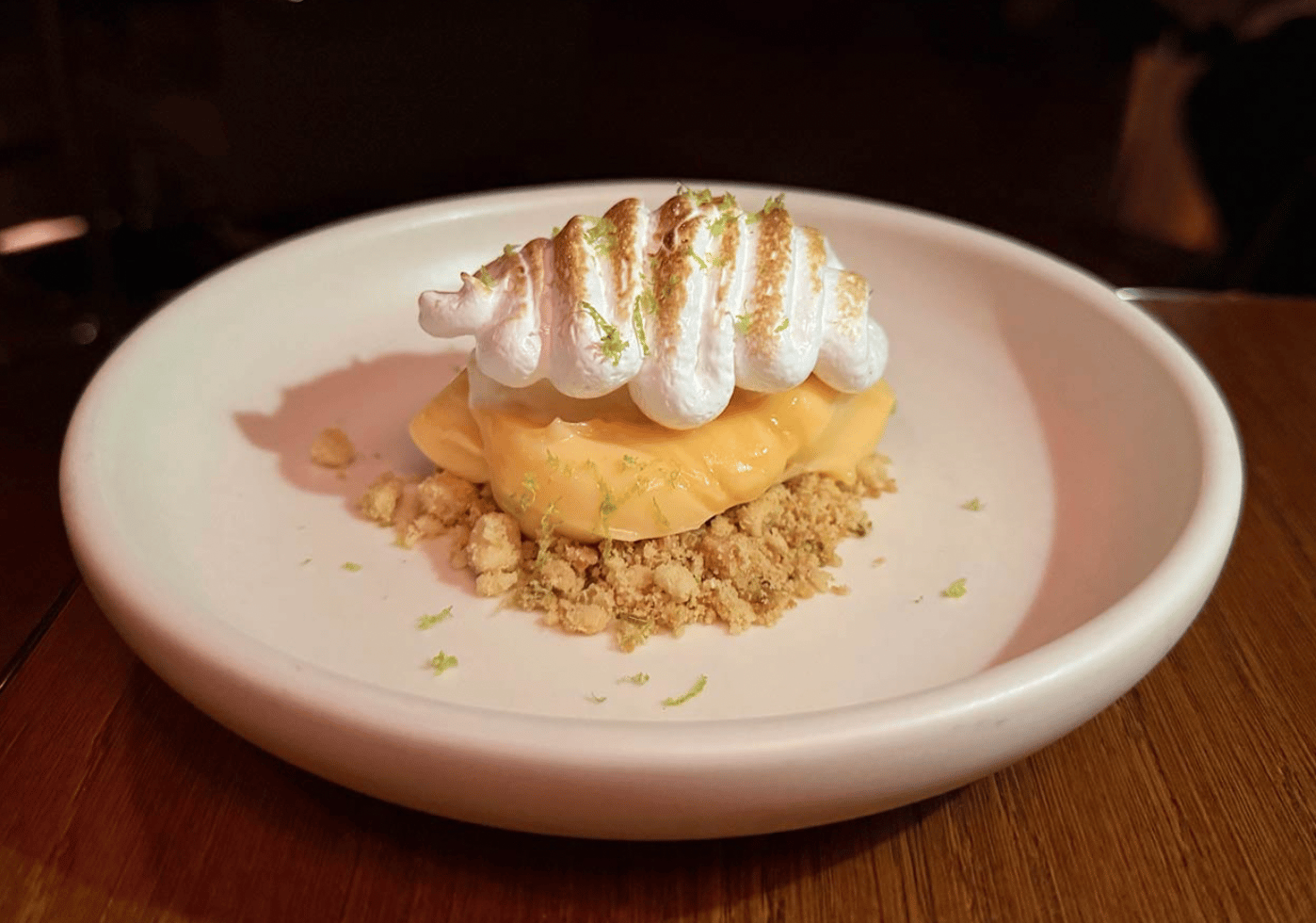
The Verdict
For diners in search of modern Italian that feels polished but not precious, Motorino is the clear choice right now. It is open, it is confident, and it hits the sweet spot where technique, taste, and price meet. Start with the Wildfarmed Focaccia, then let the Agnolotti Carbonara or Gigli al Gin do what good pasta should do, and build from there into Peposo beef cheek or the Rib-Eye Belted Galloway if the table calls for it.
David Hockney: Some Very, Very, Very New Paintings
Walk into Annely Juda Fine Art’s new Hanover Square space this winter and you step into the restless imagination of one of Britain’s greatest living artists. David Hockney, now 87, has titled his latest show Some Very, Very, Very New Paintings Not Yet Shown in Paris. The name alone hints at his flair for mischief and precision. These are works completed in his London studio over the past six months, never before seen by the public, and they feel almost electric in their immediacy. The exhibition runs from 7 November 2025 to 28 February 2026, with a brief closure over Christmas. Admission is free and no booking is required, which means anyone can wander in from Mayfair’s bustle and find themselves surrounded by colour, perspective, and the hum of an artist still reinventing the way we see.

This marks Hockney’s fourteenth collaboration with Annely Juda Fine Art, but it carries unusual energy. The gallery has just settled into its Grade II listed Georgian building at 16 Hanover Square, crowned by a glass-domed ceiling that pours light onto two floors of display space. Sunlight dapples the new canvases, catching on pigments that seem freshly applied. The setting perfectly suits Hockney’s enduring obsession with perception. He paints as if trying to trap light mid‑move.

A core thread running through the show is his ongoing study of “reverse perspective.” In these pictures, walls tilt outward instead of meeting at a vanishing point, and domestic tables seem to rise toward the viewer. The effect is both disorienting and exhilarating. It goes beyond geometry, asking us to consider how we actually see when we move through rooms—our eyes darting, our focus widening and narrowing. According to the gallery’s overview, these compositions challenge the conventions of linear perspective that have governed Western art since the Renaissance, replacing them with something truer to living vision.

Then there is The Moon Room, a suite of fifteen iPad paintings created during lockdown in Normandy in 2020. Each captures a different night sky. The digital surface glows with lunar light, reflecting Hockney’s fascination with technology as much as his love of nature. The brushstrokes, executed with a fingertip, recall Van Gogh’s spirals yet feel distinctly modern. Shown together they form a meditation on solitude, time, and artistic play—a reminder that Hockney’s experiments are rarely about novelty for its own sake but about finding fresh ways to witness beauty.

What grounds the show, however, is intimacy. Between the optical games and technological bravura, we encounter portraits of friends and family, a still life of flowers, a new self‑portrait that feels almost confessional. The colours pulse yet the atmosphere remains calm, as if these walls document quiet conversations rather than grand statements. Reviewing this body of work, critics have already pointed to a rare blend of clarity and spontaneity rarely sustained at such a late stage in a career.

The “why now” is easily answered. After the blockbuster crowds of Hockney’s 2023–24 Paris exhibition at the Fondation Louis Vuitton, this London show provides an antidote: small, generous, human‑scaled. It invites slow looking and chance encounters rather than spectacle. To stand before these paintings is to sense an artist who still cares more about curiosity than reputation. You leave the gallery not just refreshed but re‑tuned, seeing your own world at slightly different angles, as if through Hockney’s ever‑inventive eyes.

David Hockney: Some Very, Very, Very New Paintings Not Yet Shown in Paris, Annely Juda Fine Art, 16 Hanover Square, London W1S 1HT. Open 7 November 2025 – 28 February 2026 (closed 19 December – 10 January). Free admission; details at Annely Juda Fine Art.
Don't wait until New Years to take control of your health.

Tempted to wait until January to start getting healthy? Maybe you just need something that is ACTUALLY easy to stick with.
Meet AG1: With just one quick scoop, you’ll support your immune health, gut health, energy, and fill nutrient gaps.
Give AG1 a try today to unlock their best offer ever.
The Macy’s Parade’s Giant Balloons: Engineering Nostalgia at 100+ Feet Above Manhattan
Every Thanksgiving morning, as millions line Manhattan’s streets and even more watch from home, immense shapes float between skyscrapers—colourful, deliberate, and impossible to ignore. What began in 1924 as a department store’s holiday promotion has become an airborne gallery of American nostalgia and innovation. The Macy’s Thanksgiving Day Parade has moved from zoo animals and marching bands to helium-powered icons towering above the crowds. Their silent ascendancy is what defines the parade’s magic.

The first balloon was Felix the Cat in 1927, a paper-and-rubber figure filled merely with air and held aloft by handlers on stilts. When helium-filled versions debuted a year later, Manhattan gained a new skyline, at least for one day each year. During World War II the parade paused, and its deflated balloons were donated for the war effort—about 60 pounds of rubber per balloon. When the tradition returned in 1945, the floats and helium giants doubled as symbols of joy and postwar optimism, drawing larger crowds with each decade.
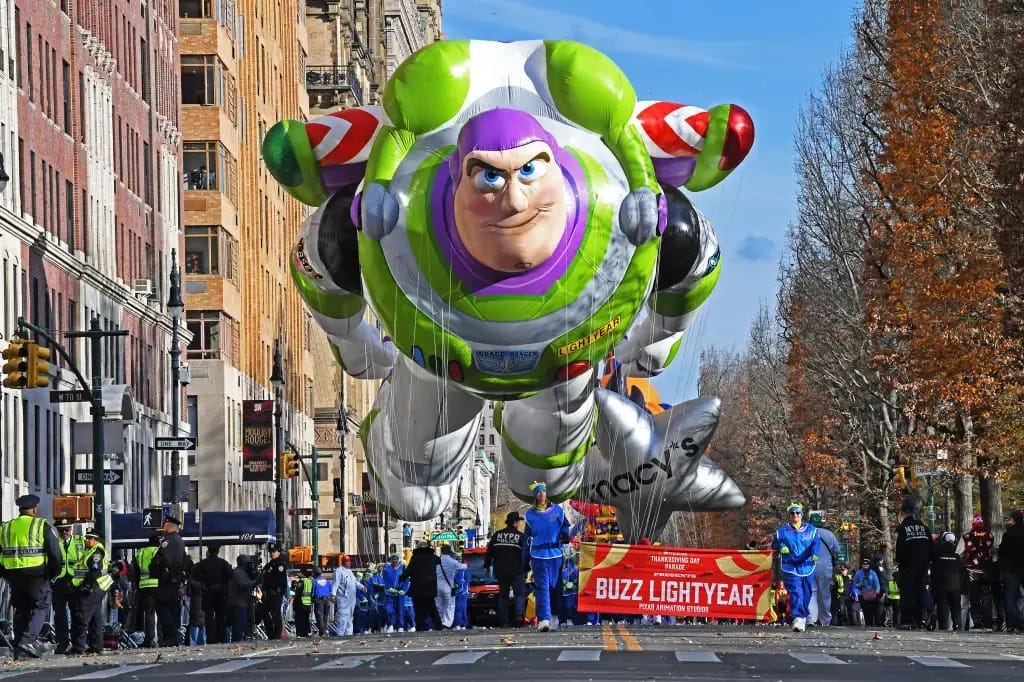
Over time, the balloons transformed from playful inflatables into feats of soft architecture. Today’s giants can reach 60 feet tall and 28 feet wide yet fold down into surprisingly compact boxes only 12.5 by 8 feet for transport. Each one is designed and built entirely by Macy’s employees who specialize in art, engineering, and safety. These creations demand logistical choreography involving more than 5,000 volunteers. Each handler trains in balloon physics—tension ropes, wind dynamics, and synchronized pacing—lessons learned the hard way after the 1997 Pink Panther incident when strong gusts caused near injury. The result now is a tightly rehearsed spectacle engineered as much for stability as for awe.

Some balloons have achieved their own celebrity. Snoopy has appeared more than any other character in parade history, while Olive Oyl’s 1986 version remains the tallest at an astonishing 102 feet. Smokey Bear and Underdog each spent decades in the lineup, earning almost the same devotion as Santa’s sleigh, which has closed every parade except one in 1932. The consistency of these recur ring characters stitches generations together; grandparents recall their first sight of Popeye while children on the curb look up at Grogu or Pikachu. It is engineered continuity through helium and storytelling.

A look closer reveals just how whimsical the scale becomes. If the Pillsbury Doughboy balloon were made from real dough, it would require more than four million Crescent Rolls. Santa’s sleigh itself spans 60 feet—about the length of three New York City taxis end to end—and has anchored nearly every parade finale. Behind the whimsy sits an ongoing technical mission: keep it massive, keep it steady, and keep it safe above the crowds.

Even the parade’s earliest balloon experiments carried an edge of daring. In the late 1920s and early 1930s, organizers released helium balloons into the sky with $100 rewards for whoever recovered them. The stunt ended when a pilot nearly crashed chasing a dragon balloon in 1931. Still, that spirit of spectacle remains captive in every inflation morning on 77th Street, where families gather to watch crews raise cartoon dreams to life. For 2025, five new balloons join the tradition, including a 30-year Toy Story anniversary Buzz Lightyear and Shrek’s Onion Carriage. Alongside 29 floats and 34 total balloons, they transform the parade route into an airborne reflection of culture itself. Behind the smiles and cheers is a precise collaboration of art and aerodynamics that lets nostalgia quite literally take flight above Manhattan.
Which Macy's parade balloon is your favourite?Choose your favourite below: |
Spotlight on Bacalar, Mexico
Eat
Along Bacalar’s palm-fringed shoreline, local restaurants serve Yucatecan comfort food that tastes like sunshine. Expect grilled fish caught just offshore, lime-bright ceviches, and handmade tortillas that dissolve in the same rhythm as the lagoon’s gentle waves.

Cenote Azul
Explore
The heart of this pueblo mágico beats at Cenote Azul, a deep, sapphire pool linked to the lagoon itself. At nearly 300 feet deep, it’s one of the Yucatán’s most dramatic open-air cenotes—a submerged world where scuba divers trace the limestone rim while swimmers float above ribbons of teal and navy.

Bacalar Rapids
Unwind
Drift south to Los Rápidos, the Bacalar Rapids, where the lagoon narrows into a serene current winding between ancient stromatolites and mangrove corners. Rent a kayak or simply float—the slow-moving water does the work while you take in the spectrum around you.
Thank you for reading!
How would you rate todays edition of the newsletter? |
Where to Invest $100,000 According to Experts

Investors face a dilemma. Headlines everywhere say tariffs and AI hype are distorting public markets.
Now, the S&P is trading at over 30x earnings—a level historically linked to crashes.
And the Fed is lowering rates, potentially adding fuel to the fire.
Bloomberg asked where experts would personally invest $100,000 for their September edition. One surprising answer? Art.
It’s what billionaires like Bezos, Gates, and the Rockefellers have used to diversify for decades.
Why?
Contemporary art prices have appreciated 11.2% annually on average
…And with one of the lowest correlations to stocks of any major asset class (Masterworks data, 1995-2024).
Ultra-high net worth collectors (>$50M) allocated 25% of their portfolios to art on average. (UBS, 2024)
Thanks to the world’s premiere art investing platform, now anyone can access works by legends like Banksy, Basquiat, and Picasso—without needing millions. Want in? Shares in new offerings can sell quickly but…
*Past performance is not indicative of future returns. Important Reg A disclosures: masterworks.com/cd.