- The Culture Vulture
- Posts
- Trillium vs Corenucopia: Chef Comebacks in December
Trillium vs Corenucopia: Chef Comebacks in December
This issue: a head-to-head of two very different chefs’ comebacks, plus a look at a bold new art exhibition, reflections on city living through design, and a last-minute escape for winter wanderlust.

Shakira Taylor
December 11, 2025

Hey Culture Clubbies!
December brings reinvention: kitchens reopen, artists debut, designers build hope, wanderers pack bags. This week we lead with two very different restaurant comebacks: one sleek, controlled, quietly ambitious; the other generous, spirited, and unabashedly social. After that: we climb inside colour-rich canvases, reimagine cities with wood and will, and sneak you in under palms for a tropical breather.In under 10 minutes we’ll cover:
Trillium vs Corenucopia — two chef-led comebacks, two different visions of dining reborn
A gallery spotlight: art that asks us to slow down and feel
Wood City: Could entire neighbourhoods be built from timber and care?
Spotlight on: Koh Chang, Thailand
Let’s get started.
Meet the Best Alcohol Replacement of the Season

As the nights get colder and holiday gatherings fill the calendar, I’ve been craving a new kind of ritual—something warm, social, and feel-good, without the fogginess that often follows a drink. And this season, I found it.
Meet Vesper, Pique’s brand-new, non-alcoholic adaptogenic aperitif—and truly one of the most exciting launches they’ve ever released. Crafted with rare botanicals and science-backed ingredients, it delivers everything I love about a drink: the unwind, the mood lift, the sense of connection… just without the alcohol.
Each sip brings a soft drop in the shoulders, a gentle lift in spirit, and a clear, grounded presence. Sparkling, tart, and herbaceous, Vesper feels luxurious and intentionally crafted—perfect for holiday parties, cozy nights in, and an elevated start to Dry January.
Because it’s new (and already going viral), it will sell out fast.
Trillium vs Corenucopia: Chef Comebacks in December
Chef comebacks hit differently in December.
Trillium reads like a statement of intent that has been sharpened by years in top kitchens, a compact dining room with controlled energy, a kitchen that leads with technique, and a menu that unfolds as a deliberate story. Corenucopia, opening into the same festive headwinds, leans into a market‑led sense of abundance, shorter on ceremony and longer on generosity, pasta and grills at the center, a bar that pulls its weight, and a room tuned to laughter and clinking glasses. Both wear seasonality on their sleeve, but each bends it to a distinct purpose. One is about precision and progression, the other about spontaneity and shareable pleasure.
Trilium
In Birmingham, Glynn Purnell the BBC familiar and chef who put the Midlands on the Michelin map has reopened the dining chapter with Trillium. A 48-cover restaurant in Snow Hill that brings bold, seasonal cooking together with an adventurous wine list curated by Loki Wine’s Phil Innes. Here the ethos is freedom within refinement, where sharing plates and larger courses sit side by side and a menu built around local produce and global inspiration is meant to be explored in whatever order you like.

The interior draws from folklore and the rhythms of nature, with hand-painted finishes, etched glass and woodland-inspired lighting lending a warm, intimate glow to the room and an outdoor terrace just off Colmore Row keeps things lively on fair-weather evenings. Chef Patron Purnell, the “Yummy Brummie” who won Birmingham’s first Michelin star in 2005 and led Purnell’s until its closure in 2024, recruits an accomplished kitchen team including Head Chef Rob Palmer (previously at Michelin-starred Peel’s) to shape dishes that balance punchy flavours with elegance.

Chef Glenn Purnell
Signature plates range from XL gougères to Dunwood Farm Wagyu bone-in sirloin with sauce au poivre, while desserts like winter blood orange sorbet reflect the restaurant’s embrace of seasonal joy. Trillium’s contemporary but welcoming space, its dynamic menu and its curated wine programme are all about the pleasures of choice and discovery — and they signal an ambitious new chapter for one of the UK’s most distinctive chefs.

The first plates lean seafood and vegetable, precise seasoning and clean lines, then the middle stretches its legs with richer sauces and a sense of momentum. By the time the umami dial lifts into dry‑aged meats and slow‑cooked reductions, the portions still feel generous without tipping into heaviness.
A beef tartare reimagined with caviar and allium layers reads as luxurious without feeling mannered, a study in salt, fat, and perfume. A fish course in the vein of semi‑smoked salmon with beurre blanc showcases saucing detail that critics often reserve for their most breathless comparisons. House bread can be a talking point, a sign that nothing lands without care. Desserts continue the line, think a warm soufflé or tart touched with local honey or seasonal fruit, technically light enough to feel like grace rather than ballast.

Cocktails are a prelude here, martinis and low‑ABV aperitifs tuned to the snacks rather than trying to steal the stage. Wine is deep, sometimes pricey, pairings available, and corkage is treated like a serious policy. Expect the full evening to land in the upper fine‑dining bracket, a £150 to £250 per‑head reality once drinks and service are counted, though the length and ambition of the menu defend the bill for those who come for a long, carefully plotted arc.
Corenucopia
Across town in Chelsea, London diners are gearing up for the arrival of Corenucopia by Clare Smyth, a luxury bistro from one of Britain’s most celebrated chefs. Smyth, famed for her three-Michelin-starred Core in Notting Hill and her international outpost Oncore in Sydney, brings her signature focus on quality and hospitality to Holbein Place in a setting described as a gracious reinterpretation of classic British and European cookery.

The restaurant occupies a striking 19th-century space that blends heritage with a luxurious, welcoming atmosphere — and though full menus are still being revealed, early glimpses suggest Smyth will serve refined comfort dishes such as elevated fish and chips, Dover sole with lobster mousse, and other reimagined British favourites informed by her exacting technique and deep respect for provenance.

Chef Clare Smyth
Interiors are expected to be elegant yet approachable with white wood-panelled walls, antique oil paintings and a walk-in wine cellar leading off a leather-lined private room, while a wine list and bar programme promise to balance the kitchen’s ambition with conviviality and ease. Corenucopia’s playful name hints at both abundance and Smyth’s roots in the classic European table; here precision meets warmth, and Chelsea — already rich with culinary pedigree — gains a new destination that feels both elevated and alive with personality.

Choice is the point. You can build a small spread or go big, and either path feels right if you read the room. Start with sharing plates that are simple and pointed, vitello tonnato with the right gloss and acidity, salumi with proper fat and salt, marinated vegetables and seasonal fritti that snap and steam. Then come the signatures, the ones that will gather repeat orders and text‑message recommendations. Hand‑rolled pasta with crab and chilli threads the needle between delicacy and heat, the sauce clinging without smothering, the crab sweet and saline rather than heavy. A whole roasted fish for two keeps it elemental, the pleasure of filleting at the table and the scent of the sea lifted by oil and citrus. Simply grilled steaks do the carnivore work, cut right and rested properly, landing with sides like courgette fritti or salads that reset the palate.

The Verdict
Two comebacks, two very clear invitations. Choose Trillium when you want surrender to a structured progression, snacks that cue the senses, seafood courses that hum with saucier detail, a measured rise into dry‑aged meat and long‑reduced sauces, desserts that feel like a final movement rather than an encore, cocktails that frame the meal rather than dominate it, and a wine program that can go as deep as you like. Go expecting polished service, an intimate room, and a bill that reflects upper fine dining, roughly £150 to £250 per head once you count drinks and service, and leave with the feeling that you experienced a chef placing a signature under each course.
Choose Corenucopia when you want to build your own night, a table that starts with antipasti and fritti, moves to hand‑rolled pasta with crab and chilli or another seasonal shape, then splits a whole roasted fish for two or a simply grilled steak with sides, and finishes with a lemon tart, gelato, or an affogato. Go expecting a lively room, a bar that keeps pace with the kitchen, a focused European list where value and discovery sit side by side, friendly service that rides the room’s energy, and a flexible spend that often lands between £50 and £70 per head. In December, both feel like the right kind of return. The only real question is whether you want the calm precision of a tasting route or the joyful noise of a menu you compose course by course.
Stacey Gillian Abe: Garden of Blue whispers
Imagine entering a room where every surface glows a deep, tranquil blue. The colour is not decorative but deliberate: a language of emotion and ancestry. In Garden of Blue Whispers, now showing at Unit London, Kampala‑based artist Stacey Gillian Abe builds a visual world from indigo. Her solo exhibition is a quiet epic of grief, memory, and Black womanhood told through the hue’s saturated calm. It feels less like simply viewing paintings and more like stepping into a living diary that breathes in and out with each brushstroke.

The exhibition gathers new works that extend Abe’s ongoing exploration of blue as both shield and invitation. According to Artsy, she reimagines indigo as a space of protection and interiority rather than melancholy, turning it into a colour that holds mourning gently instead of drowning in it. Her figures—rendered in soft gradients ranging from midnight to lapis—carry this emotional weight while resting in still, domestic settings. Each face meets the viewer’s gaze, unflinching and contemplative, creating that rare feeling of intimacy combined with power that critic It’s Nice That described as “quietly uncanny.” These portraits seem to know more than they tell, and Abe leaves room for silence to speak.
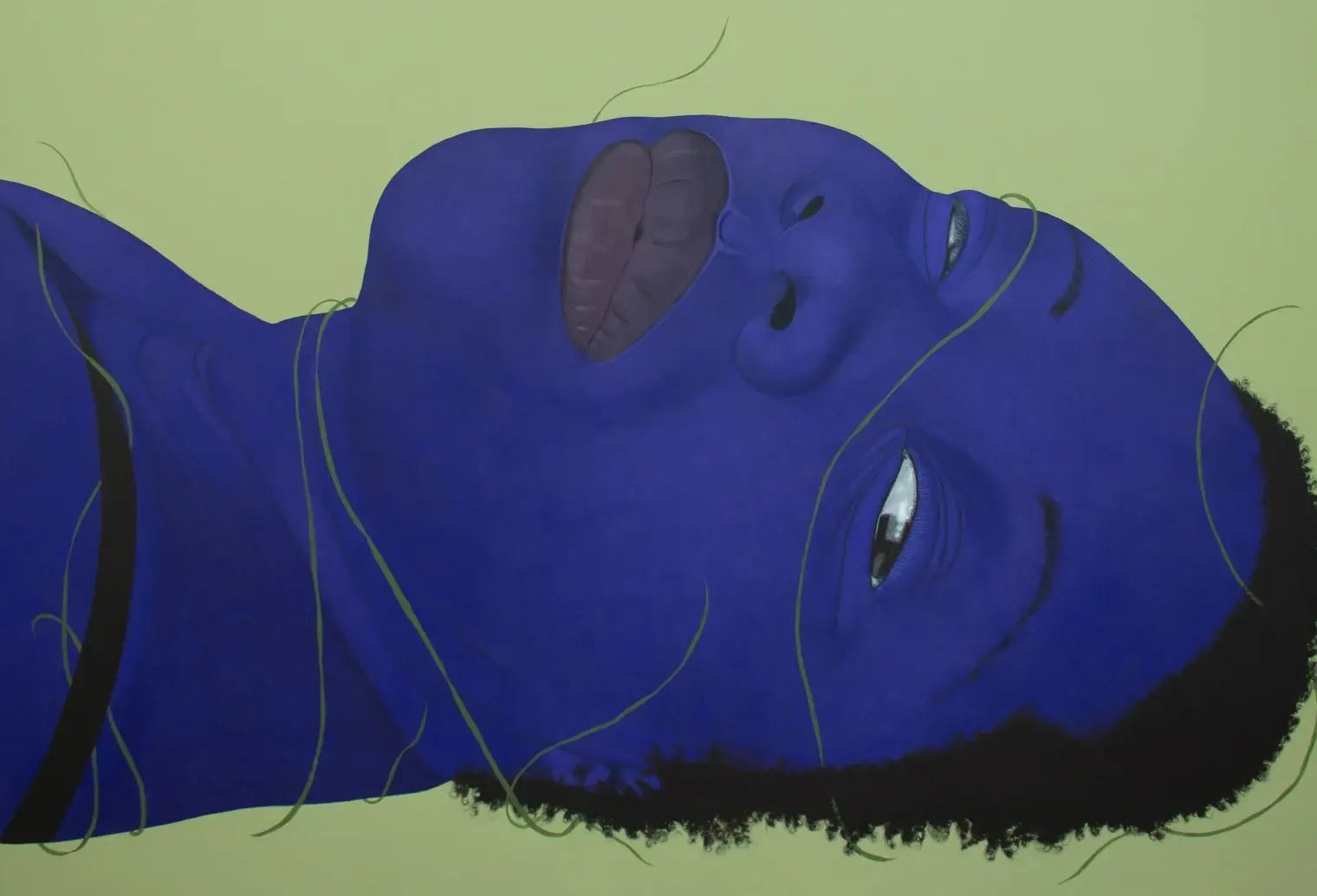
There is a sense of return in this exhibition. Garden of Blue Whispers follows Abe’s earlier London debut, Shrub‑let of Old Ayivu, yet it feels more inward, as if the artist has turned the light lower to trace the outlines of her own memory. Lampoon Magazine notes that her imagery often draws from family stories and her mother’s resilience, transforming individual memories into collective ones. The result is not nostalgia but a mapping of emotion—a charting of how personal loss can mirror a broader historical wound. Each painting becomes a vessel that holds ancestral echoes, folding past and present into one continuum of blue.

There is a sense of return in this exhibition. Garden of Blue Whispers follows Abe’s earlier London debut, Shrub‑let of Old Ayivu, yet it feels more inward, as if the artist has turned the light lower to trace the outlines of her own memory. Lampoon Magazine notes that her imagery often draws from family stories and her mother’s resilience, transforming individual memories into collective ones. The result is not nostalgia but a mapping of emotion—a charting of how personal loss can mirror a broader historical wound. Each painting becomes a vessel that holds ancestral echoes, folding past and present into one continuum of blue.

Abe’s expanding presence is undeniable. Listed in Forbes Africa’s 30 Under 30 and acquired by collectors and institutions across continents, she is among the most closely watched painters in contemporary African art. Yet in Garden of Blue Whispers the scale of her ambition feels personal rather than grand. Every painting hums with restraint; the politics are embedded in gesture. To witness them in person is to understand how she translates inner feeling into haloed portraiture.

The show runs through winter 2025 at Unit London, with entry free to the public. Visitors should check unitlondon.com for special events or evening openings. Whether you come for the craft, the colour, or the quiet, Abe offers a space where grief turns luminous and blue becomes the most truthful light of all.
Period cramps don’t stand a chance against the Menstruation Crustacean.

Looking for a gift that’s both useful and adorable? The Menstruation Crustacean Lobster Heating Pad is the sleeper hit of the season. This microwaveable little lobster warms up in seconds and provides soothing relief for period cramps, back pain, and all the winter aches that come with holiday stress. It’s soft, it’s adorable, and it works shockingly well.
Perfect for your best friend, your sister, your coworker, or that Secret Santa exchange you almost forgot about—this crustacean brings cozy vibes and instant cheer. Equal parts practical and playful, it’s one of those gifts people don’t realize they need… until they try it.
Can a Wooden City Really Replace Concrete? Inside Stockholm’s ‘Wood City’ Experiment
At first glance, the idea sounds romantic—an entire city district built from wood rather than concrete. But Stockholm’s Wood City, set to rise in the former industrial area of Sickla, is not a fairy‑tale project cloaked in pine and nostalgia. It is a billion‑dollar experiment in whether timber engineering can scale to real urban density without losing credibility on safety, cost, or performance. If it succeeds, it could redefine how cities grow in a climate‑strained world struggling to curb construction’s massive carbon footprint.
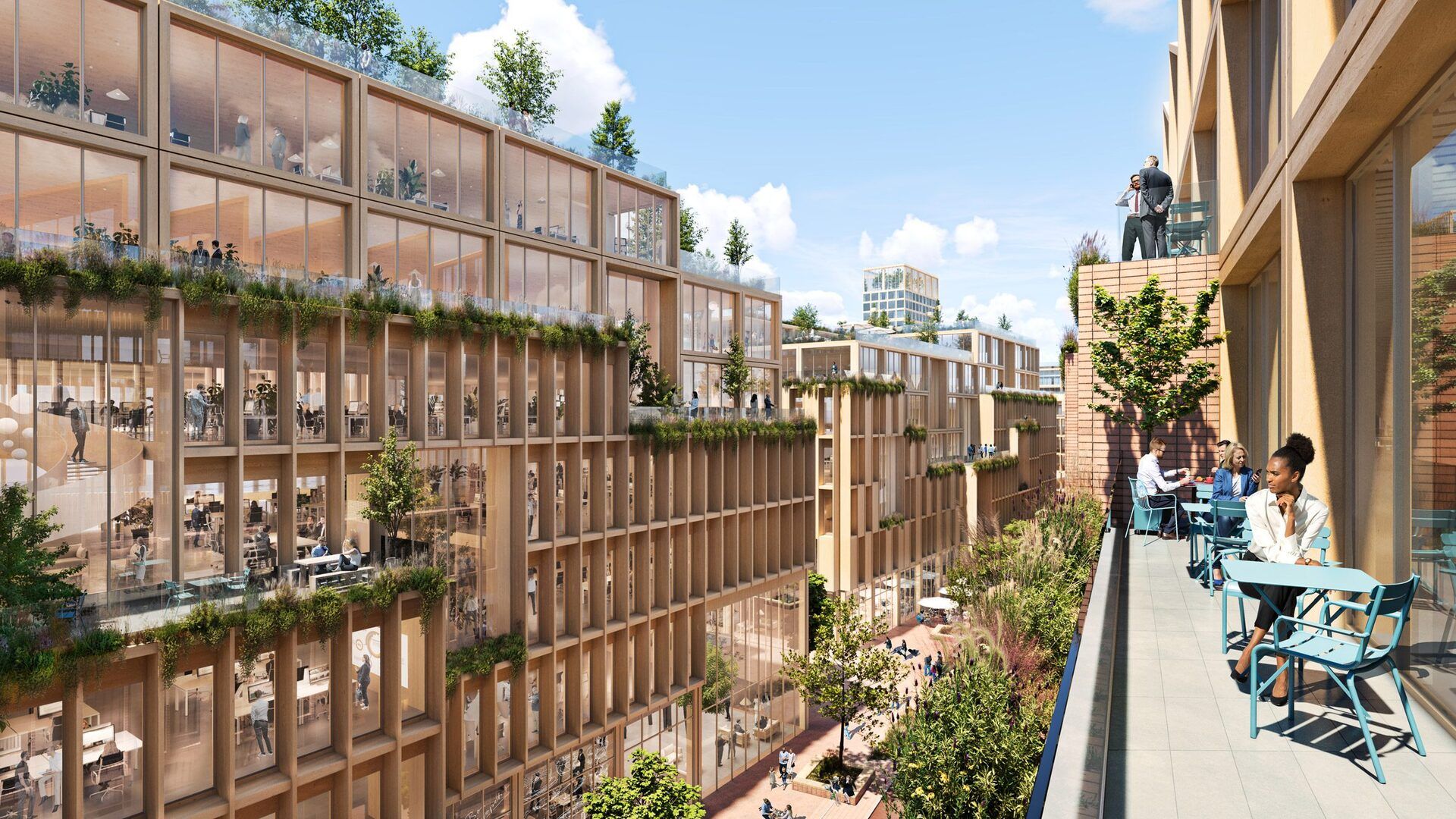
Stretching across 25 blocks and 250,000 square metres, Wood City will include around 7,000 workspaces and 2,000 homes. It will be the largest wooden urban district ever attempted. The material at its core—cross‑laminated timber (CLT)—offers a tangible advantage. Producing and assembling CLT can reduce emissions by up to 81% compared with conventional concrete while locking away carbon captured from forests. Each panel converts trees into structural carbon storage, turning the district itself into something like a vertical, built forest.
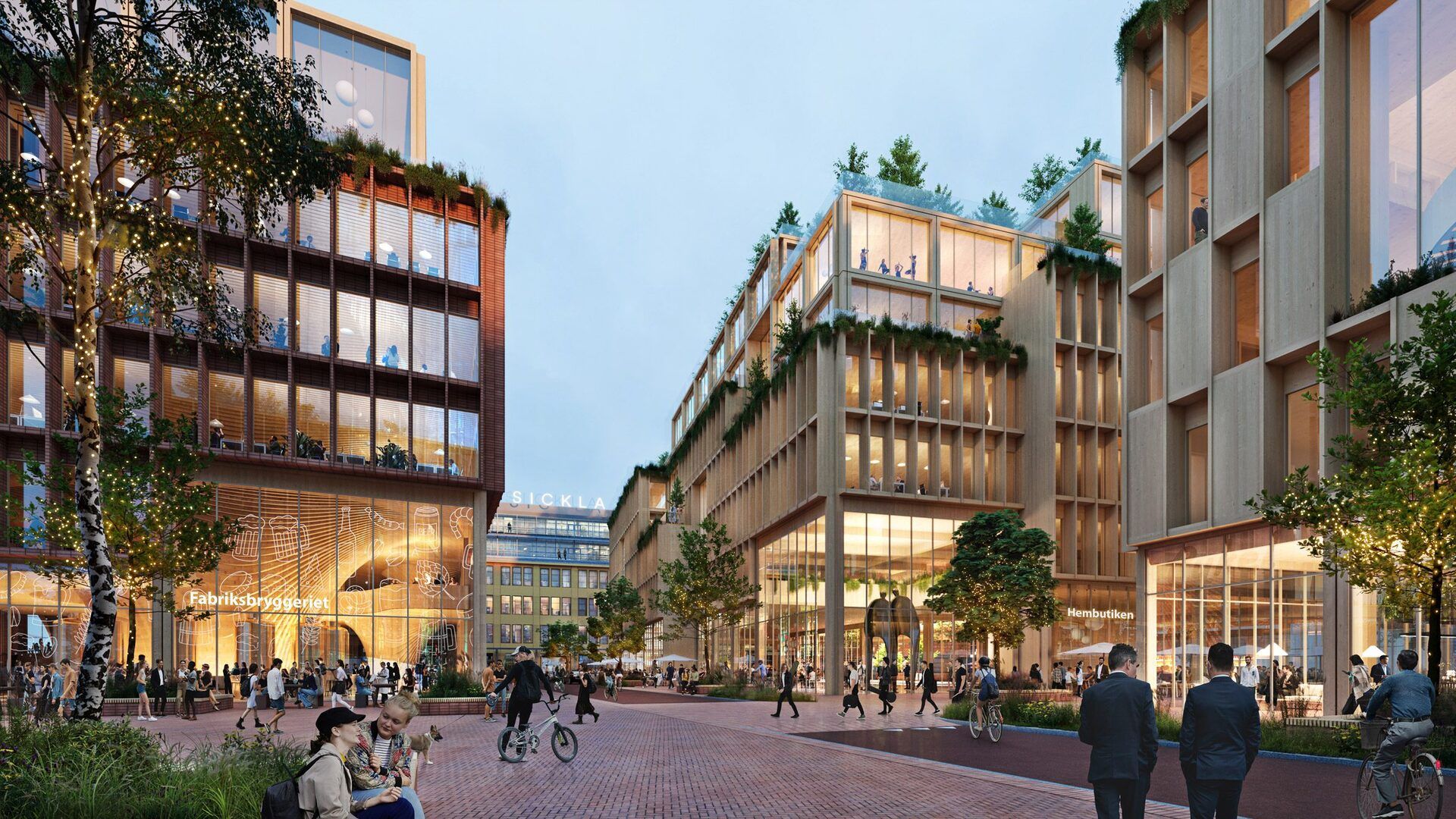
The architecture expands that idea of a “city‑as‑forest.” Inside the office and apartment blocks, you might still hear laptop clatter or street noise, but the walls and floors are lined with visible wooden grain. Architects argue that these exposed interiors and green rooftops will change how residents feel when moving through the area. Research cited by the developers suggests that living and working in wood‑lined spaces can lower stress levels and improve focus. The result is meant to fuse sustainability with psychological benefit—a low‑carbon city that literally feels calmer.

Look closer at the technical engineering and the usual associations with wood start to flip. Traditional thinking says wood burns and concrete protects. CLT resists that expectation through a counterintuitive process: the outer layer carbonises during a fire, forming a charred shell that insulates and shields the inner core. For fire engineers this is proof that a well‑designed timber building can be as secure as one made from reinforced concrete. Acoustics, water tightness, and long‑term durability are managed through layers, seals, and adaptable panel systems that turn the buildings into quiet high‑tech entities disguised in organic warmth.
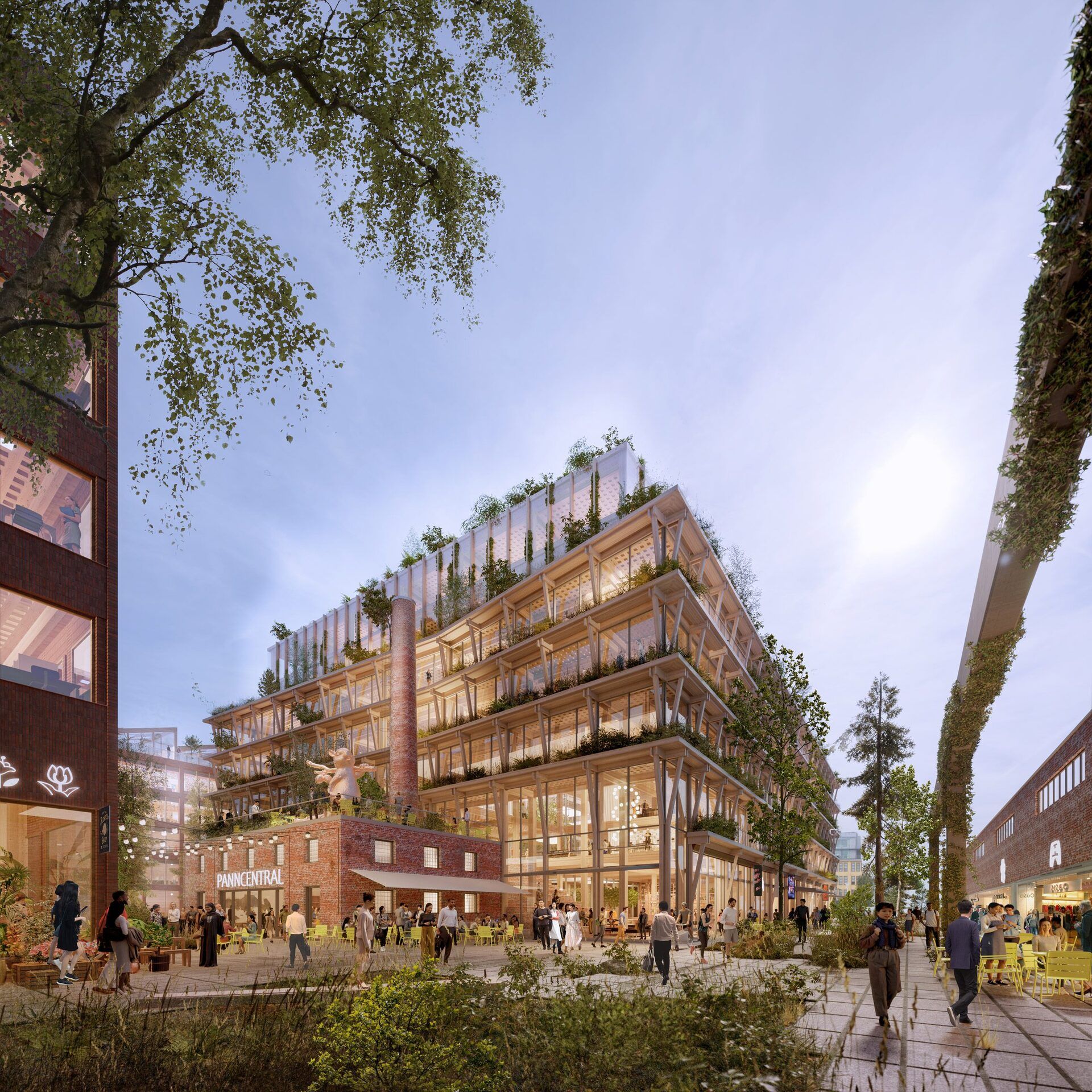
The neighbourhood will also generate and swap its own energy. Smart systems designed for producing, storing, and sharing power are built into rooftops and basements. More radically, the developers have designed mixed‑use blocks that can shift functions as the city evolves. Office wings could one day become apartments. Retail shells might convert into learning spaces. This principle of “second lives” contrasts sharply with concrete cores that are costly to reconfigure. In effect, every building is treated as a living organism capable of renewal rather than demolition.

The project is not only an architectural bet but a transport experiment. Locating thousands of workplaces just south of Stockholm’s centre is meant to trim commuter travel, suggesting that urban form itself influences carbon savings as much as building materials do. If fewer people drive or take long transit trips, the overall emissions reduction compounds. Developers readily admit that Wood City is both prototype and persuasion campaign. If it proves that timber can match or even outperform steel and concrete in scale, safety, and versatility, the world’s building codes and investor logic could shift. Standing among the wooden frames rising from Sickla’s soil, you can almost imagine a future skyline of textured warmth rather than cold grey uniformity—the possibility that cities could grow while still breathing.
Would you live in a 'Wood City'?Choose your option below: |
Spotlight on Koh Chang, Thailand
Eat
Tucked beside Klong Prao Beach, Kati Culinary turns time-honored family curry pastes into bright, aromatic dishes that perfectly mirror the island’s tropical calm. Every plate arrives fresh—think coconut-rich curries, local seafood, and herbs straight from the garden.

Explore
Trade shoreline for shade at Klong Plu Waterfall, deep inside Mu Ko Chang National Park. A short forest trail winds through layers of bamboo and birdsong until the sound of rushing water pulls you forward. The waterfall spills into a deep pool that invites both a cooling dip and a quiet pause before heading back to the beaches.

Unwind
Slip to the island’s east side, where Salak Khok and its mangrove maze slow everything down. The East Coast and Salak Khok Mangrove Area offers wooden boardwalks, kayak routes through mirror-still channels, and glimpses of traditional fishing life on stilted docks. It’s peaceful, low-key, and somehow feels worlds away from the west-coast resorts.
Thank you for reading!
How would you rate todays edition of the newsletter? |
Your health is your power.
Subscribe to Livelong and get current, clinically grounded insights on diet, exercise, supplementation, and restorative sleep—pulled from the latest research and turned into do-this-now checklists. Information for serious health enthusiasts, Livelong makes longevity practical, measurable, and real.