- The Culture Vulture
- Posts
- Fitzrovia Face-off: Aces Food Craft vs Luso Restaurant
Fitzrovia Face-off: Aces Food Craft vs Luso Restaurant
This issue: what's new in London, a closer look at a new thought-provoking art exhibition, a slice of New York arrives in London, and a quick European getaway.

Shakira Taylor
December 20, 2025

In partnership with

Hey Culture Clubbies!
In this edition, we are tasting the new Fitzrovia energy through a focused face-off between two 2025 arrivals that have chefs and diners buzzing. One leans Japanese with a dual-life format that flips from casual by day to a nine-seat spectacle at night. The other carries a baton for Portuguese cooking on Charlotte Street with a casual spirit and serious pedigree. We will unpack who shines where, how they feel in the room, what to expect on menus and price, and when to book which. Then you can decide whether your next table is a quiet counter seat for theatre or a relaxed Portuguese hang with chef-level smarts.
Fitzrovia Face-off: Aces Food Craft vs Luso Restaurant
Kerry James Marshall: The Histories
Carbone’s Celeb Secrets: Mayfair’s Italian-American Invasion
Spotlight on: Svaneti, Georgia
Let’s get started.
Modernize your marketing with AdQuick

AdQuick unlocks the benefits of Out Of Home (OOH) advertising in a way no one else has. Approaching the problem with eyes to performance, created for marketers with the engineering excellence you’ve come to expect for the internet.
Marketers agree OOH is one of the best ways for building brand awareness, reaching new customers, and reinforcing your brand message. It’s just been difficult to scale. But with AdQuick, you can easily plan, deploy and measure campaigns just as easily as digital ads, making them a no-brainer to add to your team’s toolbox.
Fitzrovia Face-off: Aces Food Craft vs Luso Restaurant
Fitzrovia has slipped into the role of 2025’s chef-driven neighbourhood, and two openings define the shift with clarity.
Aces Food Craft arrived at Pearson Square on 1 November 2025, while Luso landed earlier on 15 September 2025 at 30 Charlotte Street. The walk between them is a quick hop, but the experiences are worlds apart. Aces is the comeback stage for Alex Craciun. He and his collaborator, Aleksandra Jazevica, channel their expertise into a dual-concept space that is approachable by day and singular at night. Luso, meanwhile, sits in the former Lisboeta address, a site with Portuguese history written into the walls. Nuno Mendes has passed the baton to Leo Carreira.
Both restaurants are highlighted in 2025 openings lists and both remain open and popular as of late 2025. What follows is a practical look at what each does best, where they differ, and how to choose based on mood, appetite, and occasion.
Aces Food Craft
Aces Food Craft announces itself with a canny split personality that makes perfect sense in Fitzrovia. The Pearson Square setting, part of a buzzy pocket that has welcomed new names in recent years, frames a warmly intimate room that is comfortable enough for casual lunches yet calibrated for focus at night. Daytime is a casual à la carte format, designed to be broad and accommodating. Evenings pivot to a high-flying nine-seater chef’s table, the kind of counter that runs on craft and theatre.

Craciun’s Japanese fluency is the throughline, not as a rigid rulebook but as an instinct for clarity, product integrity, and invention. The partnership with Jazevica, director at high-end costermonger Primeur, is not incidental. It is a structural choice that ensures top-tier produce and underwrites the precision of the cooking. The result is a space that feels both new and lived-in, not showy, and with an intimacy that brings you closer to technique without turning the experience into a lecture. It is also the welcome return many hoped for from Craciun, a moment noted by early coverage that framed Aces as both a comeback and a new chapter.

On the plate, Aces works with ideas that signal confidence. Japanese flavours dominate, in tune with Craciun’s training, but they are used as a language rather than a flag. The menu that has been teased includes an English baby lamb truffle souffle with fava beans and spring vegetables. It sounds audacious, and it is intended to be, but the predicates are seasonality and texture, not novelty for its own sake. Expect highly inventive food, the kind that folds technique into structure so the dish reads as elegant first and clever second. The daytime à la carte is pitched as approachable, a format that lets you drop in without committing to a marathon. Evenings are another matter.

The nine-seat chef’s table is built for theatre and intimacy, a stage where you watch, listen, and taste in sequence. With so few seats, demand is bound to be high, and the pricing shifts correspondingly. No official numbers are published, but given the format, the evening counter is likely to land at £100 or more per person, while daytime remains more casual in cost and tone. Service mirrors the setting. During the day it is warm and comfortable, the kind that makes broad, inventive menus feel navigable. At night it is orchestrated, geared to an immersive arc where the kitchen explains as much as it cooks.

Early notes from The Nudge and SquareMeal focus on the inventiveness and the feel of a welcome return, which tracks with what you sense in the room. For signals and updates, Aces keeps an active presence at @aces_food_craft on instagram.
Luso
Luso approaches the same neighbourhood from a different angle. The Charlotte Street location is prominent, and the room inherits the bones of a site that has already helped tell a Portuguese story. When Nuno Mendes hands a space like this to another Portuguese chef, it feels like a baton change rather than a hard reset.

At Luso, the new chef opts for a more casual take on Portuguese food. The move reads as both respectful of the address and smart for Fitzrovia, where lunch crowds and early-evening dates want flavour and finesse without a straitjacket. The vibe is modern Fitzrovia with a cool edge, the kind of room that can be easy company for a midweek dinner but still feels chef-led. Where Aces chases duality, Luso chooses focus. It is Portugal through Carreira’s lens, casual in posture but clear about intent.

Interiors are expected to be elegant yet approachable with white wood-panelled walls, antique oil paintings and a walk-in wine cellar leading off a leather-lined private room, while a wine list and bar programme promise to balance the kitchen’s ambition with conviviality and ease. Corenucopia’s playful name hints at both abundance and Smyth’s roots in the classic European table; here precision meets warmth, and Chelsea — already rich with culinary pedigree — gains a new destination that feels both elevated and alive with personality.

Because Luso is still new, the specifics of signatures are less public, but the parameters are clear. This is a relaxed Portuguese menu with the latitude to surprise, built by a chef who knows how to make a counter sing and how to engage guests without fuss. The continuity from Lisboeta matters for diners who loved that address, yet the tone has shifted. Luso is deliberately more casual, broadening appeal and frictionlessly fitting into the Charlotte Street rhythm.

Prices are pitched to be accessible compared with the higher set piece formats that dominated London pre-2025, a choice that invites repeat visits rather than milestone bookings only. Service takes cues from Carreira’s front-row seat experience, which means it can be engaging and cool without slipping into performance. The space does not need to prove its seriousness, and that is part of the appeal. You come for a Portuguese hit, you get chef-level craft, and you leave without feeling you have done battle with a tasting menu. For reservations and updates, Luso communicates cleanly through luso.restaurant and @luso.restaurant, the kind of practical clarity that helps new restaurants find their groove fast.

The Verdict
For a night that feels like a small theatre, choose Aces Food Craft. The nine-seater counter, the Japanese-informed inventiveness, and the Primeur-driven product quality make it a focused, high-touch experience, with daytime giving you an easier, more casual way in. For a relaxed Portuguese table with pedigree, book Luso. Carreira’s casual lens on Portugal, the momentum of a prominent Charlotte Street site, and the baton pass from Nuno Mendes create continuity with a renewed sense of ease. Both are emblematic of Fitzrovia’s 2025 mood, where chef-led ambition meets neighbourhood rhythm. If you can, try both in one week to feel the contrast. Secure Aces early if you want the evening counter, since there are only nine seats and demand will run hot. For Luso, use luso.restaurant to lock a time, then let the casual format carry the rest. Two addresses, two philosophies, one neighbourhood that keeps getting better.
Kerry James Marshall: The Histories
For more than four decades, Kerry James Marshall has reimagined who gets to be seen in art.
Now, with Kerry James Marshall: The Histories, the Royal Academy of Arts in London gives him its grandest stage yet. This exhibition, running until January 18, 2026, fills the Main Galleries at Burlington House with a panoramic survey of his career. It is the largest-ever UK presentation of Marshall’s work, a journey through 11 thematic series tracing the contours of Black experience from the Middle Passage to modern life. The show spans over 40 years of painting, and perhaps fittingly, it feels both retrospective and reckoning.

Across the galleries, viewers encounter landscapes of history seldom granted space in established art institutions. Here, the transatlantic slave trade, Civil Rights struggle, and everyday Black life flow together as if part of one vast visual diary. Critics such as The Guardian hail the exhibition as “astonishing visions of Black America.” That acclaim underscores its ambition. The Royal Academy’s decision to mount such a monumental show aligns with its recent efforts to challenge a traditionally Eurocentric canon. Through these walls, Marshall’s subjects reclaim the visibility denied to them for centuries.

Curated by Mark Godfrey, the exhibition foregrounds Marshall’s unapologetic focus on Black protagonists. His figures are not peripheral. They occupy the center with declarative force, recasting scenes once reserved for mythic warriors and European saints. The artist’s method of layering light and near‑black pigment creates figures that seem to emerge from darkness yet dictate their own illumination. Within this luminous paradox lies his argument: Black presence as both subject and history. The exhibition’s layout mirrors that thesis, juxtaposing early works on the Middle Passage with exuberant domestic scenes that celebrate community and culture.
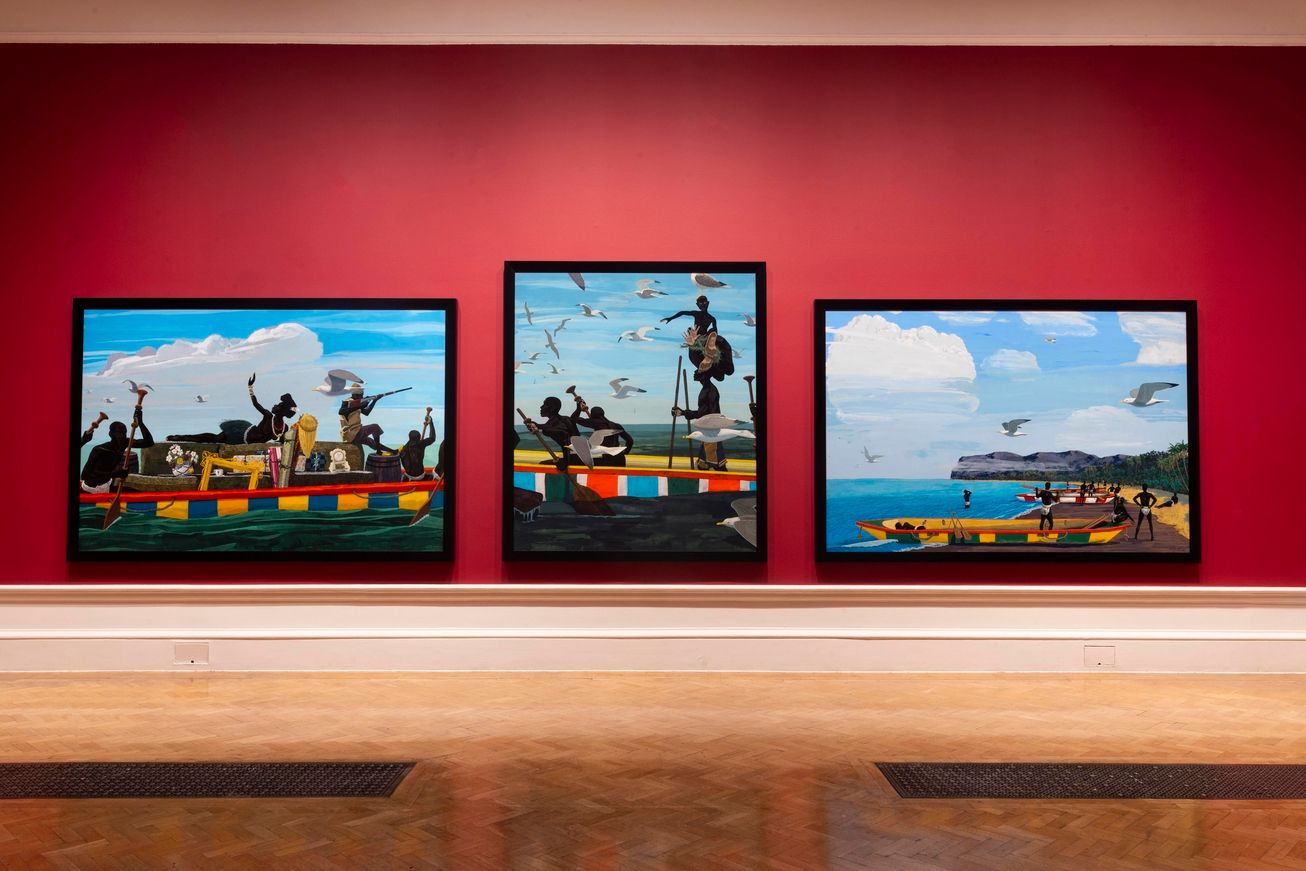
Among the eight new paintings created for “The Histories,” The Haul (2025) anchors a section titled “Africa Revisited.” On three facing walls, Marshall confronts the rarely depicted African involvement in the transatlantic trade, creating a meditation on complicity and survival. Abduction of Olaudah and his sister (2023) dives deeper, revisiting the capture story of Olaudah Equiano through imagery that pairs heartbreak with unflinching honesty. According to critic Darby English, these works push viewers toward “uncomfortable truths” about the origins of displacement. Each painting expands Marshall’s enduring inquiry: how to visualize lives built amid forgotten violence without surrendering to despair.
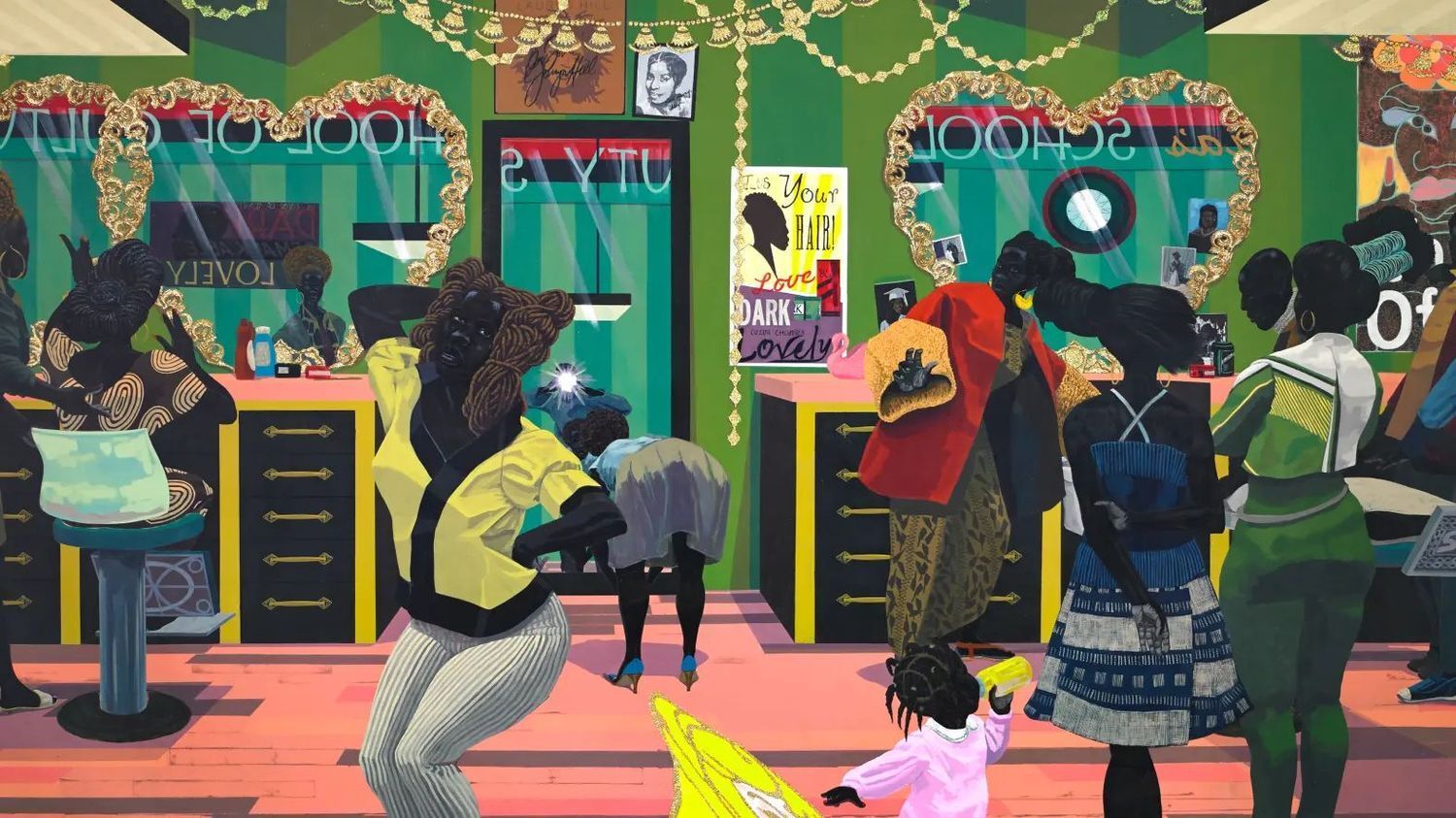
Earlier milestones provide counterpoint and continuity. The Garden Project series (1994–95) turns public housing into sites of grace, reframing urban Black life once seen only through lenses of deprivation. Knowledge and Wonder (1995), a jubilant library scene, turns Black curiosity into monument. And in Untitled (Male Nude) (2012), Marshall stages a classic portrait that insists a Black model can command the same reverence once reserved for European ideals. Together these works link past to present, portraying not only what was excluded from art history but also how beauty and dignity persist despite that exclusion.

Visiting this exhibition feels like walking through a living syllabus of resistance and renewal. Each gallery operates as a revision of art history textbooks still heavy with omissions. With tickets from £23.50, Kerry James Marshall: The Histories rewards long contemplation. Whether you arrive seeking aesthetics or accountability, you leave with both. The show runs 20 September 2025 to 18 January 2026, open Tuesday to Sunday (10 am – 6 pm, Fridays until 9 pm). More information and booking are available via the Royal Academy of Arts at royalacademy.org.uk. This is not simply a retrospective. It is a lesson in presence, painted in every shade of Black.
Meet the Best Alcohol Replacement of the Season

As the nights get colder and holiday gatherings fill the calendar, I’ve been craving a new kind of ritual—something warm, social, and feel-good, without the fogginess that often follows a drink. And this season, I found it.
Meet Vesper, Pique’s brand-new, non-alcoholic adaptogenic aperitif—and truly one of the most exciting launches they’ve ever released. Crafted with rare botanicals and science-backed ingredients, it delivers everything I love about a drink: the unwind, the mood lift, the sense of connection… just without the alcohol.
Each sip brings a soft drop in the shoulders, a gentle lift in spirit, and a clear, grounded presence. Sparkling, tart, and herbaceous, Vesper feels luxurious and intentionally crafted—perfect for holiday parties, cozy nights in, and an elevated start to Dry January.
Because it’s new (and already going viral), it will sell out fast.
Carbone’s Celeb Secrets: Mayfair’s Italian-American Invasion
When Carbone crossed the Atlantic to open beneath Grosvenor Square, it didn’t just import a menu of rigatoni vodka and veal Parm. It airlifted a whole cinematic mythology, New York’s midcentury swagger, the easy Sinatra confidence, the red velvet glow of a Rat Pack supper party, and installed it under what was once the US Embassy. The marble diplomacy has been replaced by a kind of nostalgia-fueled theatre, part embassy, part movie set, and instantly one of London’s most exclusive stages.

Descending into Carbone feels like switching film reels. Designer Ken Fulk reimagined the embassy’s bones as a subterranean fantasy: Campari-red banquettes, marble mosaics, and billiard-cloth ceilings under burgundy light where time seems permanently caught in 1958. The performers are not actors but captains in sharp Zac Posen tuxedos, maneuvering between tables with theatre-school poise. Every plate arrives rehearsed: Caesar salad spun tableside, Dover sole carved with precision, banana flambé ignited in soft, showbiz chaos. You eat, but you also spectate.

Behind the performance sits an infrastructure of precision and control. The 10,000-bottle wine cellar signals both indulgence and order, while the upheld dress code ensures that the guests themselves become part of the mise-en-scène. Mayfair is accustomed to exclusivity, yet Carbone’s brand of controlled exuberance is its own export. It stages hospitality as choreography, a memory of New York where the waiter is a lead character and the Negroni its prop.

What this means for Mayfair is less about food and more about tone. London has spent the last decade celebrating informal cool: sharing plates, minimalist fit-outs, chefs in sneakers. Carbone rewinds the reel to a time when glamour equaled ceremony. Its success hints at a cultural swing back toward extravagance. In a moment of declining understatement, diners seem ready to trade stripped-wood calm for velvet spectacle. Eating out becomes escapism in high definition.
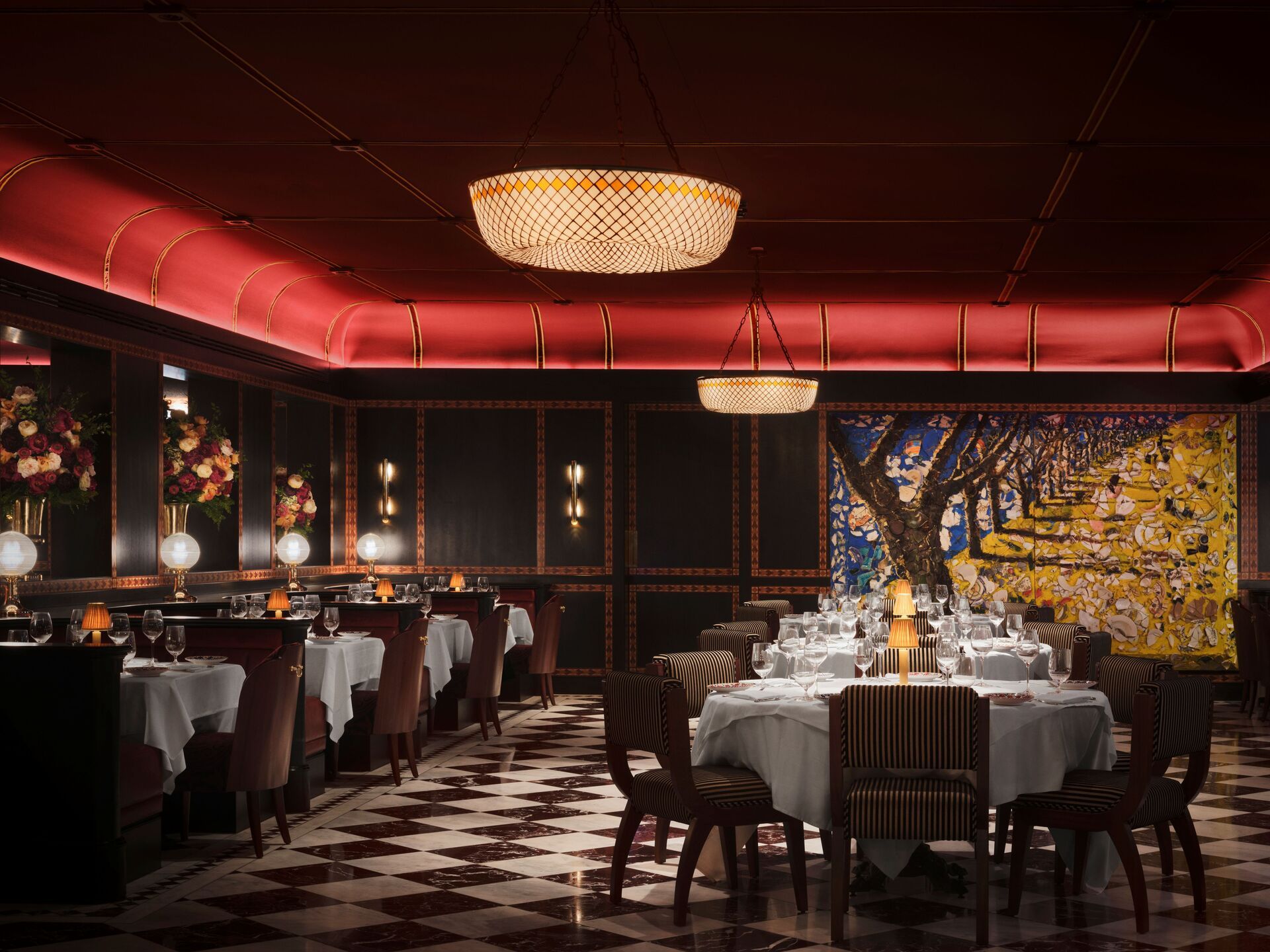
Yet Carbone’s arrival also raises questions of authenticity. With its celebrity roster imported from New York: Leonardo DiCaprio, Rihanna, Barack Obama, the London branch inherits an aura already mythologized.
Does Mayfair become the latest franchise set for the Major Food Group cinematic universe? Or does its embassy setting, historically a site of negotiation, transform the brand into something distinctly London: diplomacy turned dinner theatre? However one answers, Carbone has made Grosvenor Square pulse again. Beneath its marble floors, pasta twirls meet paparazzi flash bulbs, nostalgia meets novelty. Dinner here is not a meal but a film you can eat your way through.
Do you see Carbone London more as an exciting cultural import that elevates Mayfair’s dining scene, or as a gimmickey theme-park version of New York?Choose below: |
Spotlight on Svaneti, Georgia
Eat
Warm, hearty, and straight from the mountains — Svanetian Khachapuri is the region’s signature dish, a cheese-filled bread born from the highlands and baked with rustic charm. Try it in a family-run café in Mestia, where recipes are passed through generations and every meal begins with a story.

Explore
Wander through villages like Ushguli, one of Europe’s highest permanent settlements, where snow-dusted peaks tower over narrow paths and quiet, cobbled courtyards. The sight of these towers against the vast mountain backdrop feels like stepping into a living legend.

Unwind
Beyond the stone villages lies the trail to Shkhara Glacier, an untamed hike leading toward Europe’s second-highest peak.
Thank you for reading!
How would you rate todays edition of the newsletter? |
Lose Up to 23% Body Weight

MedVi’s GLP-1 treatments are clinically proven to help patients lose up to 23% of their body weight. Get personalized medical support, proven medications, and a plan designed to deliver real, lasting results.
Read all warnings before using GLP-ls. Side-effects may include a risk of thyroid c-cell tumors. Do not use GLP-1s if you or your family have a history of thyroid cancer. In certain situations, where clinically appropriate, a provider may prescribe compounded medication, which is prepared by a state-licensed sterile compounding pharmacy partner. Although compounded drugs are permitted to be prescribed under federal law, they are not FDA-approved and do not undergo FDA review for safety, effectiveness, or manufacturing quality.