- The Culture Vulture
- Posts
- Battle of the Bakeries: Fortitude Bakehouse vs. Jolene
Battle of the Bakeries: Fortitude Bakehouse vs. Jolene
We pit two of London’s most talked-about bakeries against each other — Fortitude’s s in Bloomsbury vs Jolene’s in Newington Green; plus culture, travel and ideas to savour.

Shakira Taylor
January 11, 2026

In partnership with

Hey Culture Clubbies!
In this edition, we are staging a bakery face-off between Fortitude Bakehouse and Jolene Newington Green. One is a tiny Bloomsbury workshop where sourdough and fermented batters shape everything on the counter. The other is a neighbourhood bakery-restaurant with heritage grains at its core and a room you want to settle into for hours. Same city, same love of flour and time, completely different rhythm.
Battle of the Bakeries: Fortitude Bakehouse vs. Jolene
Peter Doig: House of Music — painting meets sound at Serpentine South
One Bangkok’s city-within-a-city vision
Spotlight on the Albanian Riviera
Let’s get started.
The New Year Ritual That Sets the Tone for Energy and Glow ✨

January calls for rituals that actually make you feel amazing—and Pique’s Sun Goddess Matcha is mine. It delivers clean, focused energy with zero jitters, supports glowing skin and gentle detox, and feels deeply grounding. Smooth, ceremonial-grade, and crave-worthy, it’s the easiest way to start your day clear, energized, and glowing from the inside out.
Battle of the Bakeries: Fortitude Bakehouse vs. Jolene
London’s new‑wave bakeries have split into two clear schools. On one side sits the micro‑batch patisserie that treats fermentation as a flavor engine and a creative prompt. On the other is the grain‑led bakery that pushes bread to the center of the table and builds a whole day of eating around it. Both restaurants are highlighted in 2025 openings lists and both remain open and popular as of late 2025. What follows is a practical look at what each does best, where they differ, and how to choose based on mood, appetite, and occasion. Fortitude Bakehouse and Jolene Newington Green are ideal foils for this contrast.
Fortitude Bakehouse
Fortitude, tucked just off Russell Square, works like a compact test kitchen for cakes and pastries made with sourdough and fermented batters.

Slide into the Fortitude queue early and you feel the energy immediately. The room is small, almost hidden, and set up like a high‑energy workshop, with a narrow counter and a clear view of bakers ferrying trays to the front. There are stools to perch on, but most people grab and go, making decisions by sight rather than by menu.

The counter changes daily, sometimes hourly, and staff move fast while staying game to explain the fermentation behind a sponge or the spice mix in a glaze. Because everything is made in very limited batches, there is a now‑you‑see‑it rhythm to the place. Time Out notes that the filled beignets drop around 11 am, and they sell out quickly. Hot Dinners points out that when the trays are gone the doors can shut, a bake‑to‑sell‑out model that reinforces the purposeful rush.

Price sits in the mid‑range bracket for London bakeries, roughly 3 to 5 pounds for individual items, with the more elaborate beignets and buns at the top of that range. The crowd reflects that sweet spot. Office workers, students, pastry obsessives, and neighbors form an early line, and the whole operation hums with that precise kind of warmth you get when staff know they need to move fast but still want you to leave with something you will talk about all day.

Blackberry and Cinnamon cream beignet
Fortitude’s defining move is putting sourdough and fermented batters into almost everything, which gives bakes a gentle tang, deeper aroma, and a grown‑up sweetness that never cloys. The beignets are the headline act and have a case for being London’s benchmark. Time Out singles them out as the best in Bloomsbury and beyond, and the flavors change frequently. Recent fills have included snickerdoodle with baked apple, cinnamon cream and biscuit crumbs, mocha with cherry, and raspberry vanilla pistachio, each generous with filling but balanced by that light, fermented crumb.
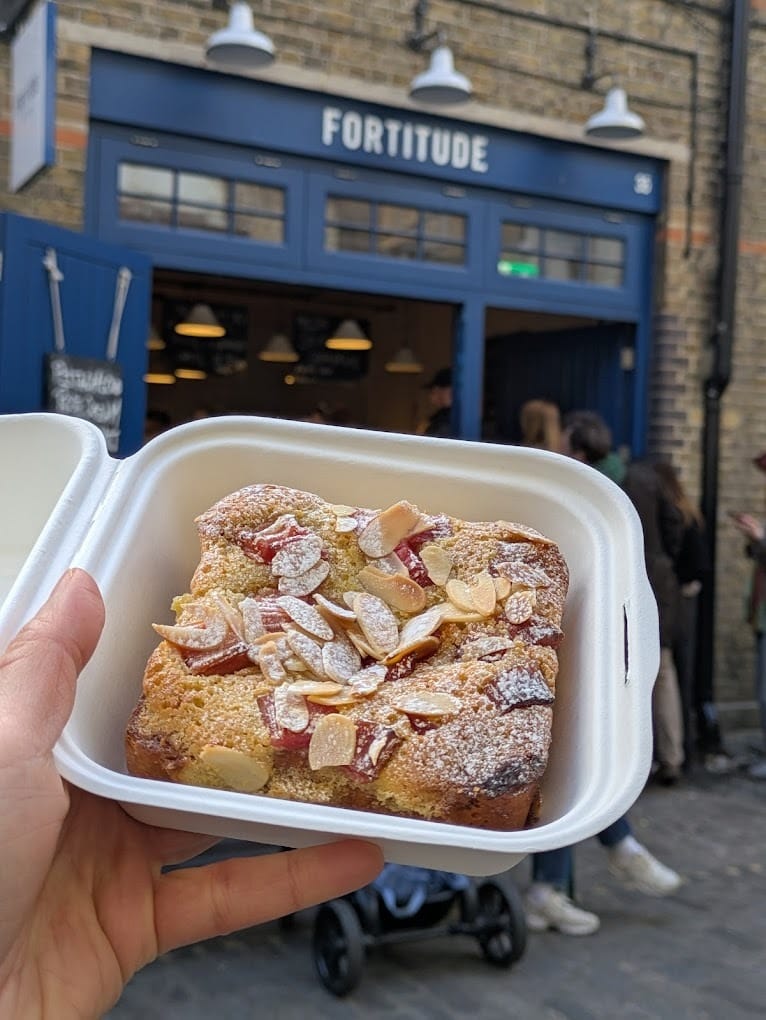
Beyond beignets, the counter swings through morning buns and tray bakes that keep season front and center. Expect chocolate and gingerbread custard morning buns when the weather turns cold, citrus‑forward loaves and sponges when winter needs brightening, and savory riffs like a pizza danish that merges laminated dough with toppings. The kitchen’s Moroccan lean is not a gimmick but a through line for both sweet and savory ideas. Time & Leisure notes how spices and aromatics show up all over, with harissa, preserved lemon, or orange blossom lifting pastries that still read as European in form. The result is not just a counter of pretty cakes. It is a practice, one that uses fermentation for structure and complexity, then layers on spice, fruit, and cream with a precise hand.
Jolene
Jolene, in Newington Green, belongs to the Primeur and Westerns Laundry family and channels the same low‑waste, producer‑driven ethos into a bigger, calmer room where you can grab a loaf, eat a croissant, and then stay for lunch or dinner.
The room is bigger and bathed in light, with wooden tables, big windows, and a calm that suits both solo pastry stops and full table meals. You can grab a loaf and a bun at the counter and be out the door as quickly as at Fortitude, but you can also fold into the restaurant side and build a day around bread and seasonal plates.

Bread is the heart of the operation, and it is built on heritage and regeneratively grown grains milled specially for the group by Andy Cato’s Wildfarmed. Hot Dinners underscores this partnership as a key part of Jolene’s identity, and you can taste it in the dense, flavor‑rich crumb and the slightly rustic look of the loaves. That grain focus runs through the pastry case too. Croissants are fat and bronzed, laminated buns run with chocolate, pistachio, or seasonal fruit, and sticky cinnamon rolls and deeply caramelised kouign‑amann style pastries appear regularly.

Stylist points to super seasonal galettes in late summer, like plum and frangipane, and rhubarb‑topped morning buns in spring. None of it is trying to mimic featherlight patisserie. This is robust, long‑fermented baking that tastes like it was made to be eaten with butter, cheese, and a glass of something. Many locals buy loaves daily for home, and the counter reflects that routine. You see regulars picking up a country‑style sourdough to slice thick, a pastry to eat on the walk back, and a plan to return later with friends.
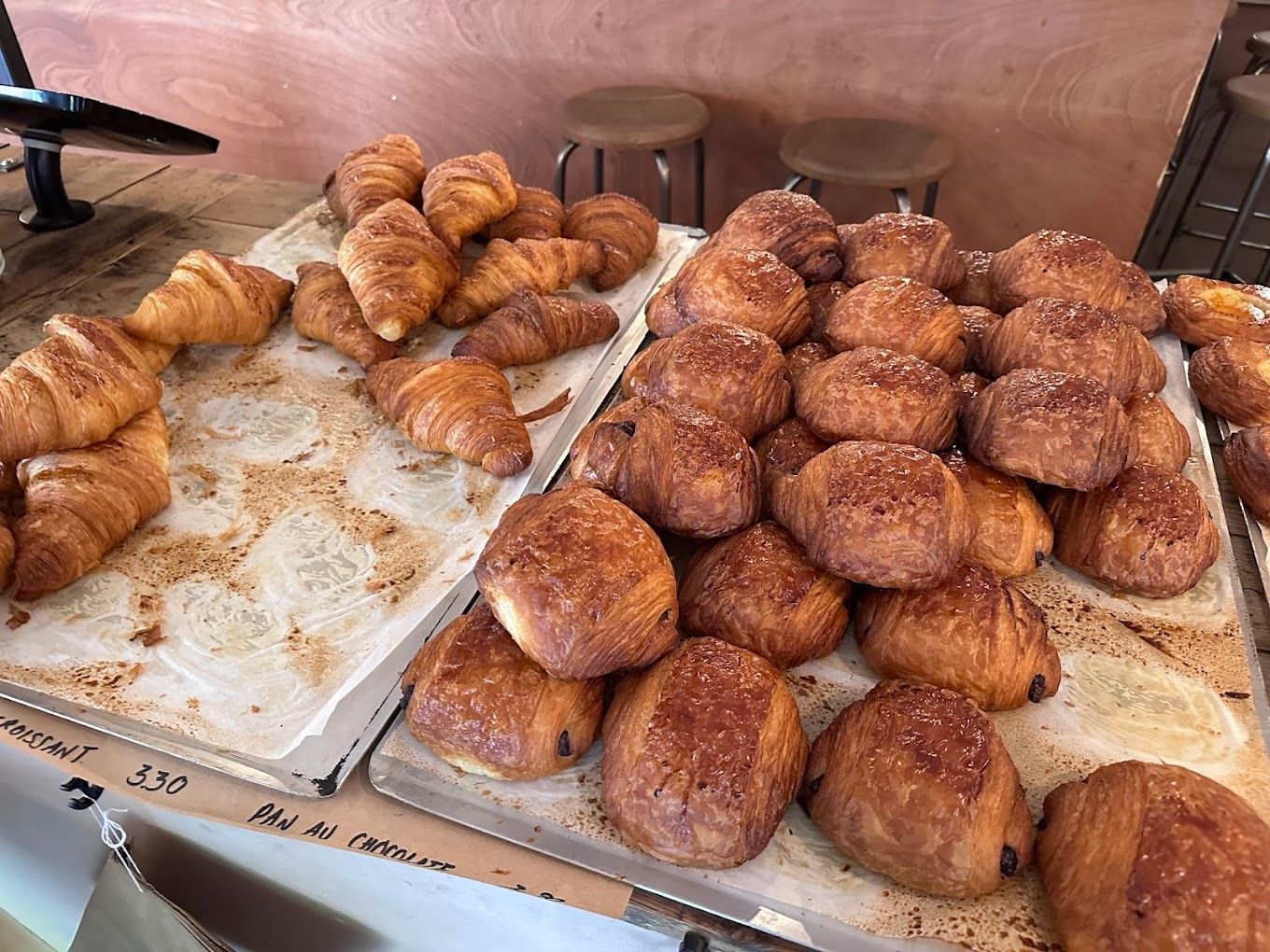
Where Fortitude stays in bakery‑snack mode, Jolene becomes a full restaurant as the day stretches on. The kitchen writes menus that change frequently and use the bread as an anchor. Brunch and lunch might involve thick‑cut toast with seasonal toppings, grain salads, eggs baked with greens, grilled vegetables, and terrines, all designed to sit well together and often to share. Evenings lean into Jolene’s restaurant DNA, with small plates and mains that keep the grain thread present without making it a slogan, then simple desserts that showcase fruit and pastry, like panna cotta with poached fruit or a slice of seasonal tart that may have begun its life at the pastry bench.

Prices reflect the dual identity. At the counter, pastries broadly match Fortitude at about 3 to 5 pounds, with loaves higher depending on size and grain mix. Sit down for brunch or lunch and most plates land in the low to mid teens. Stay for dinner and a full meal with drinks ranges from roughly 25 to 40 pounds per person depending on how you order. Service flips easily between quick and functional at the counter and measured and informed at the tables. Staff talk confidently about grains, producers, and wine, and the pacing invites lingering. It feels much closer to a modern bistro that happens to bake its own bread than to a classic bakery with a few seats.

The Verdict
Choose Fortitude Bakehouse if you want a high‑intensity pastry hit, the kind of counter where sourdough and fermentation deliver depth and balance in formats you think you know, and where a filled beignet can rewrite your idea of sweet. It is the perfect drop‑in for one or two unforgettable items, best eaten immediately, with a coffee that respects the bake. Choose Jolene Newington Green if you want the grain story to unfold across a meal, from a bronzed croissant and a loaf for home to thick‑cut toast, grain salads, baked eggs, and simple, seasonal desserts. It is where you can sit with friends in a calm, light room, talk about the bread because it is worth talking about, and leave feeling like you have had both a bakery fix and a restaurant experience. Quick, surprising, and gone by noon at Fortitude, or slow, generous, and anchored by bread at Jolene. Either way, London’s flour power is in very good hands.
Peter Doig: House of Music
Step into the Serpentine South Gallery this autumn and you will find it softly pulsing with sound.
Peter Doig: House of Music transforms the Kensington Gardens space into what the artist calls a “listening room,” where painting and vinyl play in unison. Running from 10 October 2025 to 8 February 2026, the free‑entry exhibition lets visitors drift between colour, texture, and rhythm as if moving through Doig’s own living studio. The Serpentine has long hosted ambitious projects, but few feel as intimate as this. Every wall glows, every track reshapes the air. Even the quiet moments buzz with presence.
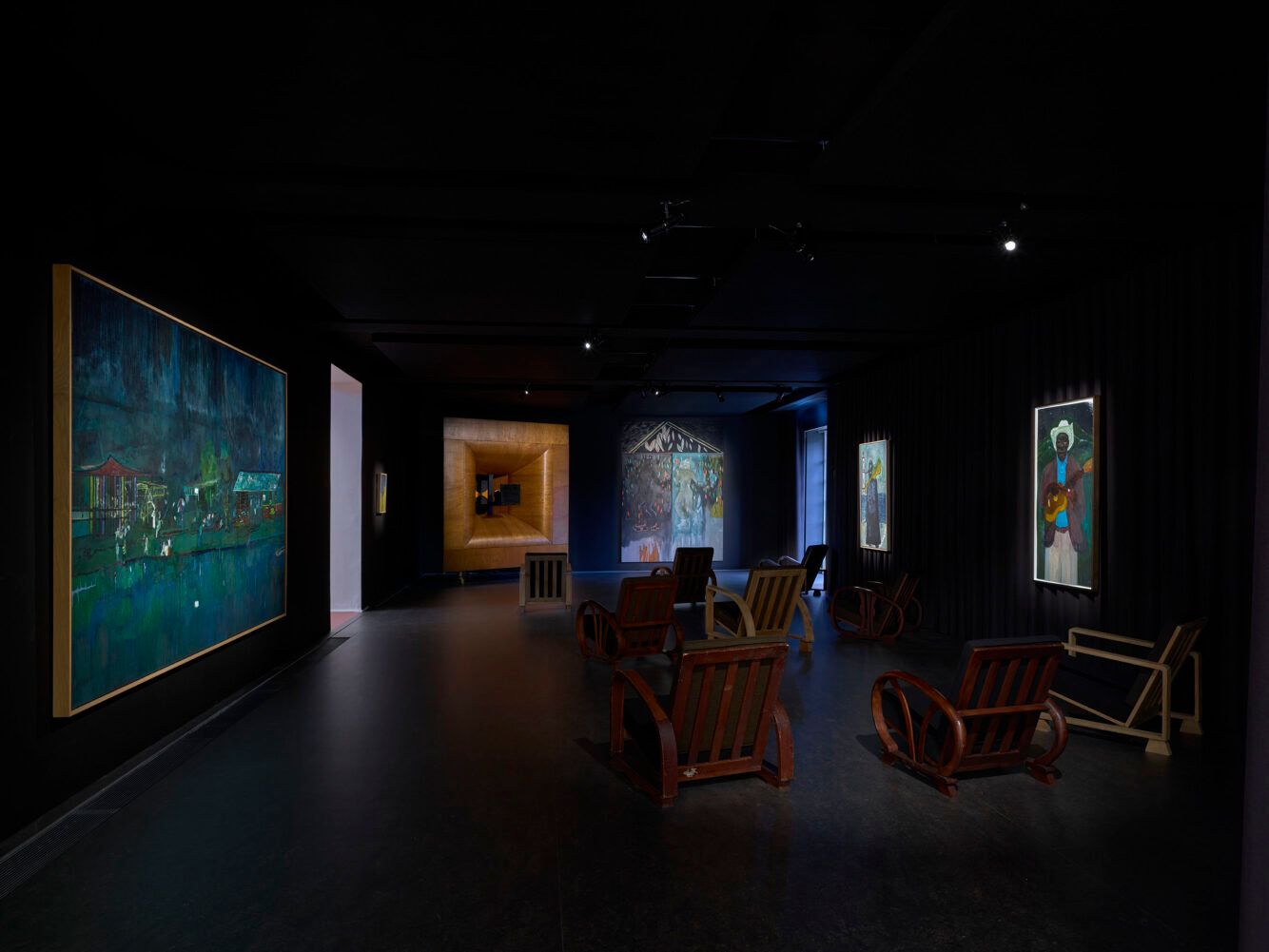
Doig’s paintings have always hovered between dream and memory, many shaped by his years living in Trinidad. Here, those humid landscapes find their soundtrack. On rotation are around 300 records from his personal collection, spun throughout the day so that no two visits are alike. You might enter to a low thrum of dub, or later hear the shimmer of left‑field rock. Reviewers describe the mood as “warm, glowing, cinematic,” the gallery itself lit like a lantern in the park. The combination is subtle but total: each brushstroke seems to breathe in time with the music.
At the heart of it all sits a vintage sound system built with Laurence Passera of dsp London. Its Western Electric and Bell Labs components are the prized ancestors of modern hi‑fi, chosen for depth rather than loudness. From these polished wooden speakers flows the day’s selection of vinyl, curated by Serpentine staff and guest DJs. Doig’s records—neither precious nor pretentious—span soca, funk, and alternative rock. A past Frieze piece once called his taste “non‑wank,” and visitors here seem to agree. The effect is transportive, like stepping into someone else’s imagination and finding it hospitable.
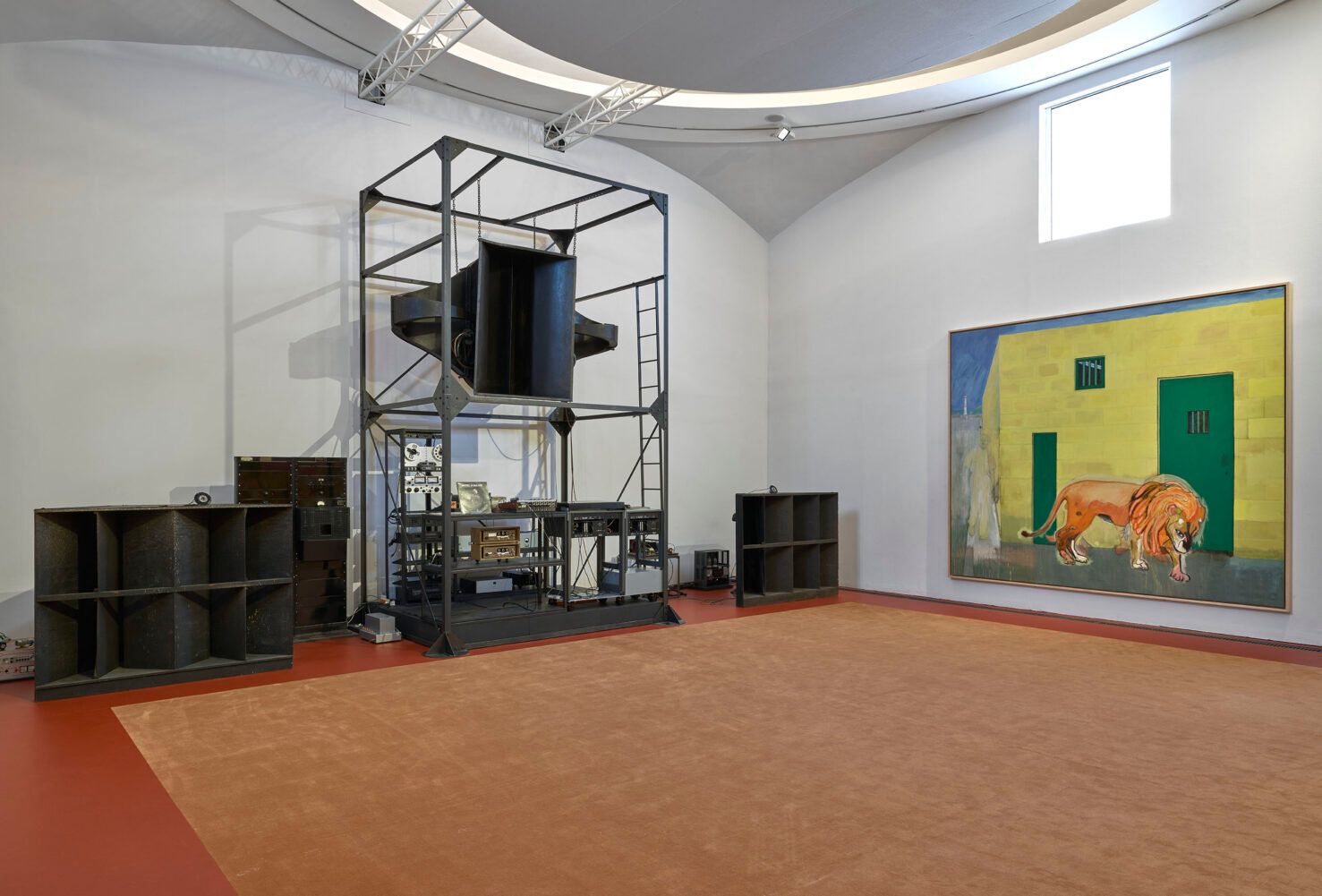
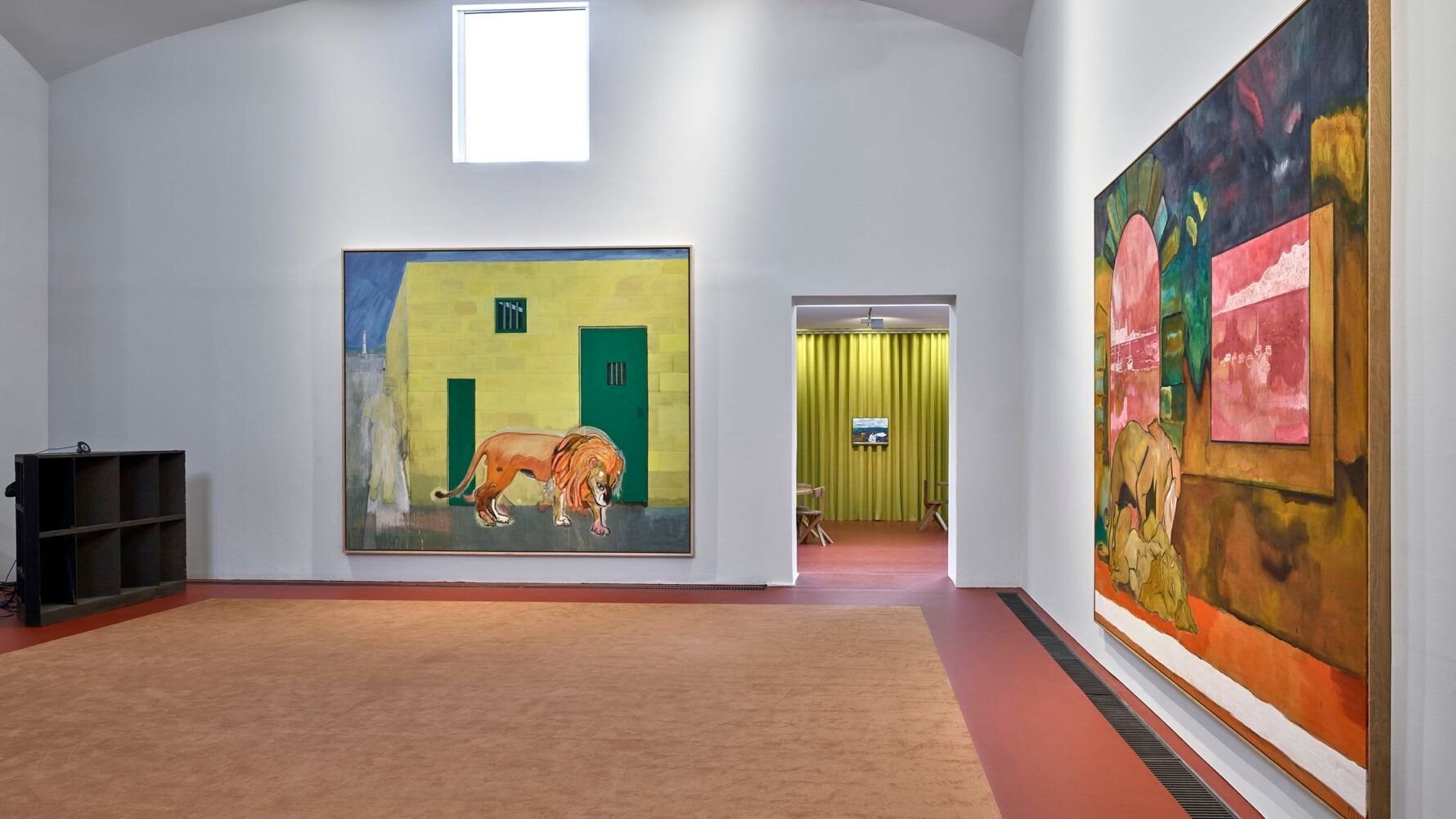
Two distinct atmospheres divide the space. The first gallery unfolds as a communal lounge of green velvet and soft reds, a place where people talk quietly while colour hums around them. Beyond that lies a cooler, blue‑lit chamber with slow, meditative sounds that urge you to linger. Critics have likened walking this route to tuning through a mixtape, one side sociable, the other inward. Between the two zones, known works such as Maracas, with its tower of speakers, hang beside new London‑premiere paintings, compact yet weighty in their presence. The edit is tight on purpose, highlighting the conversation between image and sound rather than spectacle.
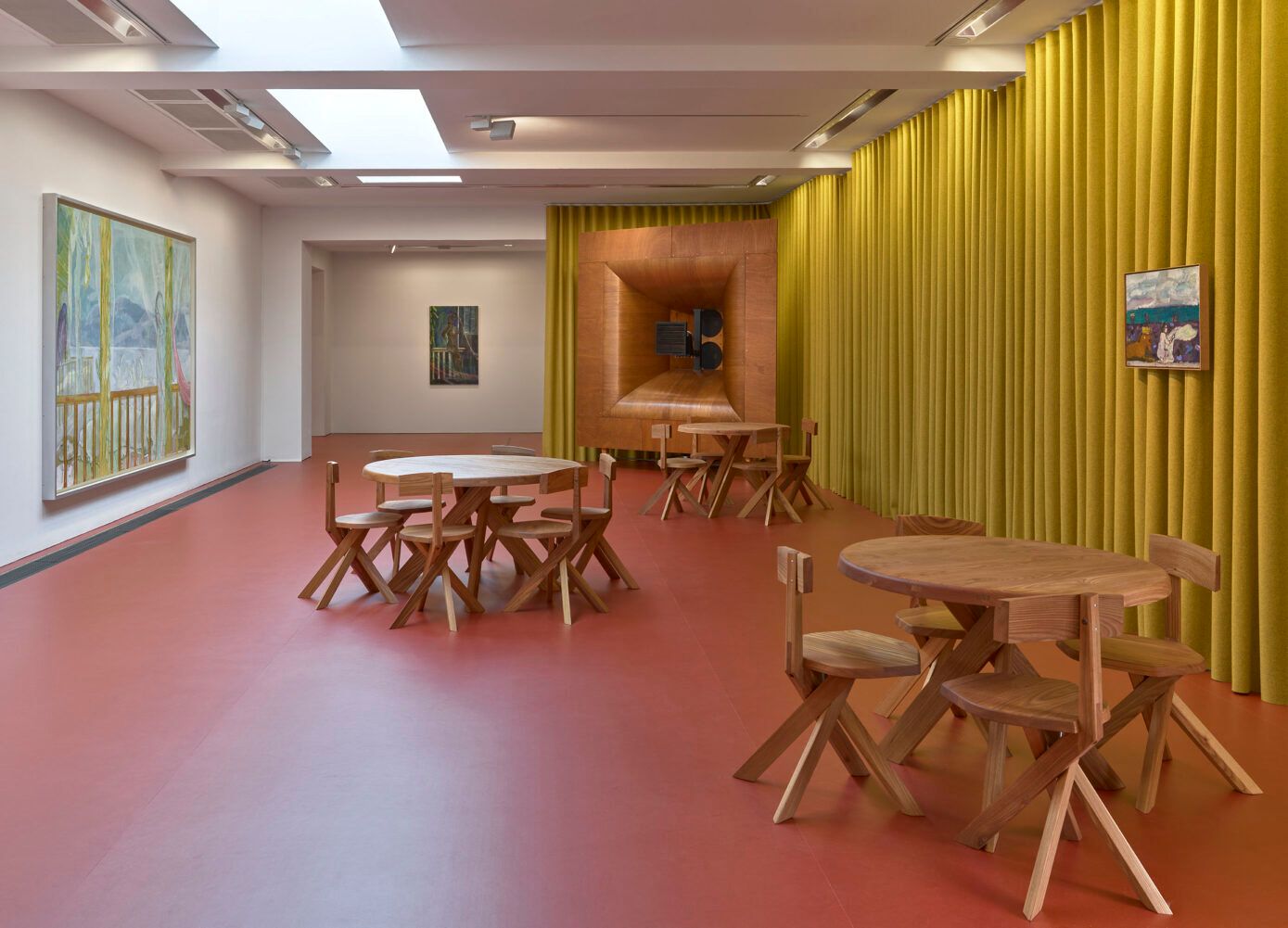
The Serpentine’s Sound Service nights deepen that dialogue. On selected evenings, figures like Ed Ruscha, Arthur Jafa, and Jerald “Coop” Cooper will each take over the decks, swapping art theory for tempo. Their sets make the galleries feel part club, part chapel, audiences gathered not to look, but to listen. No tickets are needed, but booking through the Serpentine website is advised to secure entry. Each event re‑scores the exhibition anew, the records spinning like companions to Doig’s palette.

“House of Music” is not a survey show but a lived moment, a collaboration between painting and playback that feels somehow both Caribbean and London at once. As winter approaches, the Serpentine glows against the dark park, its windows radiating colour and sound. There is no prescribed path, only movement: visitors cross the threshold, wait for a beat, then follow the tune.
What do Tom Brady, Alex Hormozi, and Jay Shetty all have in common?

They all have newsletters.
If you’re building a personal brand, social can only take you so far. Algorithms glitch. Reach tanks. But a newsletter gives you real ownership and revenue.
That’s why we built a free 5-day email course that shows you how to grow and monetize with sponsorships, digital products, and B2B services.
Usually we charge $97, but for the next 24 hours it’s free. Sign up for the course today.
One Bangkok, Thailand’s ‘City‑Within‑a‑City’: Utopia of the Future or High‑End Gated Bubble?
Beside Lumphini Park, cranes are sculpting what its backers call The Heart of Bangkok—a 16‑hectare enclave of offices, hotels, apartments, plazas, and parks united under one private masterplan. One Bangkok advertises itself as A City Always Ready, a phrase meant to conjure resilience and choreography. Its scale alone is dazzling: the largest integrated development ever attempted in Thailand, planned as a single breathing organism rather than a collage of unrelated blocks. You can walk from a hotel lobby into a performance plaza, glide to a gallery, and never really leave the property.

The urban script reads like science fiction. There will be five kilometres of shaded promenades and fifty rai of green areas linking to a two‑kilometre Art Loop. This circuit turns lobbies, skybridges, and open lawns into continuous exhibition space, transforming circulation routes into cultural corridors. Overhead, towers align like glacial columns; below ground, engineers have driven piles eighty metres deep—the deepest in Thailand—to anchor them. Metro connections, EV shuttles, and bike lanes are woven in so tightly that the city’s digital brain and its physical skeleton operate as one.

One Bangkok has already secured Platinum pre‑certification under LEED for Neighborhood Development, a first for Thailand, and aims for additional WELL, WiredScore, and SmartScore accreditations. In theory, it becomes a living laboratory for environmental and social governance, with sensors monitoring air, water, and energy. Every aspect, from waste systems to pedestrian comfort, has been engineered to model ESG ideals. On paper, it looks like the urbanist’s dream: sustainable, efficient, and lushly green. But dreams can have entry requirements.

At ground level, visitors may notice a rhythm closer to an orchestrated retail symphony. A nine‑hundred‑store Retail Loop and a Ritz‑Carlton anchor fill the zone with global brands. Public plazas appear open but are managed by a single operating body, with curated tenants and schedule. That coordination ensures safety and cleanliness, but it also means rules, programming, and surveillance flow from a central control tower. In a metropolis famous for its glorious chaos—motorbikes, food carts, stray art—the quiet order could feel uncanny.

Look closer: the Art Loop’s success may rest on whether it truly becomes a forum for Thai and regional artists or simply a glossy backdrop for luxury retail. If the installations evolve beyond decoration, they could transform One Bangkok into a genuine civic stage. Yet even that depends on who is permitted to participate and how uncurated their presence can be.
Another point to watch will emerge after opening day: who actually uses the greenery and plazas? Will they draw families from across the city or mostly serve office workers and hotel guests? Access at no charge sounds public, but a subtle choreography of security and event curation can still shape who feels welcome. The contrast between Lumphini’s open lawns and this interiorized order will reveal much about the country’s broader urban future.
Perhaps One Bangkok is a preview of cities that manage climate, comfort, and culture inside sealed perimeters. Perhaps it is a symbol of civic aspiration finally realised in steel and glass. Either way, its promise—and paradox—remains the same: a perfectly tuned environment that asks whether perfection is best achieved by opening the city up or fencing it, softly, in.
Is One Bangkok closer to your idea of a dream city of the future, or a high‑end gated bubble with better branding?Choose below: |
Spotlight on Albania Riviera
Eat
Taverna Stolis in Himarë, where olive trees shade tables scattered in a grove that faces the Ionian. The menu leans on the region’s Greek influence with grilled octopus, lemon-drizzled fish, and carafes of local white wine.

Explore
Leave the seafront cafés below and climb toward Himarë Old Town, a warren of stone lanes perched high above the bay. Between weathered Ottoman houses, you’ll glimpse terracotta-tiled roofs, wild fig trees, and the crumbling walls of a hilltop castle. Each turn offers a postcard view of the coast.

Unwind
Seven kilometers south, Borsh Village and Beach Taverns feel like the Riviera’s secret corner. The hillside hamlet is drowsy with jasmine and goats’ bells, yet below it unrolls one of Albania’s longest strips of beach. Follow the scent of charcoal to a row of modest seafood shacks where the day’s catch hits the grill minutes after leaving the water.
Thank you for reading! Mirupafshim!
How would you rate todays edition of the newsletter? |
Lose Up to 23% Body Weight

MedVi’s GLP-1 treatments are clinically proven to help patients lose up to 23% of their body weight. Get personalized medical support, proven medications, and a plan designed to deliver real, lasting results.
Read all warnings before using GLP-ls. Side-effects may include a risk of thyroid c-cell tumors. Do not use GLP-1s if you or your family have a history of thyroid cancer. In certain situations, where clinically appropriate, a provider may prescribe compounded medication, which is prepared by a state-licensed sterile compounding pharmacy partner. Although compounded drugs are permitted to be prescribed under federal law, they are not FDA-approved and do not undergo FDA review for safety, effectiveness, or manufacturing quality.