- The Culture Vulture
- Posts
- Battle of the Burgers: Tokyo's wagyu stack vs. Kobe's double char legend
Battle of the Burgers: Tokyo's wagyu stack vs. Kobe's double char legend
Tokyo wagyu drips, Tate’s pre-internet tech art whirrs and Shenzhen’s new sci-fi landmark takes flight.

Shakira Taylor
May 24, 2025
In partnership with

Hey Culture Clubbies!
This edition proves comfort food and cutting-edge culture can share the same plate. We’re biting into Japan’s most inventive burgers, slipping through an interactive maze of pre-internet art, rocketing to Zaha Hadid’s newest “spaceship” museum and rounding off with three under-the-radar Kuala Lumpur tips.
Keep reading to uncover the best bites, shows and city hacks right now.
In less than 10 minutes we will cover:
Battle of the Burgers – Tokyo wagyu vs. Kobe’s double-grilled cult favourite.
Electric Dreams – Tate Modern’s retro-futurist art playground
Science Museum or Spaceship? – inside Shenzhen’s new Zaha Hadid design.
Travel Spotlight – Kuala Lumpur’s chilli noodles, art mall and hidden alleyway
Battle of the Burgers: Tokyo's wagyu stack vs. Kobe's double char legend
You arrive in Japan craving sushi, yet one sniff of sizzling beef fat and suddenly it’s burger o’clock. What follows is less Big Mac, more high-altitude taste test: a glossy wagyu monolith in Tokyo and a cult double-grilled creation in Kobe. Both redefine comfort food; both leave permanent grease halos on your camera lens.
Two joints sum up the spectrum: central Tokyo’s tourist-friendly Wagyu Burger, and Kobe’s cult Brisk Stand where the Kittayatsu sells out by lunchtime.
Learn AI in 5 minutes a day

This is the easiest way for a busy person wanting to learn AI in as little time as possible:
Sign up for The Rundown AI newsletter
They send you 5-minute email updates on the latest AI news and how to use it
You learn how to become 2x more productive by leveraging AI
Contender #1: Wagyu Burger - ‘Rivers of Fat, Pillow of Brioche’
First impressions scream mall food-court - huge menu boards, laminated photos that flatten the meat into cartoon disks. Then the tray lands, and everything changes. The Triple-Cheese Wagyu Burger arrives looking like a geological cross-section: brioche cap, strata of molten cheddar-mozzarella-Parmesan, a patty two fingers thick and marbled like blue cheese, then another slick of sauce before the heel bun. The first bite is a sensory pile-up—crackly sear gives way to foie-gras-soft centre, and wagyu fat streams down your wrist in rivulets so hot it feels illicit.
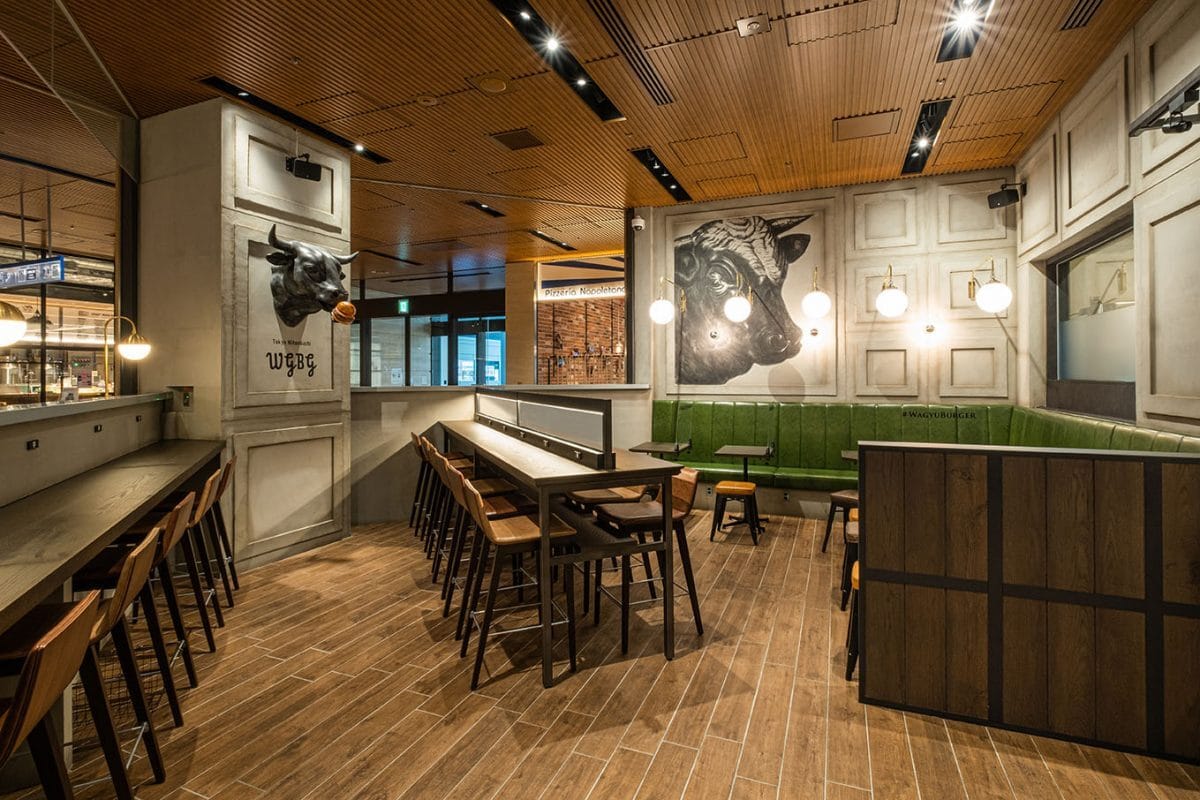
Wagyu Burger, Nihonbashi Tokyo
Triple Cheese Wagyu Burger
Flavour? Imagine steakhouse umami dialled to eleven—sweet nuttiness from the A4 chuck, gentle funk from aged fat, salt kissed with miso in a tangy “aurora” burger sauce that Japanese reviewers swear “tastes like Big Mac went to culinary school”. Pickles snap like cymbals, resetting your palate before the next molten-cheese wave. The brioche is lightly sweet, toasted till its crust shatters then melts; it never turns to mush, even as wagyu juices soak in. Wash it down with a fluorescent melon-soda and the combo punches nostalgia and novelty in equal measure.
All this hedonism costs ¥1 880 (≈ £9); Tokyo food bloggers call it “dangerously affordable for the calorie euphoria delivered”.
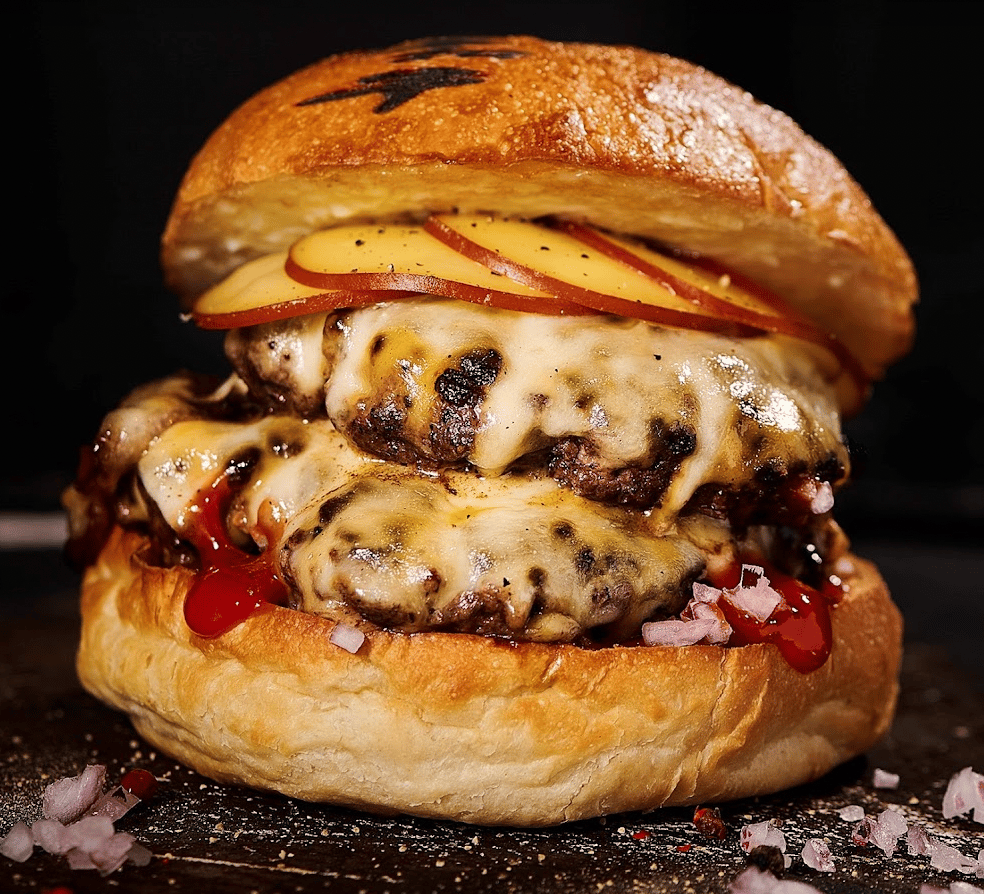
Triple Cheese Wagyu burger
Contender #2: Brisk Stand - ‘Kittayatsu: the Charred cut Legend’
Brisk Stand feels like a 1950s diner compressed to eight stools: chrome, checkerboard floor, Hank Williams on loop. Yet its headline act, the Kittayatsu (literally “the cut one”), is pure Japanese invention. Two slim patties, 100 % beef, sandwich cheddar, dill pickles and a haystack of caramelised onions. The chef slices the burger in half mid-cook, slaps each cut face onto the sizzling griddle and lets it baste in its own juice until the cheese caramelises into delicious burnt ends.
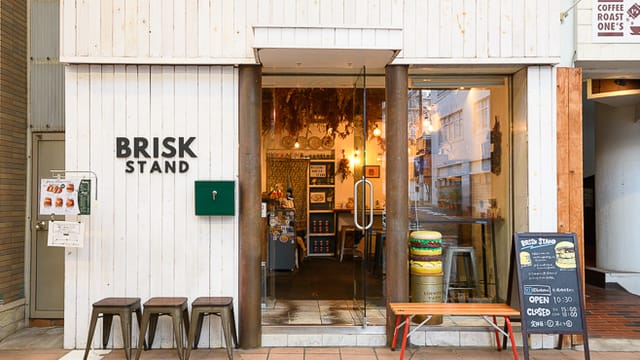
Brisk stand, Kobe
The aroma hits first: browning butter, singed onion sugar, a whiff of charcoal from the well-seasoned steel. Texture is fireworks—crackly cheese rind, brittle char, then a gush of beef broth as you bite through. Reviewers rave that “it tastes like a steakhouse and a backyard grill had a genius baby”.
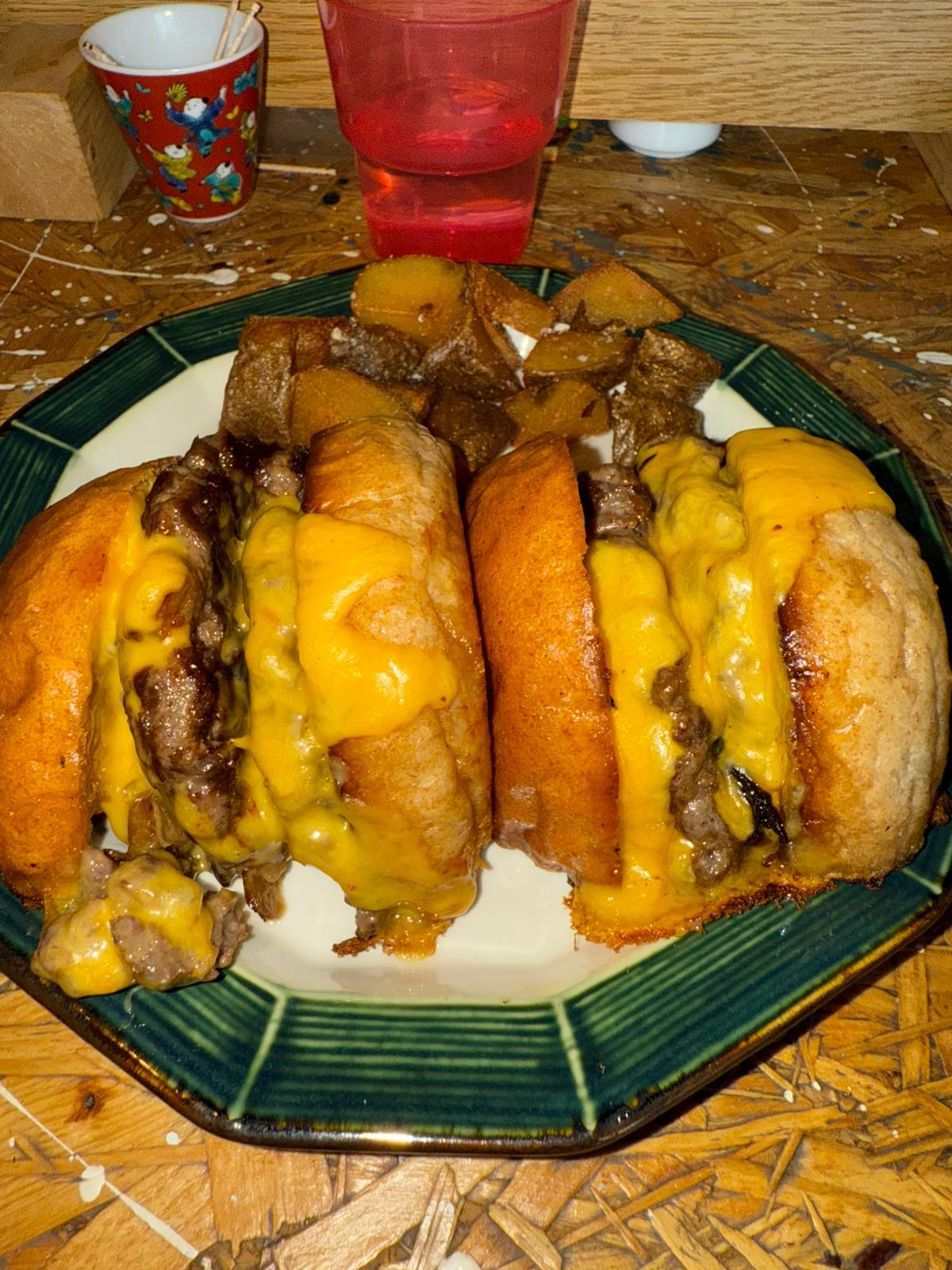
Kittayatsu - the cut one
Salt crystals flash on the surface, amplifying iron-rich flavour while keeping richness in check. Caramelised onions melt into a jammy glaze, their sweetness fusing with beef drippings for a French-onion-soup whisper in every chew. Square-cut chips, fried in beef tallow, echo the burger’s mineral depth; you chase them down with house-made ginger ale so fiery it tingles the nose.
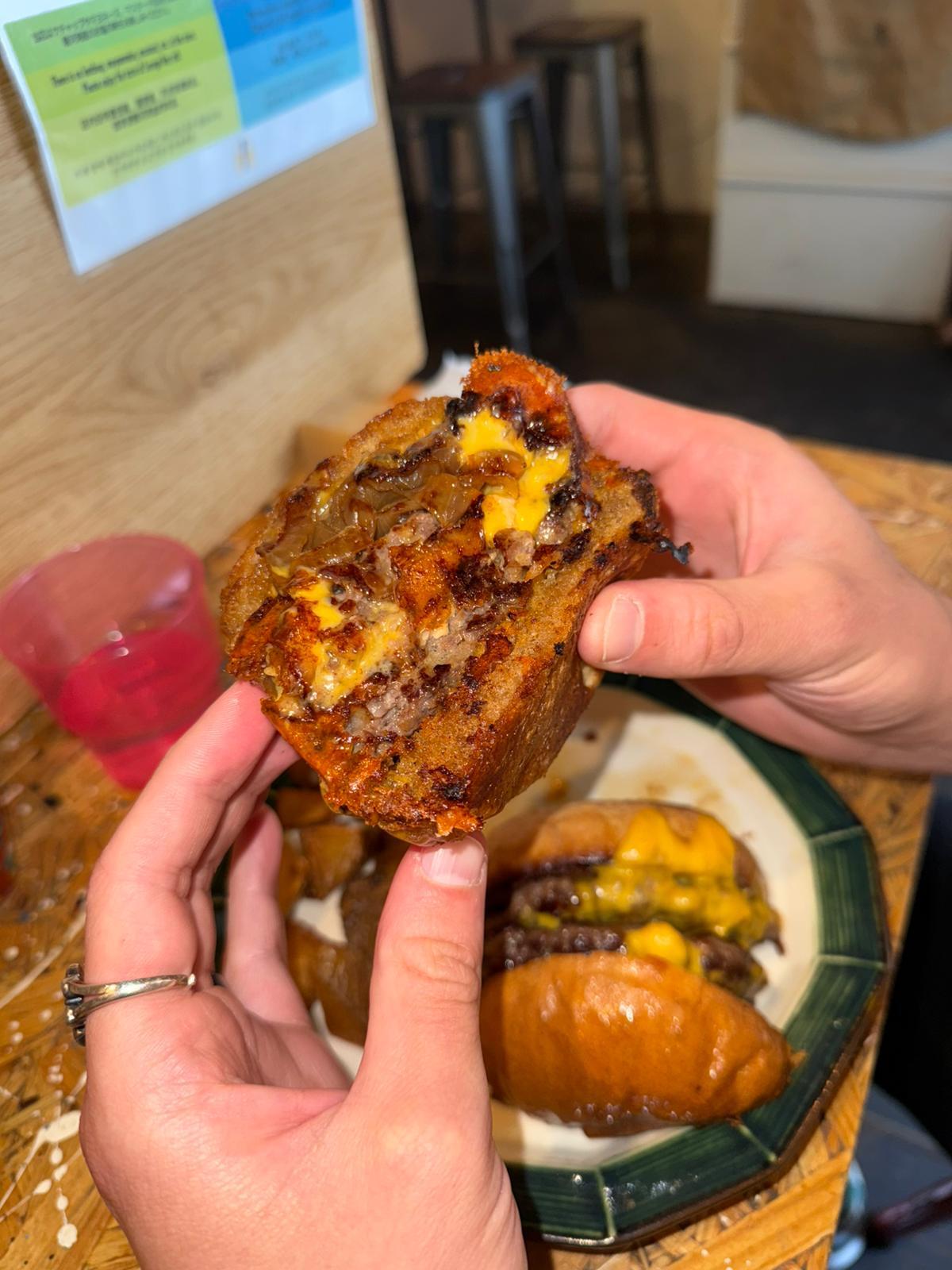
Kittayatsu at Brisk stand in Kobe, you can see the char!
Every morning only 30 Kittayatsus hit the grill; by noon the chalkboard reads “Sold Out” and the chef scrubs the flattop clean. The privilege costs ¥2 500 (≈ £13) and usually a 45-minute wait, but regulars insist the “double-char umami makes the queue feel like foreplay”.
The Verdict
If decadence per yen rules your world, Tokyo’s wagyu stack is a runaway winner—cheap, immediate, unashamedly drippy. For technique, theatre and a flavour profile that shouts “Maillard!” in surround-sound, Kobe’s double-char legend edges ahead. Either way, these aren’t just burgers; they’re culinary flexes that leave ketchup-smeared Americana looking timid.
Element | Wagyu burger, Tokyo | Kittayastu in Brisk stand, Kobe |
|---|---|---|
First bite | Butter-soft core erupts with wagyu juices | Crackly cheese crust, instant char aroma |
Core flavour | Sweet nuttiness, miso-pepper tang in sauce | Deep beef broth, onion caramel, sea-salt sparks |
Texture arc | Pillow-soft bun → molten cheese → juicy centre | Cheesy crunch → char edge → juicy smash interior |
Mess factor | Rivers of fat, drippy cheese | Finger-licking but contained by char crust |
Price & Wait | ¥1 880 / walk-in | ¥2 500 / line‐up from 10 a.m. |
London cravings?
Grab dry-aged brilliance at Black Bear, bone-marrow excess at Burger & Beyond, or liquid-cheese smash hits at Supernova Soho—none quite Japanese, but all solid consolation.
Electric Dreams - last call for Tate Modern’s vintage tech rave
Until 1 June, Tate Modern’s Turbine Hall hums, flickers and ripples with Electric Dreams: Art & Technology Before the Internet—a 150-piece time-capsule proving interactivity didn’t start with smartphones.
Step inside and you’re greeted by Greek artist Takis’s Signals—magnet-tipped rods that sway and ping like tuning forks for the space age. Nearby, Carlos Cruz-Diez’s Chromointerferent Environment bathes you in shifting laser grids, turning white shirts ultraviolet-green as you move.
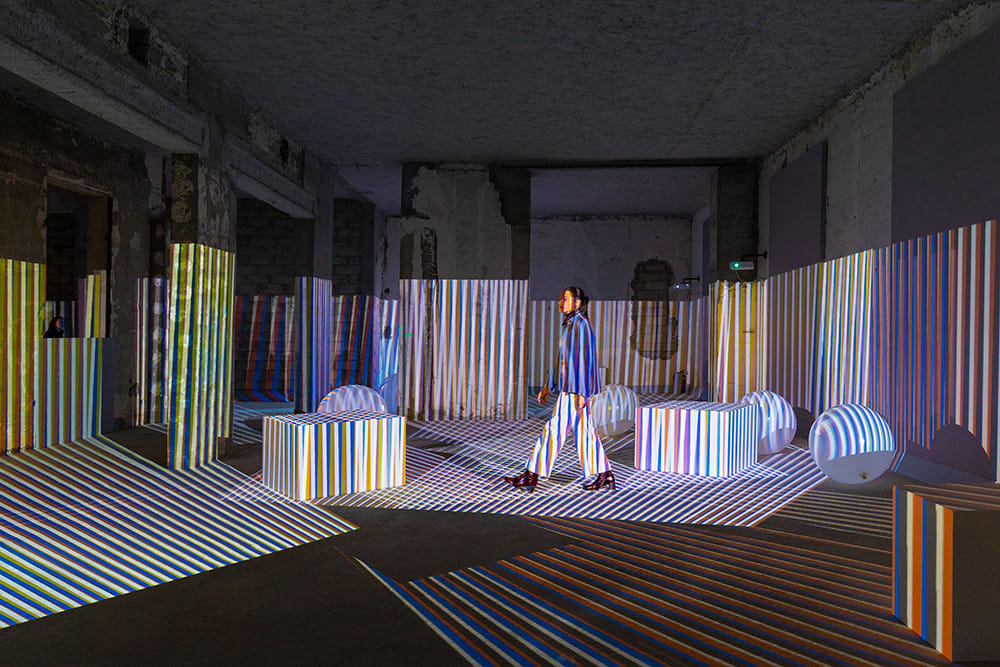
Chromointerferent Environment
The show’s first section dives into 1950s Op Art: Bridget Riley–style black-and-white wave paintings pulse under strobe, while Julio Le Parc’s motorised mirrors scatter galaxies across the floor.
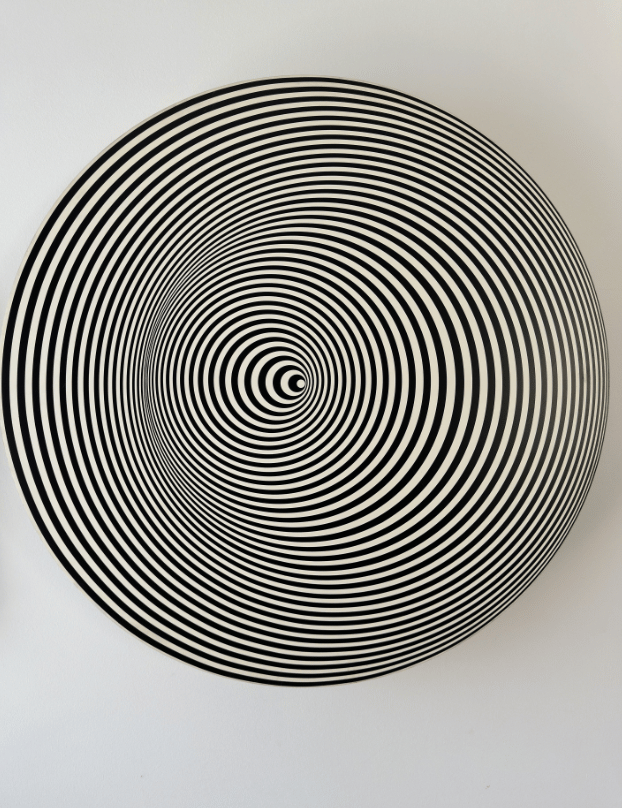
Black and white wave painting
In the 1970s gallery, restored mainframes run Vera Molnár’s algorithmic drawings, their ink-plotter arms squeaking out endless variations in real time. Don’t miss Monika Fleischmann & Wolfgang Strauss’s Liquid Views—a 1992 touch-screen pool where your reflection distorts like digital mercury when you dip a finger.
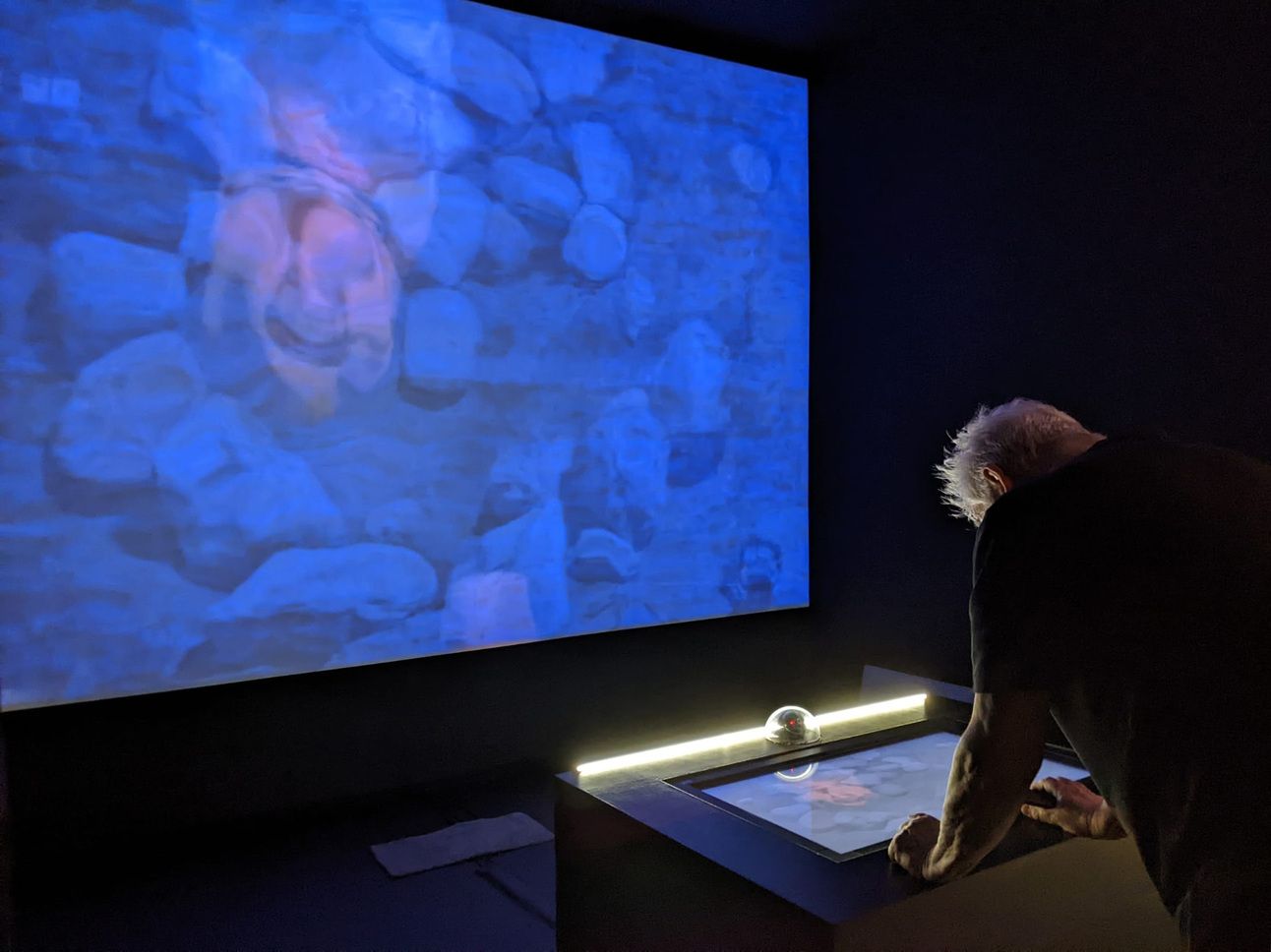
Interactive touch screen pool where your reflection ripples at your touch
Kids flock to the retro-gaming corner: a working Minitel terminal shows Eduardo Kac’s animated tele-poems, and a bank of Commodore 64s lets visitors remix pixel art on floppy disks. Exit via the “Dream Lounge”, where vintage cathode-ray TVs loop music-video experiments by Nam June Paik and David Medalla.
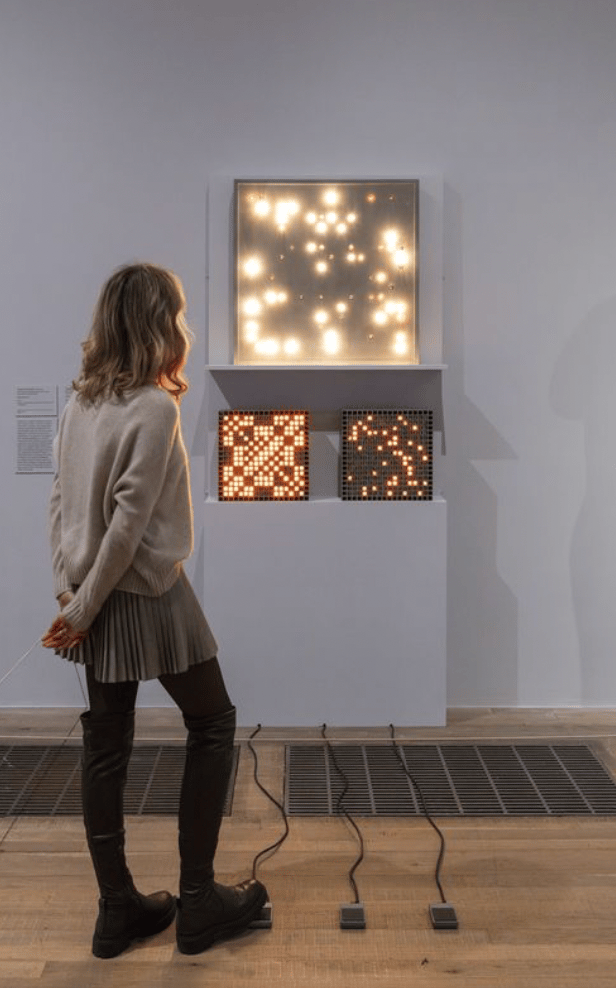
The whole trip feels halfway between a science fair and a nightclub—catch it now or wait another decade for someone to round up this much analog wizardry again.
Daily News for Curious Minds
Be the smartest person in the room by reading 1440! Dive into 1440, where 4 million Americans find their daily, fact-based news fix. We navigate through 100+ sources to deliver a comprehensive roundup from every corner of the internet – politics, global events, business, and culture, all in a quick, 5-minute newsletter. It's completely free and devoid of bias or political influence, ensuring you get the facts straight. Subscribe to 1440 today.
Science museum or spaceship? Inside Zaha Hadid’s Shenzhen Tech temple
Zaha Hadid Architects have landed another UFO on Earth: the Shenzhen Science & Technology Museum, a 125 000 m² “infinite loop” of aluminium-clad curves on the city’s Guangming Science Park. Inspired by orbital mechanics, the building begins as a near-perfect sphere facing the metro station, then stretches westward into terraced, wave-like galleries that watch the park like a glittering telescope. A grand central atrium—70 metres tall—spirals upward; bridges criss-cross the void, granting Star Wars-cantina views of drone exhibitions below.
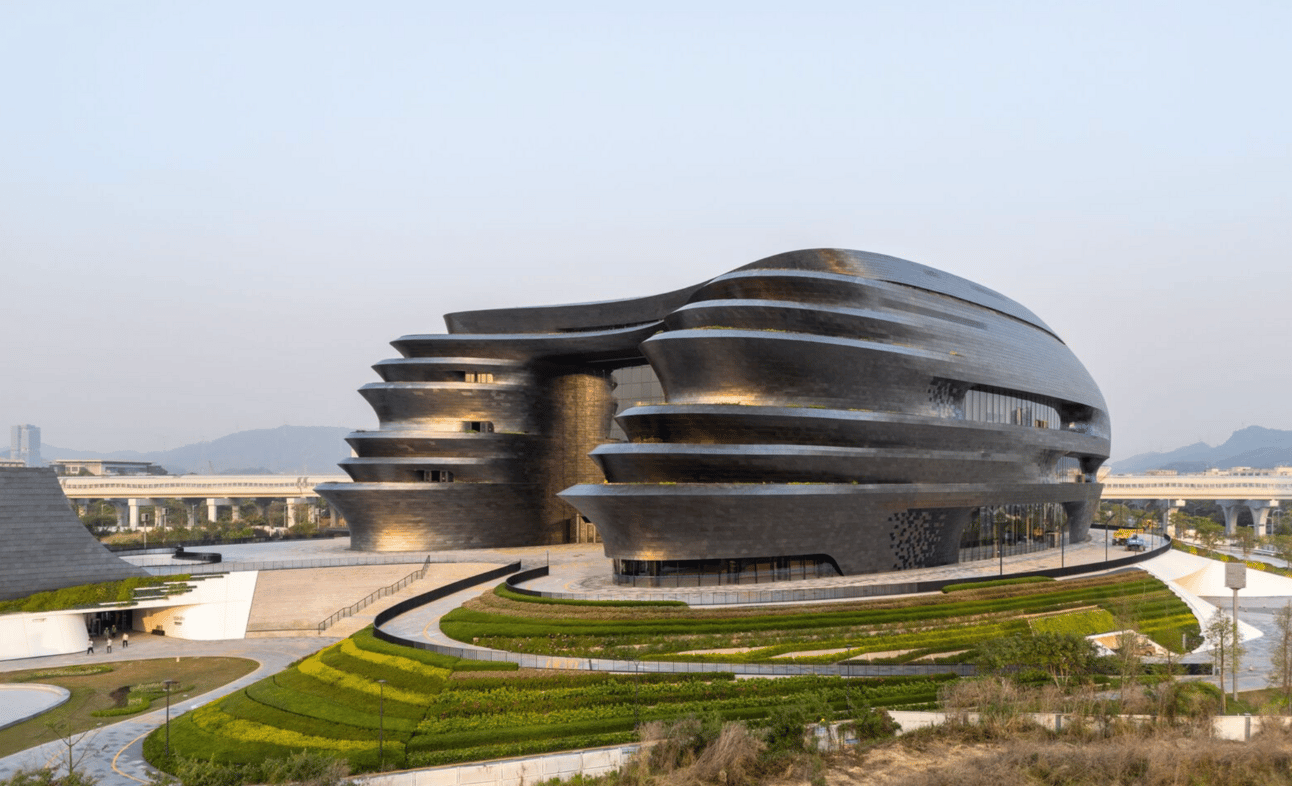
Shenzhen Science and Technology Museum
The façade’s rippling panels are anodised aluminium, chosen to reflect Shenzhen’s subtropical light while resisting coastal humidity. Inside, column-free floors use long-span steel trusses, allowing immersive exhibits from AI robotics labs to a full-size Hyperloop mock-up. Sustainability nods lie everywhere: photovoltaic cladding, ridge-line rainwater harvesters and geothermal cooling feed the grid-interactive skin.
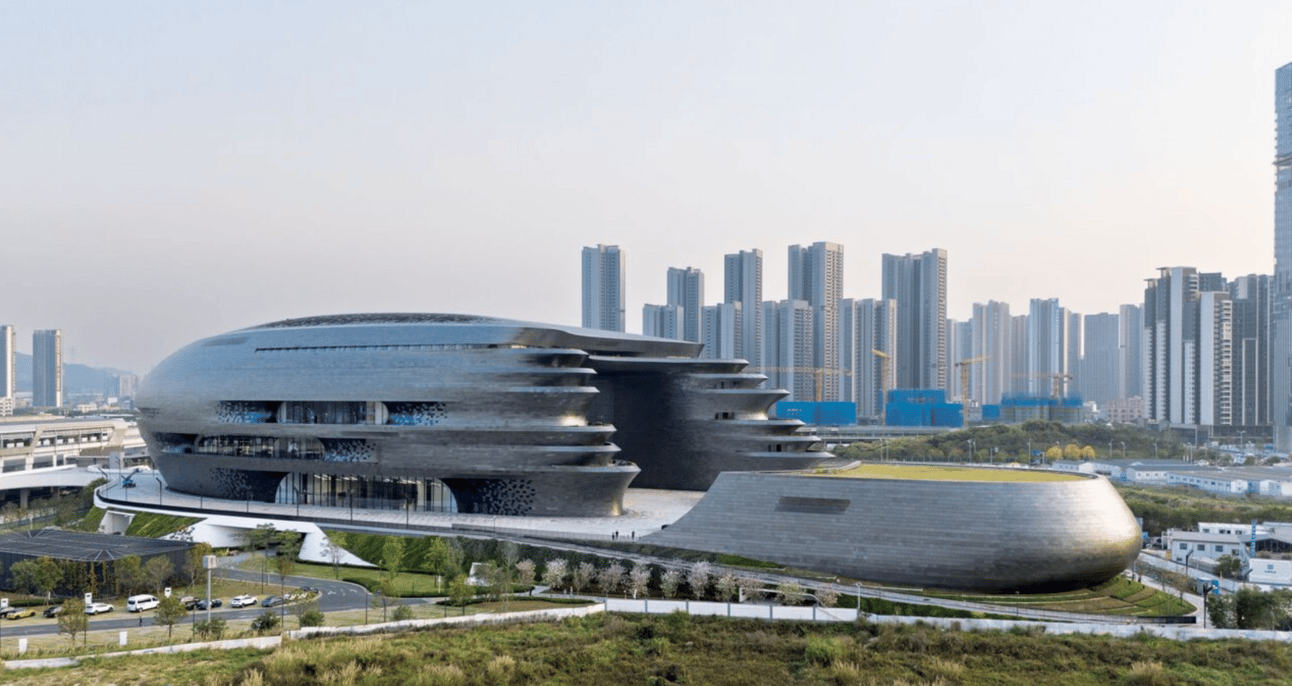
Shenzhen Science and Technology museum
If those swoops feel familiar, you’ve probably admired Hadid’s Heydar Aliyev Centre in Baku, the London Aquatics Centre or Guangzhou’s pebble-shaped Opera House—each a lesson in fluid geometry and structural daring. The Shenzhen museum is her studio’s largest post-humous commission, and at night the whole shell glows soft white, earning locals’ nickname “The Mooncake”.
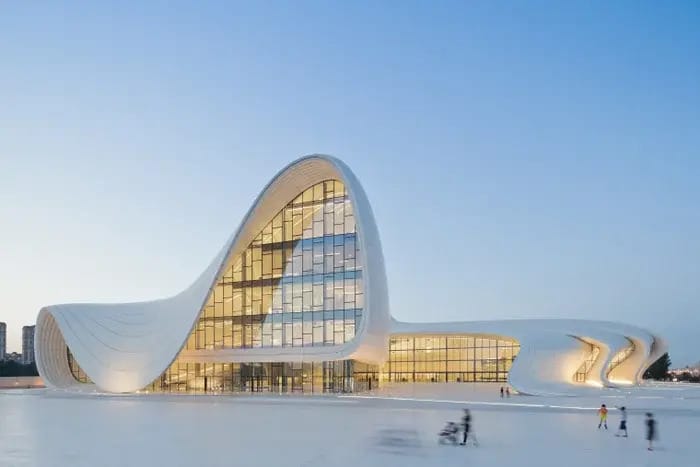
Heydar Aliyev Centre in Baku
What’s your verdict on the design of Shenzhen’s new Science & Technology Museum?Click and vote below: |
Travel spotlight: 3 Things you need to know before visiting Kuala Lumpur, Malaysia
Brave the original Kin Kin Chilli Pan Mee at Chow Kit
A poached egg, hand-pulled noodles and incendiary dry-chilli flakes create KL’s most addictive lunch, but arrive before noon or the queue snakes into the street
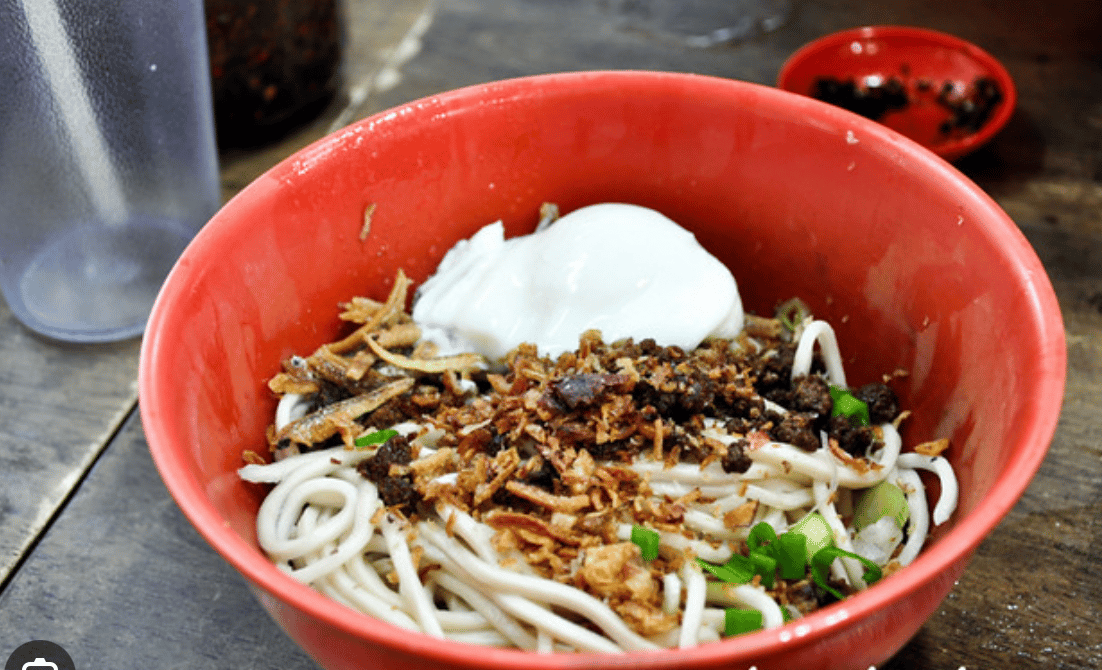
Chilli Pan Mee noodles
GMBB
Nine-storey “creative mall” in Bukit Bintang that houses 100+ indie studios, zine fairs and weekend performance art. It’s Haji Lane meets incubator hub and still flies under most tourist radar.
Kwai Chai Hong
A resurrected 1960s alleyway behind Petaling Street that lights up after dusk with projection art and seasonal installations. Scan QR codes on each wall to unlock audio tales from Chinatown’s past—best enjoyed at 9 p.m. when the tour buses have gone
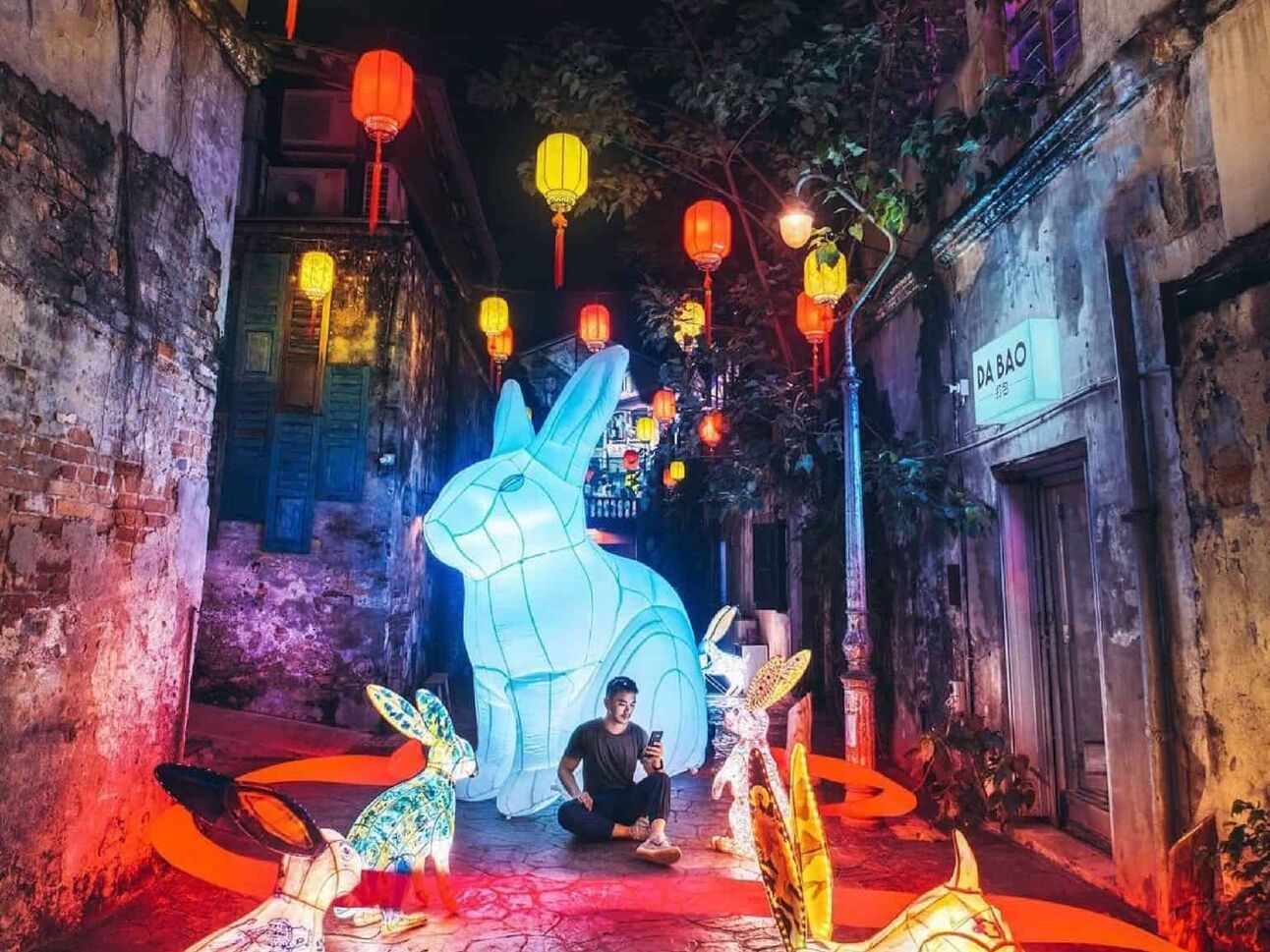
Kwai Chai Hong KL
Thank you for reading! See you next time.
How would you rate todays edition of the newsletter? |