- The Culture Vulture
- Posts
- Peranakan Fireworks: Inside Candlenut’s ‘Ah-makase’ odyssey
Peranakan Fireworks: Inside Candlenut’s ‘Ah-makase’ odyssey
Peranakan mastery in Singapore, an art-rescued Japanese island and Japan’s pastry world-cup triumph.

Shakira Taylor
May 31, 2025

In partnership with

Hey Culture Clubbies!
This edition swings from ancestral spice pots to futuristic sugar sculptures. We taste Michelin-star Peranakan at Singapore’s Candlenut, hop to an island gallery that saved itself with art, cheer Japan’s win at the Pastry World Cup and slip a trio of insider tips for Istanbul.
Keep reading to uncover the best restaurants, shows and city hacks right now.
In less than 10 minutes we’ll cover:
Flavours of Peranakan Heritage – Candlenut’s Ah-Makase feast
Island of Art – Naoshima’s creative revival
Pastry World Cup 2025 – why Japan beat long standing rivals France
Travel Spotlight – Istanbul’s noodles, underground art and secret cistern
Peranakan Fireworks: Inside Candlenut’s ‘Ah-makase’ odyssey
Peranakan cuisine, also called Nyonya food, grew from 15th-century marriages between Chinese traders and Malay communities across the Straits Settlements; think coconut milk meeting soy, tamarind courting shrimp paste and every dish stitched with ginger-flower perfume and bird’s-eye-chilli sting.
Candlenut, set in leafy Dempsey Hill, Singapore, is the world’s only Michelin-starred Peranakan restaurant, chef-owner Malcolm Lee is distilling grandmother recipes into a playful “Ah-Makase” tasting menu.
Quick, hard-hitting business news

Morning Brew was built on a simple idea: business news doesn’t have to be boring.
Today, it’s the fastest-growing newsletter in the country with over 4.2 million readers—thanks to a format that makes staying informed both easy and enjoyable.
Each morning, Morning Brew delivers the day’s biggest stories—from Wall Street to Silicon Valley and beyond—in bite-sized reads packed with facts, not fluff, and just enough wit to keep things interesting.
Try the newsletter for free and see why busy professionals are ditching jargon-heavy, traditional business media for a smarter, faster way to stay in the loop.
Bites to begin - Tiny shells, thunderous spice
The appetisers land like a colourful bomb and suddenly the room smells of charcoal, coconut and fried spice. I start with the kueh pie tee; its wafer shell snaps so cleanly it shocks a grin out of me, and the tumeric-coconut prawn curry filling sends up a sweet puff of fragrant steam. With a lemongrass sting creeping in at the finish making my cheeks glow. A recipe chef Malcolm Lee learned from his grandfather (Yeye). The ngoh hiang follows—five-spice pork-and-prawn rolled in beancurd skin—its dark molasses dip tasting like a doughnut glaze that took a wrong (glorious) turn through a spice bazaar; I catch myself humming approval before the bite is gone.

Beef cheek curry and paratas, pork satay, prawn crackers, ngoh hiang - type of fish cakes, crackers with prawn curry inside (top right.
Things escalate with the beef-cheek kapitan: wagyu braised to spoon-soft submission, swimming in a candlenut-rich gravy that layers clove, kaffir lime and butterfat. Spooned onto a tiny puffed parata, one mouthful triggers the sort of eye-roll usually reserved for chocolate cake. But it’s the Kurobuta pork-neck satay that steals my heart; double-charred, dripping kicap manis caramel, it tastes like someone glazed a brisket end with treacle and then kissed it with coriander seed smoke. Between each hit, brittle Thai prawn crackers reset my tongue with a salty shout.

Fish maw soup
A hearty pot of fish-maw soup arrives as an intermission. The gingery, slightly herbal chicken broth, simmered for 4 hours, feels like a warm compress for the stomach; pieces of maw puff up like savoury marshmallows and soak up all that comfort, easing me back into the ring for the curries ahead. What is fish maw I hear you ask? I didn’t know either before the well informed waitress explained thay are infact fish swim bladders. Yes, bladders, for swimming? And guess what - delicious!

Full menu for the Ah-makase tasting menu
Time for the main event
Then the table fills with communal curries and clouds of Thai Hom Mali rice. Iberico pork jowl in Aunt Caroline’s babi buah keluak arrives cloaked in a midnight-black nut sauce that smells of cacao and cigar boxes; the meat collapses at a nudge, and regulars dub it the menu’s “umami black hole”. Steamed barramundi headlines ikan chuan chuan—ginger sticks crackle in hot oil, flooding the plate with sharp, herbal heat that makes the fish taste almost medicinal-fresh.

Selection of Curries for the main course with the wing bean salad in the top right bowl.
Udang masak lemak layers sea-prawns and vegetables in a coconut-turmeric gravy brightened by anchovy sambal, while sambal telur hides a deep-fried egg and baby squid in tomato-chilli relish that feels like spicy ketchup engineered by a mad chef. The house-iconic blue-swimmer-crab curry tones things down—sweet crab meat floating in mellow galangal-scented coconut—while a wing-bean salad of lemongrass, radish and crispy anchovies offers citrus crunch between spoonfuls. Portions are so huge that as much as you keep going back ‘just one more bite’, you have to wave your napkin in surrender at last.
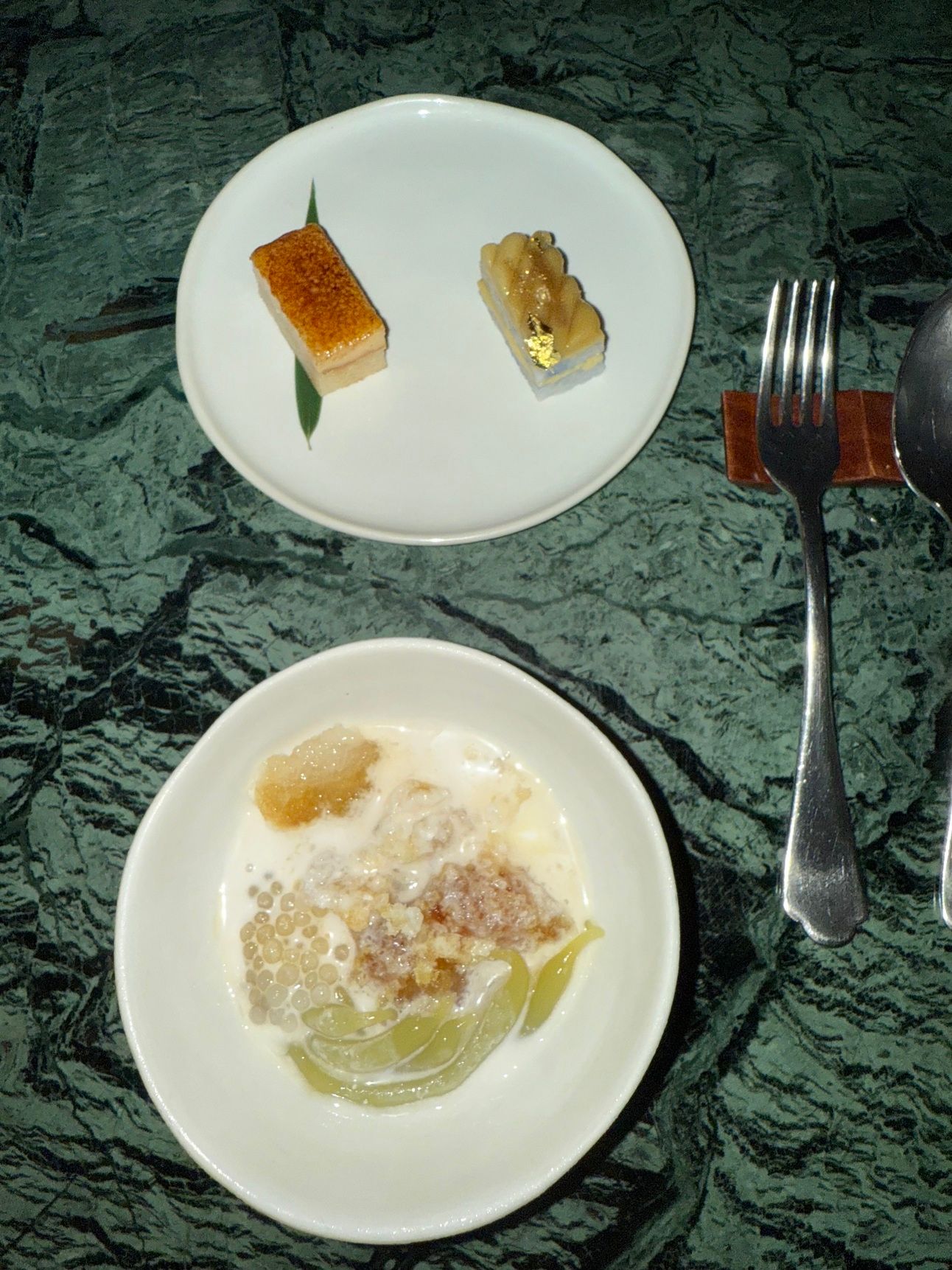
Top plate - Cassava kueh, Pulut tai tai, Bottom bowl - Cendol
Just when I thought it couldn’t get any better, dessert lands like a cool sea breeze. Surprisingly my favourite portion of the evening!
The pandan-green Candlenut chendol marries shaved young-coconut ice with smoky gula Melaka syrup. Pulut tai tai, tinted an indigo blue with pea flowers, pairs chewy rice cake with silky pandan kaya for a floral-salted finish, my personal favourite. Finally the cassava kueh arrives: a tapioca pillow under a brûléed crust that cracks with a satisfying tch, letting molten coconut sugar run onto the plate. Sweet, warm, and frankly unfair to any dessert that tries to follow.
The Verdict
Candlenut sits in a refurbished barracks compound beside a gourmet grocer—think tropical farmhouse chic. At S$138 (£80) the Ah-Makase feels like a masterclass priced lecture. I rolled out enlightened, spice-buzzed and plotting a return.
London cravings? Rasa Sayang’s laksa or Laksamania’s prawn mee will soothe nostalgia, but true Peranakan subtlety is still missing from the UK scene. Wake up, London!
Island rescued by dots & pumpkins - Naoshima’s Art Revolution
Naoshima is a pin-prick of granite—just over eight km²—floating in Japan’s Seto Inland Sea between Honshū and Shikoku. For most of the 20th century its skyline was ruled by a Mitsubishi copper-smelter whose acid rain stripped the hills and sent young families away.
Three decades ago publisher Sōichirō Fukutake and architect Tadao Ando replaced smoke with sculpture, and the island has been filling ferries ever since. It’s an art lovers dream!

Red polka dot pumpkin sculpture
Visitors now step off at Miyanoura port beside Yayoi Kusama’s red polka-dot Pumpkin, then shuttle to Benesse House, a hotel-museum where guestrooms open onto art, and to the underground Chichu Art Museum, where Monet’s water-lilies glow in pure daylight. A sister yellow Pumpkin, swept into the sea by a 2021 typhoon, was restored and returned, instantly reinstating Naoshima’s most-shared icon.

Inside Chiuchu art museum where you can also find monets water-lillies paintings
The art boom now lures more than half-a-million pilgrims a year—around 170 times the resident population—and many islanders moonlight as gallery-bus drivers or espresso-bar owners.
The Setouchi Triennale art festival, back for spring, summer and autumn 2025, spreads new commissions across a dozen neighbouring islands and keeps Naoshima’s creative tide rising.

The iconic yellow pumpkin
Ferries take about 20 minutes from Uno or 25 minutes from Takamatsu, but book museum slots early: May saw the debut of Ando’s Naoshima Museum of Asian Art and tickets vanish fast.

‘Glass teahouse’ Naoshima
UK FIX: Can’t hop a ferry? Head to Japan House London in South Kensington: its current show The Craft of Carpentry: Drawing Life from Japan’s Forests runs until 6 July 2025, and a kumiko lattice-workshop (3–10 June) lets you craft cedar-wood coasters for £15.
Fact-based news without bias awaits. Make 1440 your choice today.
Overwhelmed by biased news? Cut through the clutter and get straight facts with your daily 1440 digest. From politics to sports, join millions who start their day informed.
2025 Pastry World Cup: Japan takes the win
Every two years Lyon’s Sirha expo hosts the Pastry World Cup, a nine-hour culinary triathlon where teams of three artists (chocolate, sugar, ice specialists) sculpt edible fantasies while judges time their tempering. 2025’s podium: Japan first, France second, Malaysia third.

Top 3 Winning teams: 1st Place Japan, 2nd Place France, 3rd Place Malaysia
3rd Place: Malaysia
Malaysia’s display revolved around a chocolate sculpture of a young woman in a lace bodice, framed by sugar-crafted blossoms. Beside her, a sugar peacock unfurled practically-clear feathers that seemed to float on air, adding lift and delicacy to the scene. Jewel-bright entremets and a perfectly cylindrical log rounded out the showcase with polished precision.

Malaysias final piece
2nd place: France
Sugar virtuoso Jérémy Massing stole the spotlight with a cobalt-blue rooster, its feathers sculpted in sugar so finely they looked embroidered. Haruka Atsuji carried the nostalgia theme, crafting a 1950s school-girl alighting from a chocolate car. To finish, ice-cream maestro Mickaël Guyader set a crystalline counterpoint, an ice sculpture paired with an exquisitely light yule-log dessert.

France’s final piece
Last but not least: 1st Place Japan
Atranslucent sugar samurai caught mid-taiko-drum strike—rose through a lattice of chocolate lanterns, maple leaves and temple-beam arcs. A spinning-top entremet of apricot, pear and marigold slotted seamlessly into the sculpture, letting judges taste without disturbing the tableau. Judges praised its “gravity-defying tension” and flavour harmony of hojicha, pear and marigold granite.

Japan’s final piece
Who would you crown as the 2025 Pastry World Cup winners?Click and vote below: |
Travel spotlight: 3 Things you need to know before visiting Kuala Lumpur, Malaysia
Mitis Manti ve cafe
Seek out Mitis Mantı in Balat for tiny beef dumplings bathed in garlicky yogurt and Aleppo-butter chilli; this 12-seat spot still skips the tourist radar

Manti dumplings
Theodosius Cistern
Descend to the Şerefiye (Theodosius) Cistern, a 1 600-year-old water chamber now hosting 360° projection art shows every half hour; book the 09:00 slot for quieter photos.
Istanbuls very own ‘MOMA’
You will find the istanbul museum of modern art full to the brim with interesting sculptures and interactive exhibitions. They even have a cinema showing classic films and modern creations.
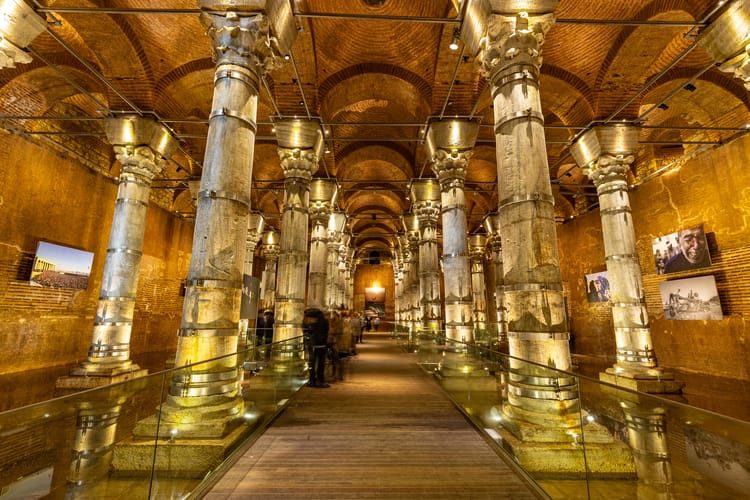
Theodosius Cistern
Thank you for reading! See you next time.
How would you rate todays edition of the newsletter? |